
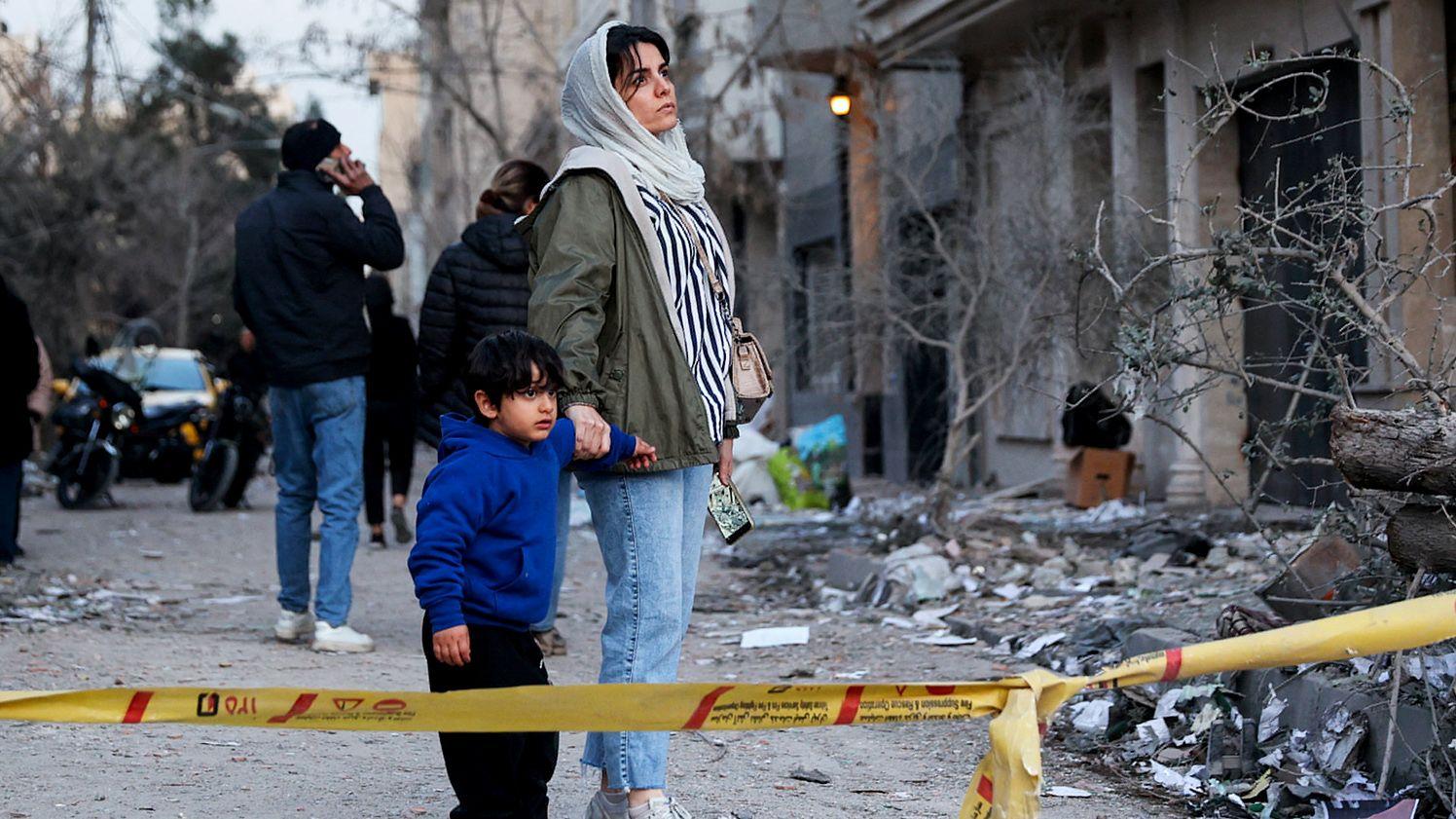

The relentless drumbeat of US and Israeli attacks has plunged children in Iran into a state of perpetual fear. With over 20% of Iran’s population (approximately 20.4 million individuals) being children, this widespread terror has profound and lasting implications for the nation’s youngest.
Fifteen-year-old Ali (not his real name) intimately understands how war breeds a pervasive sense of dread. The specter of conflict clings relentlessly to his mind, transforming ordinary sounds – a slammed door or dropped cutlery – into startling triggers.
Even a ceasefire, he notes, offers no immediate reprieve from the deeply embedded trauma.
“Before the war, I was fine, unstressed,” Ali recounts. “But now, even the slightest sound sends my brain into an overwhelming, exaggerated reaction.”
The incessant echoes of US and Israeli airstrikes in Iran have taken root in his mind, refusing to dissipate and prompting an automatic “startle reaction” to any sudden, loud noise. “The sound of explosions, the accompanying shockwaves, and the roar of fighter jets overhead can have a profoundly serious impact,” he explains.
Psychologists identify Ali’s symptoms as hyperarousal, a medical condition characterized by a persistent state of heightened vigilance in both mind and body. This constant state of alert often serves as an early warning sign for the potential development of post-traumatic stress disorder (PTSD).
Ali desperately seeks the sense of security he once knew at home, but it has vanished. His father lost his job due to the war, and his mother remains consumed by anxiety, leaving no sanctuary from the ongoing turmoil.
“My mother stays home, and every time fighter jets fly overhead, she becomes terrified and distressed, showing clear signs of anxiety. I am also very scared,” he confesses. “I’ve lost touch with my friends. I should be studying, working, and building an independent future, not constantly consumed by political worries, living under immense stress, and haunted by the unending fear of falling bombs.”

Across Iran, the world for children has drastically shrunk amid the ongoing conflict. The pervasive threat of US and Israeli aerial attacks, coupled with streets patrolled by regime militias, has forced Iranian families into isolation, confining them to their homes and leading to widespread school closures. With no safe recourse, they are left to simply wait and desperately hope for a lasting ceasefire.
Through trusted sources on the ground, the BBC has gathered poignant testimonies from parents and aid workers striving to help children confront the profound trauma of war. Some names have been altered to protect their identities.
At a human rights center in Tehran, Aysha (name changed for safety) offers phone counseling to a distressed mother, a scene repeated countless times. “Try the things I mentioned to create a calmer environment for him,” Aysha advises. “If possible, play with him and keep him connected. Even if his condition doesn’t improve afterwards, please bring him back here.”
Aysha confirms that her center is inundated with calls and direct visits from anxious parents, all seeking help for their children. “We are witnessing a significant rise in sleep disturbances, recurring nightmares, diminished concentration, and even aggressive behavior among children,” she notes. “When you struggle so intensely to raise a child, only for them to be killed – whether in a protest or a war like this – I believe no parent would ever want to bring another child into such a world.”
According to the U.S.-based Human Rights Activists News Agency (HRANA), which meticulously compiles data from across Iran, the war has claimed the lives of 3,636 individuals. Tragically, among this grim tally, at least 254 were children. Meanwhile, tens of thousands more have sustained injuries.
Amidst this widespread terror, the Iranian regime is shockingly attempting to push children towards the front lines of the conflict. The government has issued calls for parents to permit their children to join the Basij volunteer militia, a crucial arm of the state’s enforcement apparatus, tasked with manning checkpoints and maintaining order.
In a chilling televised speech, a regime figure implored parents to “take your children by the hand and go out into the streets,” shamelessly equating war with a test of masculinity for young boys. “Do you want your son to truly become a man? Let him experience being a hero on the battlefield, leading the fight. Mothers, fathers, send your children to the barricades at night. These children will transform into real men.”

For 11-year-old Alireza Jafari, however, the call to arms tragically culminated in death. He was on duty with his father at a Tehran checkpoint when he was killed in a drone attack on March 29. A local newspaper quoted his mother, Sadaf Monfared, stating that the boy “wished to become a martyr,” a testament to the regime’s pervasive indoctrination.
Amnesty International has vehemently accused Iranian authorities of “trampling on children’s rights and committing grave violations of international human rights law tantamount to war crimes” by actively recruiting children for military service. Alarmingly, the recruitment of children under the age of 15 is permitted under Iranian security laws, a policy that stands in direct contravention of international law.
Noor (not her real name), a resident of Tehran and mother to a teenage son, has vowed to keep him far from military involvement. “A 12-year-old child can never make a sound decision. They don’t truly comprehend the gravity of what is happening,” she asserts. “They might perceive it as some kind of game, imagining they’re playing a video game when handed a weapon and told to go to war. But once a child embarks on that path, there is no turning back.”
Noor took her only son out of Tehran five weeks ago, immediately after the war began. “I will never, absolutely never, allow my son to be involved in this war. Why are children being exploited like this?” she asks. “When the fighting erupted about a month ago, the very first thing I did was to leave the city. I was consumed by stress and worry that my son might venture out onto the streets and something terrible could happen to him, let alone consider letting him go to war.”
For now, a fragile hope rests on ongoing negotiations between the US and Iran in Pakistan, with many praying for a permanent ceasefire to finally take hold. Regrettably, even if a lasting ceasefire is achieved, the deep-seated damage inflicted upon the minds and bodies of these children – a consequence of relentless bombing, the militarization of their childhood, and the shattering of their sense of security – will undoubtedly persist far into their future.
Additional reporting by Alice Doyard.
- ‘We’re sinking deeper’ – Iranians brace for US attacks as Trump’s deadline looms
- Does a ceasefire end war?
- Israel launches ‘largest’ air attack in Lebanon, 182 dead – Iran threatens retaliation
- ‘You are no longer my brother’ – When war divides families in Iran
- ‘The first victims of this war are 40 children in Minab’ – Iranian response to US-Israel attacks
- ‘US missile hit near school’ – Investigation into perpetrator of girls’ school attack in Iran points to US
Summary
The relentless US and Israeli attacks have instilled a state of perpetual fear among children in Iran, who comprise over 20% of the nation’s population. Many, like 15-year-old Ali, experience hyperarousal due to constant airstrikes, leading to an exaggerated startle reaction and a loss of their sense of security. This pervasive conflict has confined families to their homes and closed schools, leading to a significant rise in sleep disturbances, nightmares, diminished concentration, and aggressive behavior among children seeking help at human rights centers.
The war has tragically killed at least 254 children, with tens of thousands injured. Alarmingly, the Iranian regime is recruiting children into its Basij militia, a practice criticized by Amnesty International as a war crime that violates international law by allowing recruitment under 15. Despite ongoing ceasefire negotiations, the deep-seated psychological and physical damage caused by relentless bombing and the militarization of childhood will undoubtedly persist long into these children’s futures.