
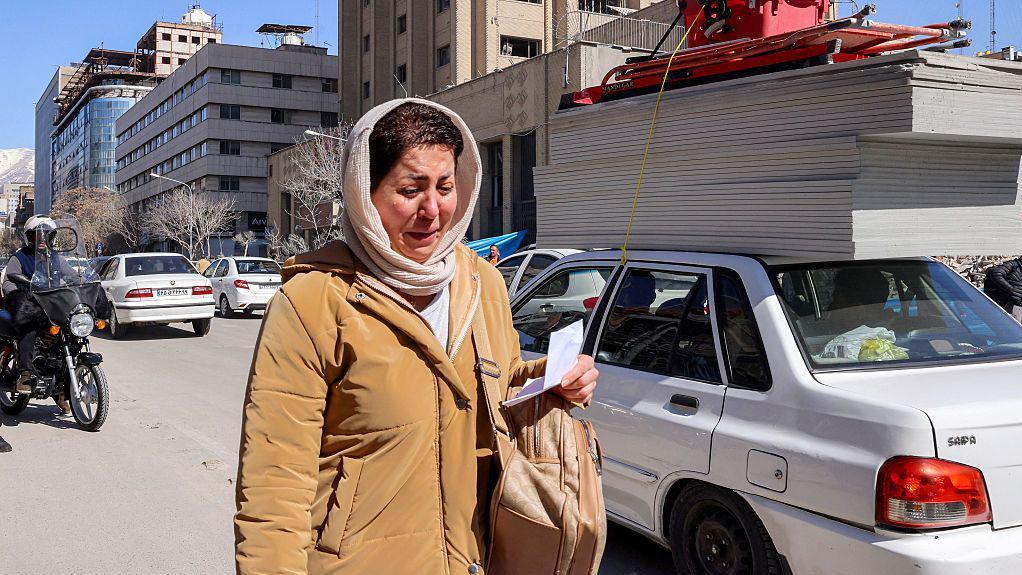

Fear and uncertainty are gripping Tehran as residents resort to stocking up on essential goods, bracing for a prolonged period of US-Israel bombardment with no clear end in sight. Speaking to BBC Persia, locals expressed deep anxieties over potential food shortages and relentlessly rising prices, all against the harrowing backdrop of incessant explosions echoing across the city.
Nasrin, a resident of the Iranian capital, articulated the prevailing sentiment: “We have to stock up on necessities because we don’t know how long this [attack] will last.” She added, “We are worried we will run out of essential needs if we don’t prepare now.”
Even before the recent wave of US and Israeli attacks, Iran was grappling with soaring inflation. Severe cost-of-living pressures and crippling international sanctions had already ignited widespread national protests last December, which were met with brutal repression by the Islamic Republic regime, reportedly claiming thousands of lives. The escalating US and Israeli military actions over the past few days have only exacerbated the already dire living conditions for Iranian citizens. This grim reality was conveyed by several residents who managed to bypass government-imposed internet blockades to speak with BBC Persia.
Accessing verifiable information from within Iran remains a significant challenge for international news organizations, which frequently face visa denials. The recent, extensive internet blackouts further complicate efforts to report on the unfolding situation accurately.
Perhaps you are interested:
- What is the objective of the US-Israel attacks on Iran?
- Will Gulf states retaliate against Iran’s attacks and be drawn into war?
- What happens if Iran closes the Strait of Hormuz, a global oil route?
Pouyo, another Tehran resident, highlighted the dramatic spike in staple food prices since the US-Israel offensive commenced on Saturday, February 28. “I just checked, rice is now 625 toman [approximately 2,500 Indonesian Rupiah], whereas before the war it was 530 toman [2,120 Indonesian Rupiah],” he stated. He further noted that potatoes have experienced the most significant price increase.
In response to the domestic crisis, the Iranian state news agency has announced that, “in line with the government’s decision to prioritize the provision of basic necessities,” all food and agricultural exports have been banned “until further notice.”
Connectivity issues are also deepening the crisis. Shayan, a resident of Karaj, about an hour’s drive from Tehran, reported a sharp increase in internet data package prices. “It’s very difficult now to connect to the internet,” Shayan lamented, adding that the cost of Elon Musk’s Starlink internet service has also seen an “extraordinary” surge.

Omid, a 26-year-old in Tehran, captured the pervasive apprehension: “People are now starting to feel uneasy about how long this situation will drag on.” He recalled initially assuming that the US and Israel would only target specific figures, such as Ayatollah Ali Khamenei, who reportedly died on Saturday, February 28. Omid had believed the attacks “should have ended by now.” However, he confirmed hearing numerous explosions across the city until Tuesday, March 3, noon. This relentless series of attacks ultimately drove Omid to begin stockpiling essential supplies.
Despite the need for provisions, Omid noted that not all shops remained open. “The presence of security forces on the streets is tighter, but the streets themselves are empty,” he observed, adding that “some shops are closed, especially those near affected areas.”
Other residents corroborated these accounts, reporting that they heard and witnessed a barrage of explosions in the capital on Monday, March 2, and Tuesday, March 3. Maryam recounted being near an area struck by a missile on Monday night, March 2. “Last night’s attack was terrifying,” she wrote in a text message, describing how “our house shook.” While some residents have opted to flee Tehran, Maryam expressed her resolve to stay.
She affirmed, “Some people have left Tehran, but we stay at home.” Maryam’s commitment extends beyond mere survival: “If we are not killed, we will remain here as long as there is a call for protests on the streets, and I will go out with my family to join.” Strikingly, she also conveyed a sense of defiance against the regime: “I am very happy these officials are being targeted. We will endure these attacks until they all leave.”
The Iranian Red Crescent, a non-governmental humanitarian organization, has reported approximately 787 fatalities across Iran since the US and Israel launched their attacks on the country on February 28. The turmoil continues unabated. The Israeli military confirmed striking Iran’s presidential office and other key infrastructure targets on Tuesday. Furthermore, BBC-verified video footage revealed explosions in Pardis, located east of the capital.
In retaliation, Iran has unleashed a massive barrage of missile and drone attacks, primarily targeting Israeli military and government installations in Tel Aviv and other locations. Reports also indicate that attacks have been launched against countries hosting US military bases—including Qatar, Bahrain, Jordan, the United Arab Emirates (UAE), and Kuwait—as well as US allies Oman and Saudi Arabia. In recent days, Iran has been accused of broadening its offensive to include other targets, such as international shipping lanes, civilian infrastructure—like a hotel in Dubai—and the US embassy in Riyadh, Saudi Arabia.
- Indonesian religious organizations unite in condemning US-Israel attacks on Iran
- Iran’s Leader, Ayatollah Ali Khamenei, reported dead in US-Israel attack
- US-Israel attack Iran: Where are Russia and China?
- ‘The first victims of this war are 40 children in Minab’ – Iranian residents’ response to US-Israel attacks
- ‘This is not the Dubai we know’ – Testimonies of residents and tourists as Iran attacks the United Arab Emirates
- President Prabowo offers to mediate US-Israel-Iran conflict – ‘Highly unrealistic’
- Ayatollah Ali Khamenei passes away: Who is his successor and what might happen next?
Summary
Tehran residents are experiencing widespread fear and uncertainty amidst ongoing US-Israel bombardments, leading them to stockpile essential goods due to worries about food shortages and rapidly soaring prices. Iran’s existing severe inflation and economic challenges, compounded by international sanctions, have significantly worsened, prompting a government ban on food exports and higher costs for basic necessities and internet services. Additionally, internet blackouts are severely hindering communication and access to verifiable information.
Civilians have reported terrifying explosions and shaking homes, with some expressing defiance against the regime despite the escalating dangers. The Iranian Red Crescent has confirmed approximately 787 fatalities since February 28, while Israel has admitted striking key Iranian government sites. In retaliation, Iran has launched massive missile and drone attacks against Israeli military targets and facilities in allied nations, including alleged strikes on shipping lanes and civilian infrastructure.