
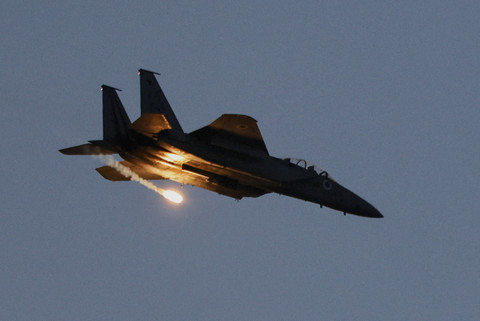

The Israeli military has announced it conducted the largest air operation in its history, claiming to have deployed a formidable force of 200 fighter jets. This massive aerial assault reportedly targeted critical Iranian missile and air defense systems located across the nation’s western and central regions.
This unprecedented military maneuver was officially characterized by the Israeli Air Force as the “largest military cross-flight in history,” underscoring the extraordinary scale of the mission.

During the extensive operation, the fighter jets are said to have unleashed hundreds of munitions, striking approximately 500 targets simultaneously. These coordinated strikes aimed at neutralizing various air defense systems and missile launchers spread across multiple strategic locations within Iran.
An official statement, as reported by Al Jazeera on Sunday, March 1, affirmed that these assaults on Iran’s defensive infrastructure were designed to “enable the expansion of IAF air superiority in Iranian airspace.” Furthermore, the statement asserted that the strikes aimed to “significantly weaken the Iranian regime’s offensive capabilities—particularly its launch sites in western Iran.”
The military further specified that among the numerous targets, one notable strike specifically focused on a surface-to-surface missile launch site situated in Tabriz, western Iran, highlighting the precision and strategic intent behind the operation.
Summary
The Israeli military claimed to have conducted its largest air operation in history, deploying 200 fighter jets. This massive assault reportedly targeted critical Iranian missile and air defense systems across western and central regions. Characterized as the “largest military cross-flight in history,” the operation involved hundreds of munitions striking approximately 500 targets simultaneously.
The coordinated strikes aimed at neutralizing various air defense systems and missile launchers, including a surface-to-surface missile launch site in Tabriz. According to an official statement, these assaults sought to expand IAF air superiority in Iranian airspace and significantly weaken the Iranian regime’s offensive capabilities, particularly launch sites in western Iran.