
Teknowarta JAKARTA – President Prabowo Subianto has underscored that Indonesia’s foreign diplomacy is consistently geared towards achieving tangible, concrete benefits for the nation. This firm commitment ensures that every international engagement directly serves the interests of the Indonesian people.
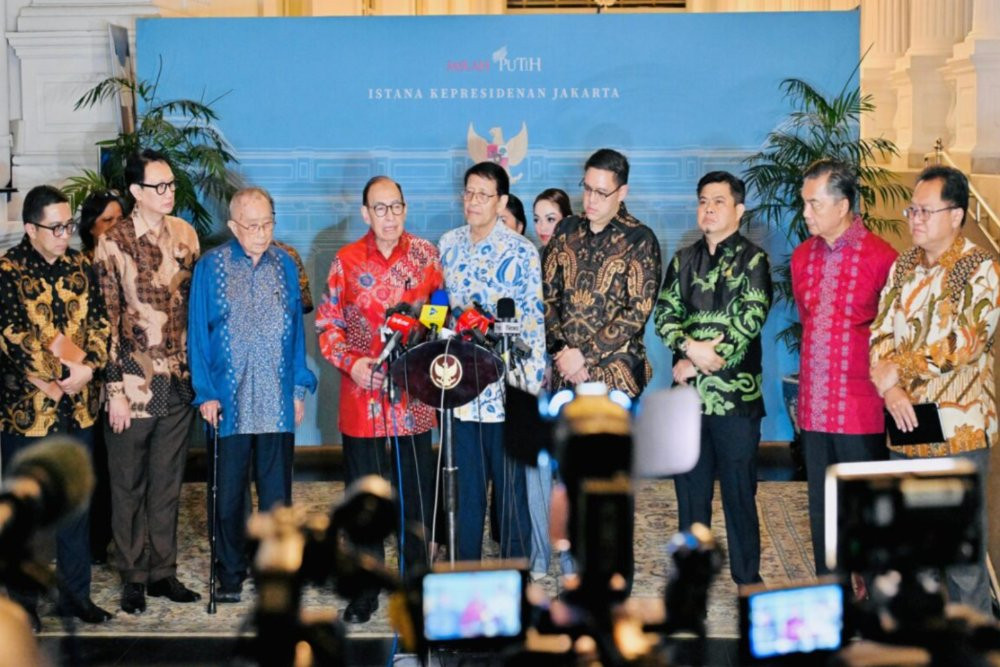
President Prabowo conveyed this emphasis during a pivotal meeting held at Merdeka Palace on Wednesday, February 4, 2026. The gathering brought together a distinguished group of former Indonesian Ministers and Deputy Ministers of Foreign Affairs, leading academics in international relations, and key leaders from Commission I of the House of Representatives (DPR RI).
According to Cabinet Secretary (Seskab) Teddy Indra Wijaya, this results-oriented approach is clearly reflected in the array of strategic achievements Indonesia has secured over the past year. Among these significant accomplishments is Indonesia’s induction into BRICS, a powerful economic bloc comprising some of the world’s largest economies.
: Foreign Minister Sugiono Says Palestine Played Role in Indonesia’s Decision to Join Peace Council
“Indonesia has joined BRICS, whose members include Brazil, Russia, China, and India, all formidable global economic powers,” Seskab Teddy stated on Thursday, February 5, 2026, further highlighting the nation’s growing international influence.
Beyond BRICS membership, Teddy elaborated on other strategic milestones. These include the successful negotiation of zero percent trade tariffs with 27 European Union countries, a move set to significantly boost Indonesian exports. Another notable achievement is the agreement for the development of a Hajj Village in Saudi Arabia, strengthening bilateral ties. Furthermore, Indonesia played a crucial role in the United States-initiated Palestine peace agreement, showcasing its dedication to global stability.
: : Former Foreign Minister Alwi Shihab Reveals Benefits of Indonesia Joining Peace Council
“Indonesia made history by participating in the signing of the US-initiated Palestine peace agreement. Following the agreement’s signing, there has been a significant reduction in conflicts and casualties,” Teddy affirmed, underscoring the positive impact of Indonesia’s involvement.
Regarding Indonesia’s participation in the Board of Peace (BoP), Seskab Teddy clarified that membership in this forum is non-permanent, granting Indonesia full authority to withdraw at any time. He also addressed the US$1 billion fund often associated with BoP membership, explaining that it is designated for Gaza reconstruction efforts and is not a mandatory contribution.
Teddy detailed that Indonesia has officially joined the Board of Peace alongside seven other major Muslim-majority nations: Saudi Arabia, Turkey, Egypt, Jordan, Qatar, UAE, and Pakistan. This diverse group signifies a collective commitment to peace in the region.
“Member countries have the option to pay or not to pay. Payment grants permanent membership, while non-payment results in a three-year membership. Currently, Indonesia has not yet made a payment,” he added, outlining the flexible terms of engagement.
Through this proactive and results-driven diplomatic approach, President Prabowo reaffirmed Indonesia’s unwavering commitment to strengthening its global standing. He emphasized that every foreign policy step undertaken is meticulously designed to deliver strategic benefits not only for the Indonesian people but also for the broader cause of world peace.
Furthermore, Teddy emphasized that Indonesia’s participation in the BoP represents a tangible and direct step towards actively reducing conflict in Palestine.
“This goes beyond merely attending conferences, meetings, discussions, or official gatherings,” he concluded, highlighting Indonesia’s intent for impactful, direct engagement.
Summary
President Prabowo Subianto emphasizes that Indonesia’s foreign diplomacy aims to achieve tangible benefits for the nation, a commitment reiterated during a meeting with former foreign ministers and experts. This results-oriented approach has led to significant strategic achievements, including Indonesia’s induction into BRICS, successful trade tariff negotiations with EU countries, and an agreement for a Hajj Village in Saudi Arabia. Indonesia also played a crucial role in the US-initiated Palestine peace agreement, which notably reduced conflicts.
Regarding the Board of Peace (BoP), Indonesia’s membership is non-permanent, allowing for withdrawal at any time. The associated US$1 billion fund for Gaza reconstruction is not a mandatory contribution, and member countries can choose to pay for permanent membership or not pay for a three-year term; Indonesia has not yet paid. Joining seven other Muslim-majority nations in the BoP, Indonesia views this as a direct and impactful step towards actively reducing conflict in Palestine.