
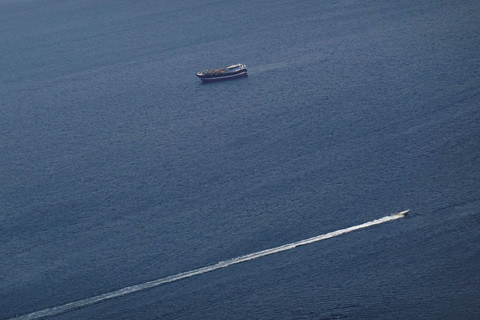

India has lodged a strong diplomatic protest after two of its tankers were reportedly fired upon by Iranian forces in the strategically vital Strait of Hormuz on Friday, April 18. This significant maritime incident has prompted New Delhi to demand immediate assurances for the safe passage of its vessels through the crucial global waterway.
The Ministry of External Affairs confirmed India’s deep concern, with Secretary Vikram Misri summoning the Iranian ambassador to convey the nation’s profound displeasure over the “shooting incident” involving two Indian-flagged ships. The official statement, quoted by AFP on Sunday, April 19, underscored the urgency of the situation. Furthermore, India explicitly urged Iran to ensure the continued facilitation of its vessels, especially those bound for Indian ports, traversing the Strait of Hormuz, asking the ambassador to relay this critical message directly to authorities in Tehran.
Further details emerged from maritime tracking site TankerTrackers.com, which reported on X that two Indian vessels were compelled to turn back westward, exiting the Strait of Hormuz, by the Iranian Revolutionary Guard Corps (IRGC) Navy. Among these was a Very Large Crude Carrier (VLCC), an Indian-flagged supertanker, reportedly carrying a substantial cargo of 2 million barrels of Iraqi oil, highlighting the scale of the disruption and the value of the energy supplies at stake.
This incident casts a spotlight on India’s critical reliance on global shipping lanes for its energy security. As the world’s second-largest buyer of liquefied petroleum gas (LPG), India imports approximately 60 percent of its LPG requirements. The nation has been grappling with a severe gas crisis since the escalation of conflict in the Middle East began on February 28, making secure passage through the Strait of Hormuz paramount for its economic stability and domestic energy supply.
The situation further underscores New Delhi’s complex geopolitical balancing act in the region. While India maintains historically strong ties with Tehran, it has simultaneously and strategically expanded cooperation with Iran’s regional rival, Israel. This deepening partnership spans crucial sectors including defense, agriculture, advanced technology, and cybersecurity, demonstrating India’s multi-faceted approach to regional engagement amidst escalating Middle East tensions and the critical imperative of safeguarding its maritime trade routes.
