
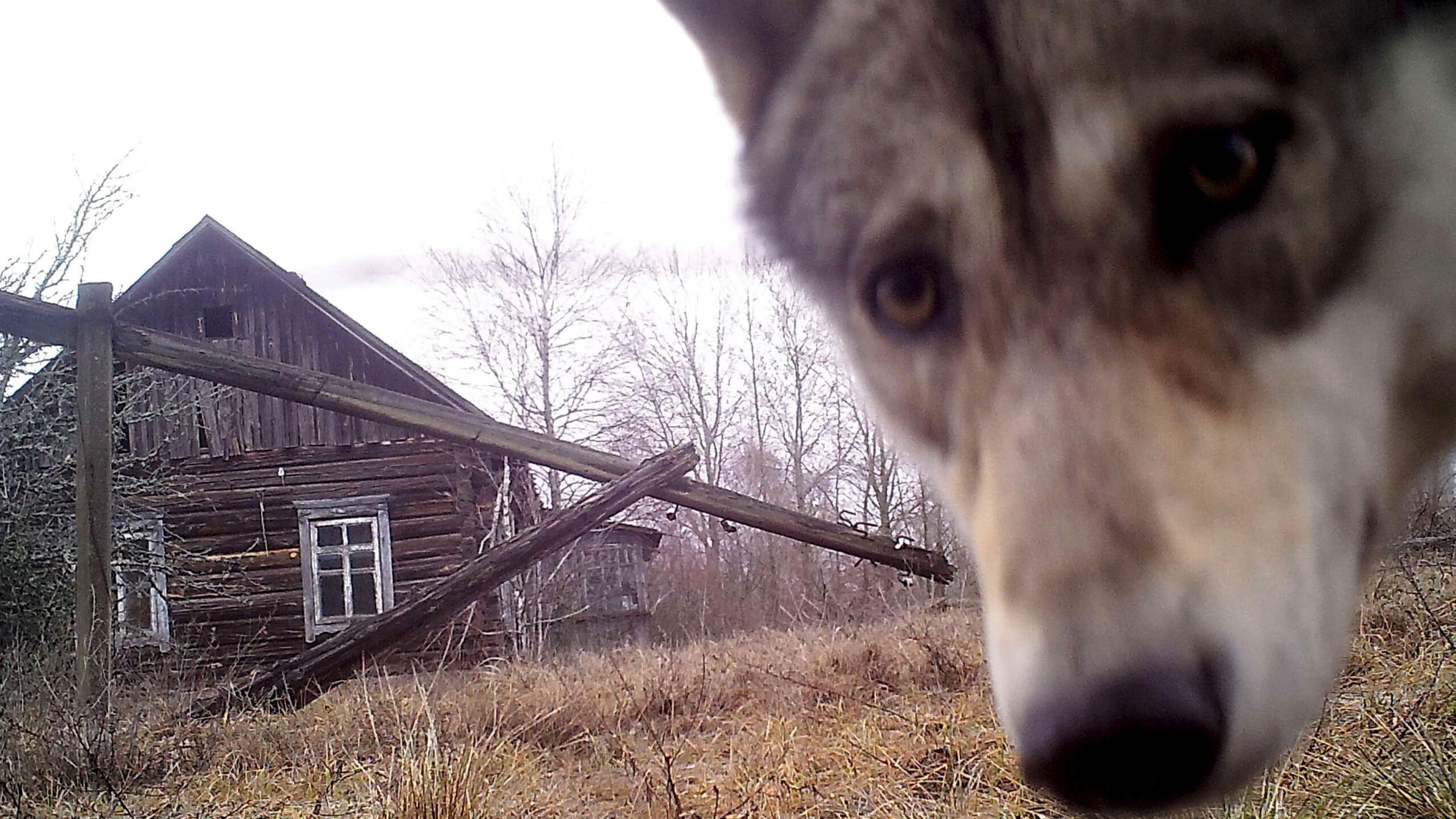

When we envision sanctuaries for wildlife, forests and national parks often come to mind immediately. It’s far less likely that the radiation zone of Chernobyl or the Demilitarized Zone (DMZ) between North and South Korea would spring to mind. Yet, remarkably, these very places have become thriving habitats for diverse wildlife.
In areas deemed uninhabitable for humans, animal life is flourishing. This raises a crucial question: can this phenomenon of “accidental rewilding” offer valuable lessons for environmental conservation?
More Than 70 Years Untouched by Humans
Crossing the border region between North and South Korea has been impossible for humans since 1953. The 248km long and 4km wide Demilitarized Zone (DMZ) stretches across and divides the Korean Peninsula. Human activity within the DMZ is severely restricted, and the area is heavily laden with landmines. However, these formidable conditions have not deterred animals and plants.

According to South Korea’s National Institute of Ecology, an astounding 6,168 wildlife species inhabit the DMZ. This figure includes 38% of all endangered species on the Korean Peninsula. For over 70 years, this territory has remained virtually untouched by human activity, transforming it into a vital sanctuary for a variety of animals such as golden eagles, mountain goats, and musk deer. The area also hosts numerous endemic Korean plant species, found nowhere else in the world.

Seung-ho Lee, President of The DMZ Forum, an organization dedicated to preservation in the region, states that nature has been “accidentally protected by the armistice agreement.” He explains, “Nature has reclaimed its place. Many animals, especially various bird species, now have broader access to the area, while human activity is almost non-existent.” Lee further highlights the global significance of many species living there, including cranes that reside in the DMZ but “fly to various parts of the world.”

The Demilitarized Zone in Korea is not the only unexpected place that has become a haven for wildlife. On April 26, 1986, a reactor at the Chernobyl Nuclear Power Plant in the former Soviet Union—now located in Ukraine—exploded, releasing dangerous radioactive substances into the atmosphere. Radioactive contamination spread across thousands of square kilometers, forcing the evacuation of hundreds of thousands of people.
Subsequently, an exclusion zone was established around the site, which largely remains uninhabited to this day. This area has since been expanded and now spans approximately 4,000 square kilometers. According to the UK Centre for Ecology & Hydrology, the region still harbors some of the highest levels of radioactive contamination globally.
‘The Red Forest’
Immediately after the explosion, the subsequent ecological impact was severe, as noted by Jim Smith, Professor of Environmental Science at the University of Portsmouth in the UK. He recounts that many trees died and turned a “reddish-brown” color in the area now known as the Red Forest, and there was also damage to mammals and aquatic life. However, the radioactive elements released from Chernobyl underwent relatively rapid decay.

“Radiation levels dropped very rapidly within days and weeks of the accident, and what remains in the area now is low-level radiation that persists for decades,” Smith explains. While these radiation levels are unsafe for long-term human habitation, for other species, the story is remarkably different. “Wildlife is actually thriving in Chernobyl… without a doubt, I think the exclusion zone is now far more ecologically diverse and abundant than before the accident,” he asserts.
Smith’s research supports this surprising observation. “We have studied fish in the lakes, including the [nuclear] cooling pond… We also studied aquatic insects, and we found that the more contaminated lakes had the same diversity and abundance of aquatic creatures as the almost uncontaminated lakes in the area.”

Mammals, too, appear to be flourishing within the exclusion zone. “We tried to see if there was any difference in mammal populations between more contaminated and less contaminated areas, and we found no difference,” Smith states. “The only difference we saw was in the wolf population, which is seven times higher in Chernobyl compared to other nature reserves in the region.”
‘Let Nature Be’
The fact that wildlife can thrive better in radioactive zones than outside them may sound astonishing, but there is a clear explanation. “It is a very vast area, free for wildlife without noise, without lights, without pesticides, without herbicides, without logging, and without agriculture,” explains Germán Orizaola, Professor of Zoology from the University of Oviedo in Spain. He concludes, “The pressure from human activity is far, far worse for nature than even the worst nuclear accident.”

Smith concurs with this assessment. “What I learned from Chernobyl is that… human presence in an ecosystem is actually the primary damage,” he states, adding that other factors like pollution are important but “only additional factors.” He regards Chernobyl as “a very powerful example of what natural rewilding can achieve.”
Orizaola argues that these sites demonstrate a truly effective conservation strategy. “Often, we have nature reserves and national parks, but then they transform into tourist destinations with elements of human utilization, making them not truly effective for nature preservation,” he observes. “Chernobyl is an extraordinary place, truly amazing… if we really want to protect nature, the best way is to reduce human pressure on the environment and let nature take its course naturally.”
- Sumatran elephant dies headless in Riau – Three factors explaining persistent illegal poaching
- Why Colombia wants to kill Pablo Escobar’s ‘cocaine hippos’
- Whale-eating creatures of the deep sea
- Burning of bird-of-paradise crowns, illegal hunting, and Alfred Wallace’s legacy in Papua – ‘If you want to protect this bird, protect its people too’
- Winners of the Sony World Photography Awards 2026: From foxes in a blizzard to a barefoot volcanologist
- Tiny possums and gliders thought extinct 6,000 years ago rediscovered in Papua
- Rare Tapanuli orangutan found dead under a pile of wood and mud after Sumatra flood
- A researcher’s testimony after being bitten by a shark – ‘This animal let me live’
- The journey of a lion pride forced to leave the desert and hunt on the beach
Summary
Unexpected areas such as the Korean Demilitarized Zone (DMZ
