
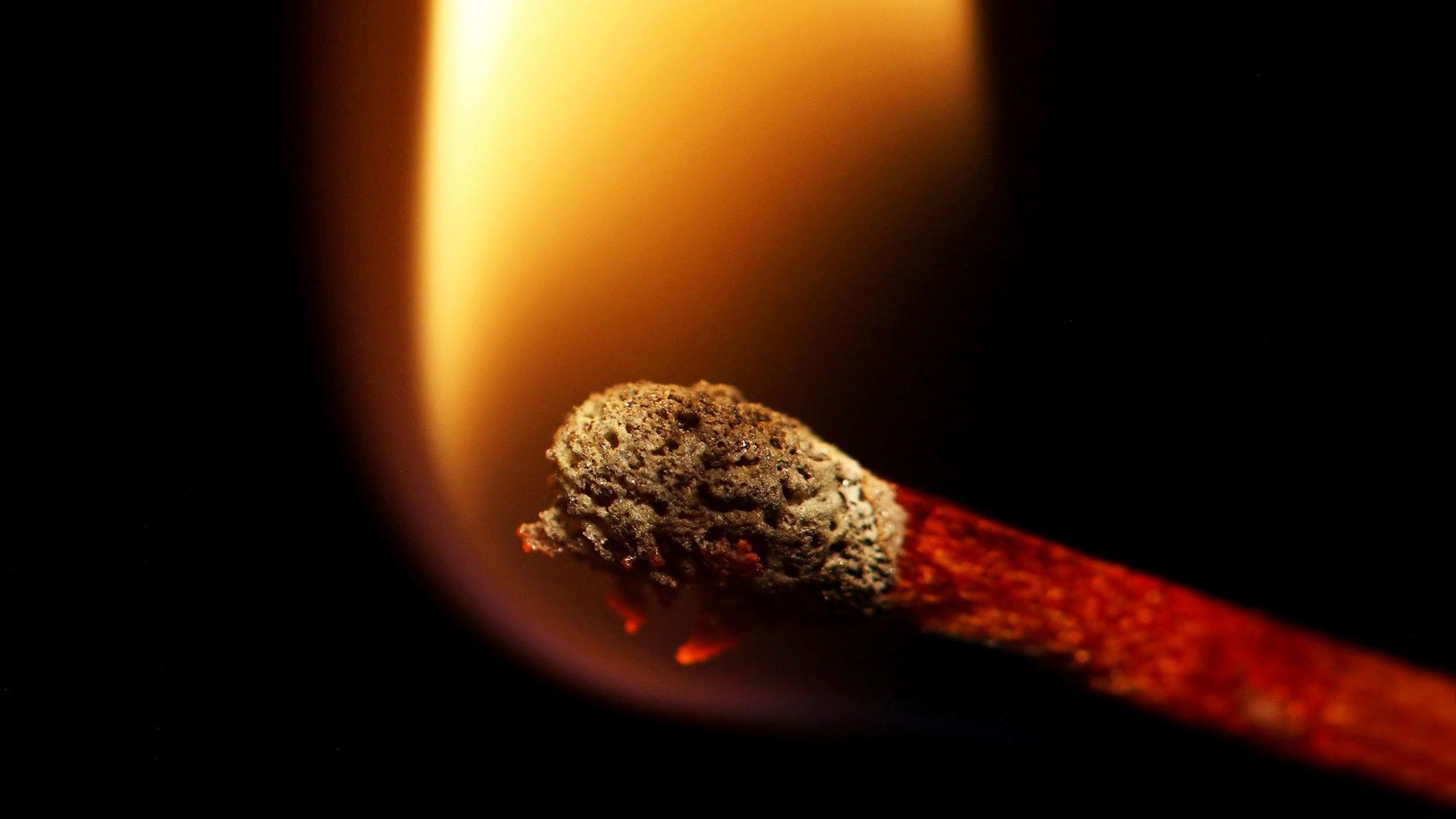

In 1826, humanity benefited from a fortunate event—or perhaps a moment of sheer serendipity—that would forever transform how we create light and heat.
This pivotal story begins with John Walker, an English apothecary who was engrossed in experiments, mixing various chemicals with the aim of creating explosives. In an unwitting stroke of fate, a wooden stick coated with one of his chemical mixtures scraped against a stone on the front of his fireplace, and immediately, a flame ignited.
Walker was born in the bustling port town of Stockton-on-Tees, Durham, in 1781, right in the throes of the Industrial Revolution. The driving force of this era, James Watt’s steam engine, had already been in commercial use since 1776, dramatically reshaping industries.
The spirit of innovation continued to surge, with the first public railway utilizing a steam locomotive reaching Stockton in 1825. Just four years later, George Stephenson’s iconic Rocket locomotive demonstrated its incredible potential by pulling passenger trains at speeds of 50 km/h. Soon, journeys that once painstakingly consumed 12 days by horse could be completed in a mere eight hours.
However, despite these monumental leaps in power and transportation, the fundamental act of starting a fire to generate such energy remained arduous. People still struggled to keep embers alight, highlighting a curious anachronism in an age of rapid progress.
Walker’s accidental discovery, therefore, didn’t just provide a new way to make fire; it revolutionized its production, usage, and, crucially, the ease with which this essential element could be carried anywhere.
Who Was John Walker?
Beyond his chemical pursuits, Walker was actually a professionally trained surgeon. However, finding himself deeply uncomfortable with the blood-soaked operating rooms of the 18th century, he pivoted to the less visceral, yet equally vital, profession of a compounding pharmacist.
By 1826, his days were largely dedicated to crafting medicines for humans, horses, cattle, and even chickens, according to Alan Middleton, author of A Tale of Hope and Despair: North of England Match Co West Hartlepool 1932–1954.
Crucially, though, Walker’s intellectual curiosity extended far beyond remedies; he also devoted considerable time to experimenting with various chemicals.

“Walker was an intelligent and very kind man, and some say he might have been a bit eccentric,” Middleton explains. “One of his passions was chemistry. He mixed chemicals to create percussion caps for firearms for his farmer friends,” he adds, hinting at the context of his eventual groundbreaking discovery.
How Did He Create the Match?
According to Alan Middleton, the creation of the match was, remarkably, entirely accidental.
“One day, he was mixing a composition and left it to dry. Once dry, he scraped the piece of wood on the fireplace, and it ignited,” Middleton recounts, vividly describing the moment of invention.
“That was a moment of genius that no one in the world had ever achieved before,” he emphasizes, underscoring the unprecedented nature of Walker’s breakthrough.

“He quickly realized its commercial potential. This happened around 1826, though we don’t know the exact date. However, the first sales took place in April 1827,” Middleton clarifies.
“He named them ‘friction lights’ and initially sold them in quantities of hundreds within a tin can.”
Also read:
- Prehistoric technology and innovations that spurred the revolution of human civilization, what are they?
- The story of failure that started the invention of the internet – ‘We were just trying to make it work’
- Five inventors who died from their own creations
Walker’s “Friction Lights” consisted of extremely thin, flattened wooden splints. Each end of these splints was carefully dipped into a paste containing potassium chlorate, antimony sulfide, gum arabic, and water. When firmly pinched with folded sandpaper, the match would ignite, providing an instant flame.
Did Walker Mass-Produce Modern Matches?
Despite his ingenious creation, Walker chose to keep his formula a secret and, notably, never patented his invention. His matches were affordable, and he was able to meet the local demand within Stockton.
However, as noted by the Pharmaceutical Journal: “Walker’s match was not perfect. The burning sulfur layer sometimes detached from the stick, with the risk of damaging floors or the user’s clothing.”

In 1829, Samuel Jones of London introduced “Lucifers,” effectively copying Walker’s groundbreaking Friction Lights. It was these Lucifers that became the first truly mass-produced matches.
Soon after, other innovators began refining the formula, as explained by Derek Judd, chairman of the British Matchbox Label and Bookmatch Society (BML&BS). The size and shape of the tin containers also underwent various modifications.
However, it wasn’t until 1844 that the modern safety match, largely owing to Swedish production, truly gained widespread popularity. “That was the first truly patented matchbox,” Judd confirms, marking a significant milestone in the match’s evolution.
How Is Walker Remembered?
In many regions, match-making evolved into a cottage industry. Matches were produced in homes, offering a crucial, albeit often risky, supplementary income for families. “Women and children around the factories would make boxes on a piece-rate system [paid per amount produced, not a fixed wage],” Judd explains.
Eventually, machines arrived, transforming the business into a multi-million-dollar industry, though not without its own challenges.

Despite its industrial growth, another invention—the cigarette lighter—ultimately led to a significant decline in match profits. “The business shrank over the years,” Judd notes. “A number of companies simply disappeared.”
Nevertheless, matches remain in widespread use. Beyond their essential function, they have also become a fashion accessory, as Middleton points out, with specially designed packaging sometimes selling for up to US$250.
Yet, the creator himself remains largely unrecognized. Both Middleton and Judd agree that, after 200 years, Walker is long overdue for greater acknowledgment. “Walker was a figure in history who didn’t want to pursue his invention,” Judd states. “Had he done so, he could have become famous.”

The residents of Stockton share this sentiment. Many hope that the 200th-anniversary celebration of the modern match—which commenced on May 29th, Walker’s birthday—will finally bestow the deserving recognition upon this extraordinary inventor.
“We hope that through various events this year and next, more people will know his role in developing the everyday match we know today,” says council leader Lisa Evans.
“The invention of the friction match allowed fire to be created instantly, with little effort, fundamentally changing daily life.
“The use of matches made daily tasks in both industrial settings and households immeasurably easier and faster.”
“The spark he created continues to inspire people to this very day.”
- Five inventors who died from their own creations
- The story of failure that started the invention of the internet – ‘We were just trying to make it work’
- Prehistoric innovations that drove the revolution of human civilization
Summary
In 1826, English apothecary John Walker accidentally invented the modern friction match while experimenting with chemicals. A wooden stick coated with his mixture scraped against a surface and ignited, leading to his “friction lights.” He began selling these early matches, made from wooden splints dipped in a chemical paste, in April 1827. This accidental discovery revolutionized the ease of creating fire, a significant advancement in an era of rapid industrial progress.
Despite his ingenious creation, Walker chose not to patent his invention, and his matches had some imperfections. Samuel Jones later mass-produced a similar product called “Lucifers” in 1829, while the truly modern safety match was patented and popularized in 1844, mainly through Swedish production. Although his invention fundamentally changed daily life by providing instant fire, Walker himself remains largely unrecognized, with efforts now underway to acknowledge his groundbreaking contribution.
