
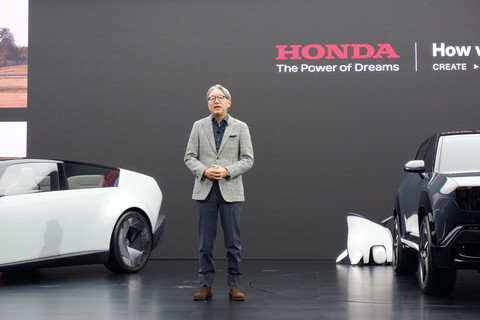
Honda Motor Company has reported its first annual loss in nearly seven decades as a publicly traded company, a significant downturn announced on Thursday, May 14. This historic loss was primarily driven by substantial restructuring costs exceeding $9 billion (approximately IDR 158.45 trillion at an exchange rate of IDR 17,606) associated with the Japanese automaker’s electric vehicle (EV) business.
Consequently, as reported by Reuters, Honda has decided to scrap its ambitious long-term EV sales targets. This significant financial setback marks Honda’s worst performance since its initial public offering in 1957, underscoring the considerable risks associated with aggressive electric vehicle strategies for established automotive manufacturers, particularly when market demand falls short of projections.
Honda CEO Toshihiro Mibe confirmed the abandonment of a key target that aimed for electric vehicles to comprise one-fifth of the company’s new car sales by 2030. Furthermore, the ambitious goal of a complete transition to either electric or fuel cell vehicles by 2040 has also been rescinded. Mibe further revealed that Honda has indefinitely suspended its planned $11 billion EV project in Canada, an initiative intended for electric vehicle and battery production. This project was previously slated to be Honda’s largest investment in the country.
Amidst these challenges in its automotive division, which continues to lag in terms of scale and execution, Honda remains heavily reliant on its consistently profitable motorcycle business. This segment is crucial for generating vital cash flow and supporting shareholder returns. “Overall, the execution has been very slow,” commented James Hong, Head of Mobility Research at Macquarie, as quoted by Reuters on Friday, May 15. Hong further suggested that several strategic steps outlined by Honda, such as increasing the use of local components from China, are not particularly innovative or new.
For the fiscal year ending March 2026, Honda forecasted an operating loss of 414.3 billion yen (approximately $2.63 billion). This projected loss is significantly worse than the median estimate of a 315.6 billion yen loss from a survey of 22 analysts by LSEG, and starkly contrasts with the substantial 1.2 trillion yen profit recorded in the previous year. For the fiscal year that just concluded in March, Honda formally recorded total EV-related losses of 1.45 trillion yen. Furthermore, the company anticipates an additional 500 billion yen in costs for the newly commenced fiscal year. Despite these substantial figures, this total loss is lower than the previous estimate of up to 2.5 trillion yen in EV-related losses that Honda had initially communicated last March.
Optimistic About Returning to Profit
Despite the current challenges, Honda remains optimistic, forecasting a return to profitability this year with a projected profit of 500 billion yen. This turnaround is expected to be driven by aggressive cost-efficiency measures and the sustained strength of its profitable motorcycle business. “The motorcycle business is set to expand production capacity in India and target an all-time high sales volume of 22.8 million units,” Honda declared in its financial report, highlighting its strategic focus.
Indeed, robust sales performance in key markets like India and Brazil propelled Honda’s motorcycle division to record its highest-ever sales volume and operating profit, demonstrating its critical role in the company’s financial health. This strong performance effectively cushioned the substantial impact of the EV business restructuring and the ongoing decline in automobile sales within crucial markets such as China. However, James Hong from Macquarie cautioned that even Honda’s resilient motorcycle business faces potential margin pressure due to the accelerating transition towards electric vehicles in vital markets like India and Vietnam. “They have a limited window of opportunity to act,” Hong concluded, emphasizing the urgency for Honda to adapt to evolving market dynamics.
Summary
Honda Motor Company announced its first annual financial loss in nearly seven decades, primarily driven by over $9 billion in restructuring costs associated with its electric vehicle (EV) business. This historic setback led Honda to scrap ambitious long-term EV sales targets, including a 20% EV share by 2030 and a full transition by 2040. Furthermore, the company indefinitely suspended its planned $11 billion EV project in Canada. For the fiscal year ending March, Honda formally recorded total EV-related losses of 1.45 trillion yen.
Despite these automotive challenges, Honda remains optimistic, forecasting a return to profitability this year with a projected profit of 500 billion yen. This turnaround is expected from aggressive cost-efficiency measures and the sustained strength of its profitable motorcycle business. The motorcycle division achieved record sales and operating profit, with plans to expand production in India. However, the motorcycle business faces potential margin pressure from the accelerating EV transition in vital markets.
