
News Summary:
- Israel and the United States launched an attack on Iran on Saturday (February 28, 2026), resulting in the death of Iran’s supreme leader, Ayatollah Ali Khamenei.
- President Prabowo Subianto expressed his willingness to travel to Tehran to mediate peace between the United States and Iran.
- Professor of International Law at UI, Hikmahanto Juwana, offered his perspective on President Prabowo Subianto’s proposed initiative.
The joint aerial assault by the United States and Israel against Iran on Saturday, February 28, 2026, has dramatically escalated regional tensions. This devastating attack resulted in the death of Iran’s revered Supreme Leader, Ayatollah Ali Khamenei. Reports indicate that not only Khamenei but also his daughter, son-in-law, and grandchildren perished in the strike. Khamenei’s body was reportedly discovered amidst the building rubble, bearing projectile fragments, underscoring the ferocity of the assault.
In a swift and unexpected move, US President Donald Trump personally announced Khamenei’s demise via his Instagram account. Trump did not mince words, labeling the 86-year-old leader as “one of the most evil men in history.” His post declared, “Khamenei, one of the most evil men in history, has died. This is not only justice for the people of Iran, but for all great American people, and people from many countries around the world, who have been killed or tortured by Khamenei and his cruel gang. He could not avoid our intelligence and our highly sophisticated tracking systems, and working closely with Israel, there was nothing he, or the other leaders killed with him, could do.”
In the wake of this monumental event, the Iranian government promptly declared a 40-day period of national mourning and announced a seven-day suspension of all state activities. Temporarily, the immense responsibility of supreme leadership will fall to Iran’s President, the Chief Justice, and members of the Guardian Council, as the nation navigates this unprecedented leadership void.
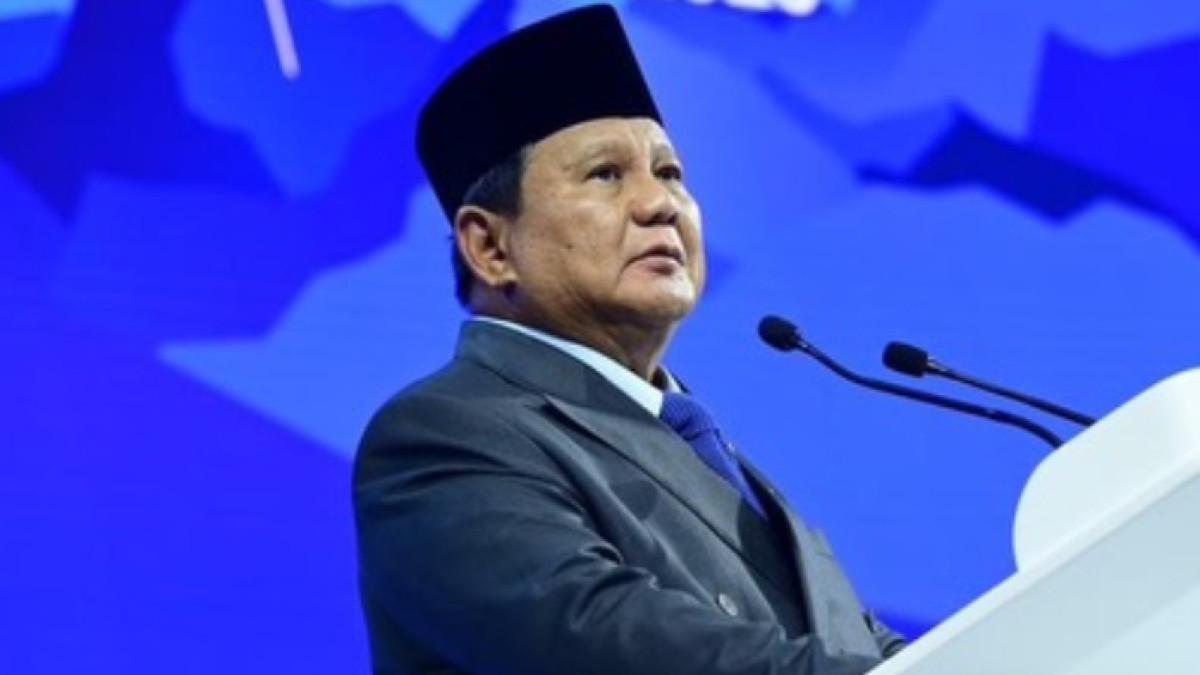
Amidst the global shockwaves, Indonesian President Prabowo Subianto has stepped forward, expressing Indonesia’s readiness to facilitate dialogue between Iran and the United States. President Prabowo even offered to travel to Tehran to initiate peace efforts. However, this proactive stance has elicited a variety of responses from different quarters.
 Insights from a UI Professor of International Law
Professor Hikmahanto Juwana, a distinguished Professor of International Law at the University of Indonesia (UI), has urged President Prabowo Subianto to exercise caution and not rush into a peacemaking mission in Tehran. His counsel comes in response to Prabowo’s intention to mediate the escalating conflict between Iran and the United States following the joint Israel-US attack on Iran.
According to Professor Hikmahanto, the current timing is not conducive for peace diplomacy. “If the President wishes to be a peacemaker, it should not be now,” Hikmahanto told Tribunnews.com on Sunday, March 1, 2026. He believes that peace initiatives are best pursued after a conflict has persisted for a considerable duration. In such prolonged phases, the psychological need for a mediator becomes paramount for the warring nations.
“It’s better to wait until the war is likely to end after a long period, because at that time, a peacemaker is needed to help the conflicting nations save face,” Hikmahanto elaborated. The former Rector of Jenderal Achmad Yani University (Unjani) further explained that in protracted conflicts, warring parties typically shy away from openly admitting defeat.

“They do not want to be seen as having lost and consequently accept a peace proposal,” he stated. Conversely, Hikmahanto warned that if President Prabowo were to intervene when the escalation has just occurred, as is currently the case, such efforts would likely face rejection. “Right now, it’s too early, and it will not be accepted by the conflicting parties,” he concluded.
President Prabowo’s willingness to act as a mediator was officially conveyed through the Indonesian Ministry of Foreign Affairs’ official X (formerly Twitter) account, @Kemlu_RI. The post stated: “The Government of Indonesia, represented by the President of the Republic of Indonesia, expresses its readiness to facilitate dialogue for the re-establishment of conducive security conditions, and if agreed upon by both parties, the Indonesian President is willing to travel to Tehran to conduct mediation.”
It is important to note that Israel launched its aerial assault on Iranian territory on Saturday, February 28, 2026, local time. Reports confirmed that two explosions were heard in the area of Tehran, Iran’s capital, underscoring the direct impact of the aggression.
(TribunTrends.com)(Tribunnews.com/Fersianus Waku)
Summary
The United States and Israel launched a joint aerial assault on Iran on February 28, 2026, which resulted in the death of Iran’s Supreme Leader, Ayatollah Ali Khamenei, and his family. US President Donald Trump announced Khamenei’s demise, labeling him “one of the most evil men in history.” Following the attack, Iran declared 40 days of national mourning and temporarily suspended state activities, with interim leadership established.
In response to the escalated tensions, Indonesian President Prabowo Subianto offered to mediate the conflict, expressing willingness to travel to Tehran for peace talks. However, Professor Hikmahanto Juwana from the University of Indonesia advised President Prabowo not to rush into a peacemaking mission. He suggested that mediation would be more effective after a prolonged conflict, when warring parties are more receptive to external help, as early intervention would likely be rejected.