
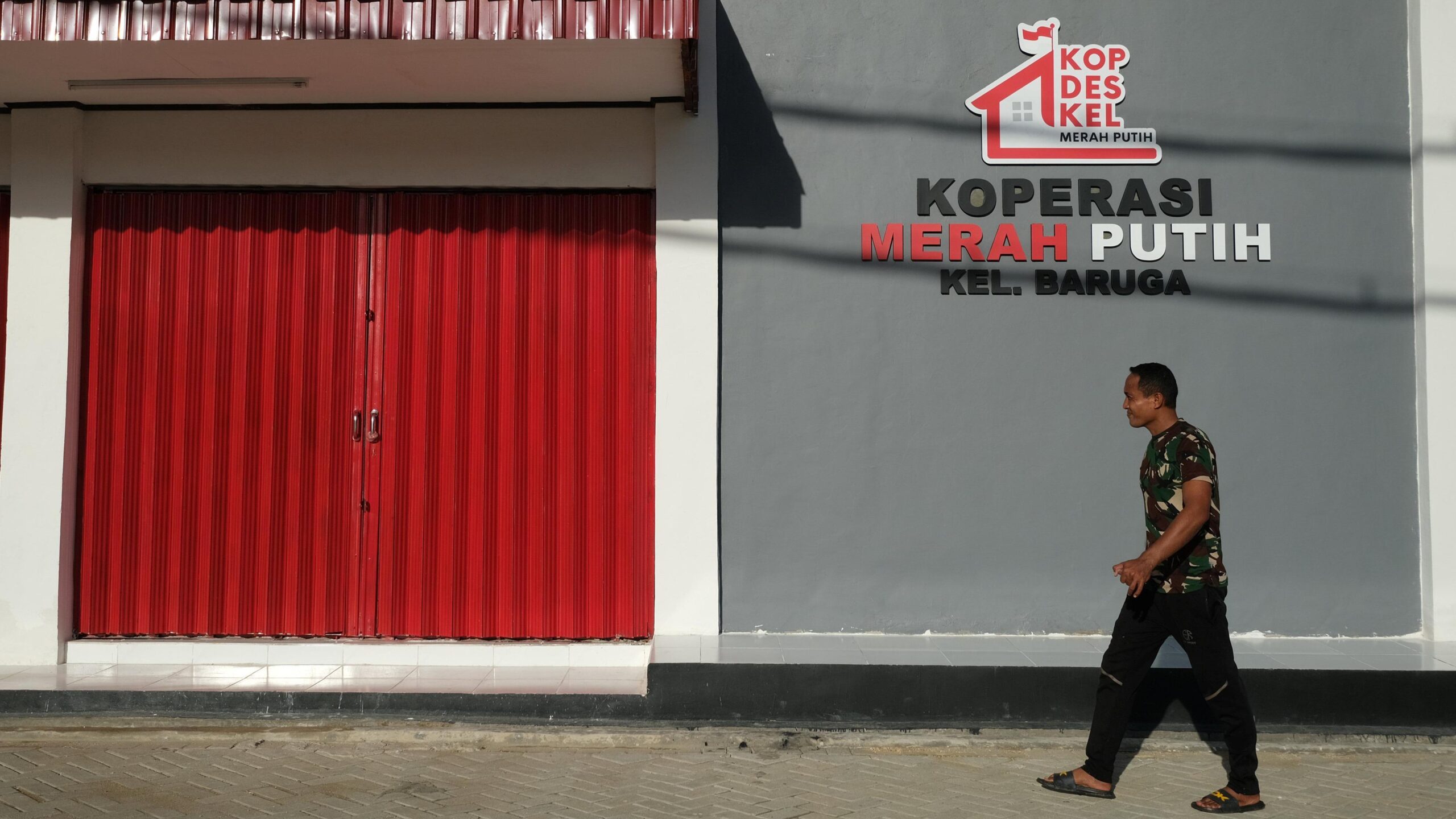

While high-ranking officials in Jakarta are embroiled in a heated debate over plans to import cars from India, the management of Merah Putih Village/Urban Cooperatives (KDKMP) claims they were never consulted regarding their transportation needs.
“It’s not effective,” stated a Merah Putih Cooperative official, whose cooperative already possesses logistical operational vehicles. The crux of this controversy revolves around claims that purchasing vehicle units directly from factories in India would be cheaper. Opponents argue that such a move offers no added value to the Indonesian economy, citing the lack of new job creation as a major concern. This proposed procurement of operational vehicles for KDKMP is set to utilize tens of trillions of rupiah from the state budget.
A researcher studying the Merah Putih Cooperatives expressed no surprise at the lack of involvement from cooperative officials, noting that the Merah Putih Cooperative program has been a “top-down policy” from its inception. The researcher voiced concerns that, over time, this flagship program of the Prabowo-Gibran administration could become a ‘bancakan’ (a shared feast, implying misappropriation) for certain groups.
‘More Cars, More Taxes’
“We haven’t received any information that we will be getting those pickup trucks. I only read on social media that there are plans for vehicle procurement,” stated Gestianus Sino, Chairman of Merah Putih Penfui Timur Cooperative in East Nusa Tenggara (NTT). Sino, commonly known as Gesti, confirmed that his cooperative currently possesses operational vehicles, including a dump truck, two pickup trucks, and a Viar (three-wheeled motorcycle).
“So, I believe if a pickup truck were provided for Penfui Timur, it wouldn’t be effective,” he explained. “Adding more cars means adding more taxes… it’s a headache.” Merah Putih Penfui Timur Cooperative, located in Kupang Regency, was previously recognized as one of the best Merah Putih Cooperatives in Indonesia.

When President Prabowo Subianto launched the institutionalization of 80,081 KDKMP units in July 2025, Merah Putih Penfui Timur Cooperative was selected as one of the national pilot cooperatives.
Gesti asserted that his cooperative currently operates six business outlets, a requirement for the establishment of a Merah Putih Cooperative. These six outlets encompass basic necessities, logistics, a health clinic, savings and loans services, and a cold storage warehouse. The cooperative’s operational model involves purchasing three primary products from the community – agriculture, fisheries, and livestock. Subsequently, the cooperative either resells these products or supplies them to hotels in Kupang City. “We have met all six outlet requirements as stipulated by the government,” he affirmed.

Presently, the needs of the cooperative led by Gesti do not center on operational vehicles, but rather on strengthening the capacity of its management and members, developing business units, and establishing inter-cooperative networks. “Currently, we operate based on capital pooled from members and self-funded efforts by the management. While we aim for larger targets, we are still limited by financing and other constraints,” Gesti added. He reiterated, “Regarding cars, we genuinely don’t need them yet.”

As of Monday (23/02), Merah Putih Penfui Timur Cooperative is one of 83,353 legally established KDKMP units spread across Indonesia. The core issue is that while most of these institutions have appointed management, they are not yet operational. The government targets 27,000 units to begin operations by April. “So, it will be gradual, and as stated by the President, it will reach 80,000 cooperatives by the end of this year,” said Minister of Cooperatives Ferry Juliantono, as quoted by Antara on Wednesday (18/02).
The Merah Putih Cooperative program stands as one of the national priority initiatives of the Prabowo-Gibran administration. Based on Presidential Instruction Number 17 of 2025, each village cooperative under this program is slated to receive state budget support through various sources coordinated by relevant ministries.
- Village heads protest up to 70% cut in village funds for Merah Putih Cooperatives – ‘How can we build infrastructure with Rp360 million?’
- Is the Merah Putih Cooperative what farmers really need? – ‘We are traumatized by models like this’
- Merah Putih Cooperative inaugurated by Prabowo – Potential for corruption and budget leakage estimated at trillions of rupiah, can it be prevented?
Previously, Minister of Cooperatives Ferry Juliantono stated that the development of KDKMP would be funded, among other means, through the placement of government funds in the Association of State-Owned Banks (Himbara) and Bank Syariah Indonesia (BSI). As reported by Harian Kompas, Presidential Instruction Number 17 of 2025 outlines that each cooperative will receive a fund allocation of approximately Rp3 billion, disbursed to state-owned enterprises under the food holding company, PT Agrinas Pangan Nusantara (Persero).
However, it recently emerged that a portion of the KDKMP budget was sourced from a 50% cut in village funds, sparking strong objections from village heads. At an allocation of Rp3 billion per cooperative, a rough estimate for establishing and activating 80,000 units would require approximately Rp240 trillion. Considering that many KDKMP units are not yet operational or as capable as Merah Putih Penfui Timur Cooperative in NTT, the need for operational vehicles might indeed arise for some.
Why are officials debating car imports from India?
The plan to import vehicles from India initially came to light through an announcement by automotive company Mahindra and Mahindra Ltd. (M&M) on February 4. Their website stated that this year, the factory would “supply 35,000 units of Scorpio Pickup vehicles to Agrinas Pangan Nusantara for the Merah Putih Village/Urban Cooperative Project.” These pickups are equipped with a four-wheel-drive (4×4) system.
PT Agrinas Pangan Nusantara (Agrinas) also intends to import an additional 35,000 4×4 pickup trucks and 35,000 six-wheeled trucks from Indian automotive manufacturer Tata Motors, bringing the total to 105,000 units. This quantity significantly exceeds the current number of Merah Putih Cooperatives in Indonesia.

In an Instagram post published by Agrinas on Saturday (21/02), Joao Angelo de Sousa Mota, the managing director of the state-owned company, claimed that the prices offered by Indian automotive manufacturers were more competitive than those for locally available products. His caption indicated that the Indian units are estimated to be Rp120-150 million cheaper per unit compared to domestic alternatives. “If we were to use an e-catalog, the cost we calculated would be around Rp121 trillion. However, by utilizing direct buying from companies, we can achieve efficiency of approximately Rp43 trillion. This is solely for infrastructure and facilities,” Joao stated.
He explained the decision to purchase four-wheel-drive pickup vehicles was “because we need them for areas with very challenging terrain conditions.” Joao further added, “Moreover, our national car production currently stands at only 70,000 units – if I’m not mistaken. If we were to add another 70,000 units by buying from the existing market, there would be no stock left.”
Conversely, Minister of Industry Agus Gumiwang presented a contrasting perspective on this pickup truck procurement policy. In his press statement, Agus did not directly address Agrinas’s plan to import 105,000 vehicles from India. Instead, he emphasized that “strengthening domestic pickup vehicle production has a significant economic impact for Indonesia.”

To illustrate, Agus Gumiwang explained that if the procurement of 70,000 units of two-wheel-drive (4×2) pickup vehicles were fulfilled by domestic products, it would generate a positive economic impact of up to Rp27 trillion. He asserted that purchasing domestic pickup products would provide added economic value and create employment opportunities for Indonesian workers.
Subsectors directly linked to pickup vehicle production include, for instance, the tire industry, glass industry, wet battery (accu) industry, metal industry, leather industry, plastic industry, cable industry, electronic industry, and many others.

“If all pickup vehicle needs are met through imports, the economic added value and job creation will benefit industries abroad. However, if these needs can be met by domestic industries, then the economic benefits, job creation, and strengthening of national industries will also be realized domestically,” Agus stated on Thursday (19/02).
The Indonesian Chamber of Commerce and Industry (Kadin Indonesia) echoed Minister Agus’s sentiments, urging President Prabowo to cancel the plan to import 105,000 commercial vehicles worth Rp24.66 trillion from India. According to the organization, importing fully assembled cars could cripple the domestic automotive industry, fail to stimulate the economy, and directly contradict the government’s ongoing industrialization program.

“After receiving insights from automotive industry players and associations, we appeal to the President to cancel the plan to import 105,000 unit commercial vehicles,” said Saleh Husin, Deputy Chairman for Industry at Kadin Indonesia, on Sunday (22/02).
Minister of Trade Budi Santoso also responded, stating that the import of 105,000 vehicles for the Merah Putih Cooperatives is exempt from requiring import approval. “Cars are unrestricted. Cars don’t need PI (Import Approval), they don’t need recommendations,” Budi was quoted by Detik on Friday (20/02). On Monday (23/02), Deputy Speaker of the House of Representatives, Sufmi Dasco Ahmad, requested the government to postpone the car import plan from India. “I have conveyed a message to the government to delay the plan, considering the President is still abroad,” he said.
Concerns of Misappropriation
Luthfian Haekal, a researcher from Destructive Fishing Watch (DFW) Indonesia, views the controversy surrounding Indian car imports among the elite as evidence of minimal participation in the Merah Putih Cooperative policy. “Cooperative officials are not given the space to articulate what they need; instead, they are suddenly spoon-fed by the state,” he remarked. “Perhaps coastal communities need modernized fishing gear, or farmers require modern agricultural tools. But why is there a procurement of cars instead?”
In early February, DFW Indonesia released a survey of 146 Merah Putih Village Cooperative officials across 19 provinces. One key finding revealed that the majority of respondents (51.7%) felt that rules and guidelines provided by the central government must be fully adhered to.

“The pattern has consistently been top-down, from the state to the Merah Putih Cooperatives, not from the community to the management,” Haekal explained, asserting that this approach does not reflect the true principles of a cooperative. He fears that if this centralized policy pattern continues, the Merah Putih Cooperative program could ultimately become an avenue for certain groups to engage in ‘bancakan’ (a shared feast, implying misappropriation). “Rent-seeking activities, allocation of shares. It’s always about budget absorption,” he warned.
BBC News Indonesia has reached out to Minister of Cooperatives Ferry Juliantono and Minister of Villages Yandri Susanto for comment on this matter but has not received a response by the time this news was released.
Journalist Eliazar Robert in NTT contributed to this report.
- Far from online loans and loan sharks – The story of Mamiek nurturing cooperatives and ‘eradicating mobile banks’
- The story of a group of people who managed to own a house in Menteng, Jakarta for under Rp1 billion
- Warteg: Communities helping ‘Warung Tegal’ entrepreneurs survive amidst massive inflation
Summary
The proposed plan to import 105,000 vehicles from India for the Merah Putih Cooperatives (KDKMP) has ignited a debate among high-ranking officials, while local cooperative managers claim they were not consulted. Many cooperative officials state they already have operational vehicles and find additional cars ineffective, fearing increased taxes and unnecessary burdens. This top-down policy approach, which seemingly disregards actual cooperative needs, has fueled concerns about potential misappropriation of the substantial state budget allocated for the program.
PT Agrinas Pangan Nusantara, tasked with the procurement, defends the imports, citing lower prices from Indian manufacturers and the necessity of 4×4 vehicles for difficult terrains, projecting significant cost savings. Conversely, the Minister of Industry and Kadin Indonesia strongly oppose the plan, advocating for domestic procurement to stimulate the national economy, create jobs, and strengthen local automotive industries. They warn that importing fully assembled cars could harm Indonesia’s domestic manufacturing sector.