
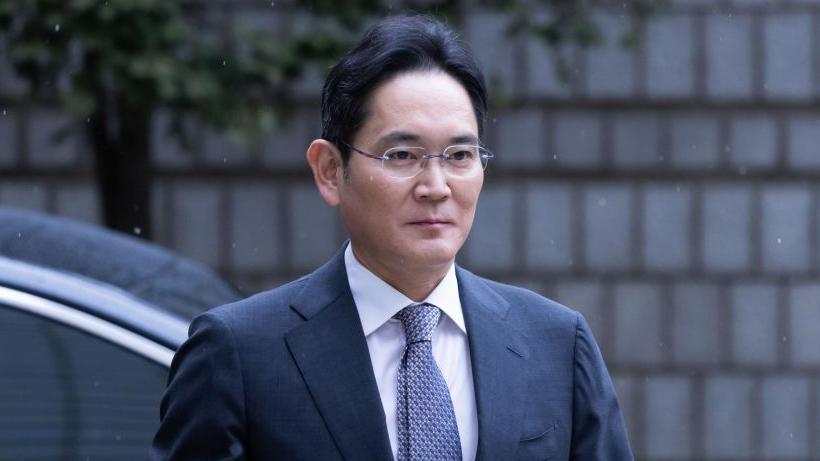

When power shifts occur within the world’s largest corporations, the public often remains blissfully unaware. However, that is rarely the case for South Korean tech titan Samsung. While the company’s products function flawlessly and services run smoothly, the boardroom dynamics of this conglomerate consistently command global headlines.
The Samsung founding family dynasty is deeply intricate, and their role is so vital to South Korea’s economy that any change at the top becomes front-page news. This was especially evident in 2017, when the heir apparent, Lee Jae-yong—commonly known as JY Lee—was imprisoned for his role in a corruption scandal that also led to the impeachment of the country’s president.
At 57, Lee is the grandson of Samsung’s founder. Geoffrey Cain, author of Samsung Rising, describes him as “one of the most powerful people in the history of technology.” Yet, in 2015, when his father—Samsung Chairman Lee Kun-hee—was hospitalized following a heart attack, the younger Lee’s grip on power was far from secure.

Lee faced accusations of donating funds to a foundation managed by Choi Soon-sil, a close confidante of former President Park Geun-hye. Prosecutors alleged these payments were made in exchange for political support for a merger intended to tighten his control over the conglomerate. He was further accused of utilizing fraudulent accounting and stock manipulation during the merger between Samsung C&T and Cheil Industries.
Investigators argued these maneuvers were designed to secure the largest share of the newly merged entity, allowing Lee to take control of Samsung Electronics—the crown jewel of the empire and the primary source of its wealth and influence. While Lee Jae-yong consistently denied the fraud charges, he was found guilty of bribery in 2017.
The ensuing scandal in 2016 triggered weeks of mass protests across Seoul, ultimately culminating in the impeachment of the South Korean president.
Why was this deal so vital?
Since its inception as a grocery store in the late 1930s, Samsung has remained firmly in the hands of the Lee family. According to Geoffrey Cain, the family holds status “equivalent to royalty” in South Korea. They evolved the business into a global juggernaut encompassing insurance, memory chips, construction, and consumer electronics. To keep the empire within the family, the conglomerate relied on a complex web of mergers, acquisitions, and transfers of power—the very maneuvers that led to Lee Jae-yong’s imprisonment.
Lee had held de facto control of Samsung since 2014, following his father’s heart attack. To prepare for his succession, he had navigated a series of top-tier positions. However, as the acting leader, he faced a precarious situation: the process of cementing family control was not yet complete.

The business empire had grown immensely complex, consisting of dozens of interconnected companies linked by a tangled web of cross-ownership. A further burden was the staggering inheritance tax, exceeding US$10 billion (£7.4 billion). Should the family have sold off shares to cover this cost, they risked losing their control entirely.
Succession Risks
As the only son, Lee Jae-yong was selected to lead Samsung after his father’s passing. Despite three decades of preparation, some observers doubted his ability to manage South Korea’s largest company and the nation’s economic beacon. Jaeyeon Lee, a reporter for the South Korean newspaper Hankyoreh, notes, “He is completely different… While his father was seen as very aggressive and goal-oriented, [Lee Jae-yong] is viewed as more shy, quiet, and cautious.”
Critics often argued that his sisters were more capable, and Lee faced scrutiny over his perceived lack of ruthlessness. Doubts were also raised regarding his business acumen following the collapse of his pet project, e-Samsung, during the dotcom bust.
The family had previously struggled with messy successions. A generation earlier, Lee Kun-hee—the youngest son—was chosen to lead, bypassing his two older brothers. This led to a fierce dispute between Lee Kun-hee and his eldest brother, Lee Maeng-hee. While Lee Maeng-hee claimed he was capable of running the company, the 1976 decision to appoint the younger Lee created long-lasting repercussions.
An Empty Chair
Following an uncertain start, Lee Kun-hee oversaw a golden age for Samsung during the 1980s and 1990s. Yet, fresh challenges emerged. In 2008, both Lee Jae-yong and his father resigned after a former Samsung lawyer turned whistleblower revealed details of a slush fund used for bribery and political payouts. As Jaeyeon Lee explains, “The lawyer said he could no longer tolerate the corruption. According to him, Samsung was so rotten that his work became unbearable.”

This created a leadership vacuum at the peak of the company, raising existential questions for both Samsung and the South Korean economy. Although the elder Lee was later cleared of bribery charges, he was convicted of tax evasion and received a suspended sentence and a fine. The question remained: how would the Lee family regain its firm grasp on power?
A 40-Year Feud
Lee Kun-hee eventually received a presidential pardon and returned as chairman, but the family strife persisted. In 2012, his eldest brother launched a legal bid to reclaim what he considered his rightful inheritance. The legal battle threatened to dismantle the family’s empire, as the elder brother sought shares worth hundreds of millions of dollars. Had the lawsuit succeeded, it would have shattered the structure that allowed Lee Jae-yong’s succession to proceed.
Stabilizing the Path
Ultimately, the court ruled that while some of the uncle’s claims had merit, the statute of limitations had expired. Reporter Jaeyeon Lee suggests that this conflict likely influenced the elder Lee’s decision to clarify his own succession path for his children. Thus, when Lee Jae-yong’s father suffered his heart attack, the line of succession was distinct, even as the younger Lee prepared to face a decade of legal turmoil.
Exoneration and Change
In July 2025, Lee Jae-yong was finally cleared when the Seoul High Court upheld a not-guilty verdict regarding the merger fraud allegations. The ruling brought an end to a decade of criminal indictments and imprisonment. It also marked a significant departure from the traditional chaebol, or family-owned, business model.
During the legal proceedings, Lee Jae-yong signaled a historic change for the Samsung dynasty: “I want to make a promise now—there will be no more controversy regarding succession. I will not hand over management rights to my children.” This revelation leaves the world wondering: if the eldest son will no longer automatically inherit the keys to the Samsung kingdom, who will take the helm?
- Related: Does a ban on mobile phones in Dutch schools have a positive impact on students?
Summary
Samsung, sebuah raksasa global yang berasal dari toko kelontong, secara historis dikendalikan oleh keluarga Lee, yang dinamikanya sering menjadi berita utama di Korea Selatan. Pewaris utama, Lee Jae-yong, menghadapi satu dekade kekacauan hukum, termasuk pemenjaraan pada tahun 2017 karena penyuapan terkait merger yang dirancang untuk mengkonsolidasikan kendalinya atas konglomerat dan permata mahkotanya, Samsung Electronics. Manuver ini, yang melibatkan dugaan akuntansi palsu, sangat penting untuk mempertahankan cengkeraman keluarga atas kerajaan yang luas di tengah struktur kepemilikan yang kompleks dan tantangan pajak warisan yang signifikan.
Setelah bertahun-tahun melalui perjuangan hukum, Lee Jae-yong akhirnya dibebaskan dari tuduhan penipuan merger pada Juli 2025, menandai berakhirnya dakwaan kriminalnya. Yang terpenting, ia kemudian menyatakan perubahan bersejarah untuk chaebol dengan berjanji untuk tidak menyerahkan hak manajemen kepada anak-anaknya, menantang model bisnis tradisional yang dimiliki keluarga. Keputusan ini menimbulkan ketidakpastian tentang kepemimpinan Samsung di masa depan, beralih dari suksesi turun-temurun otomatis.
