
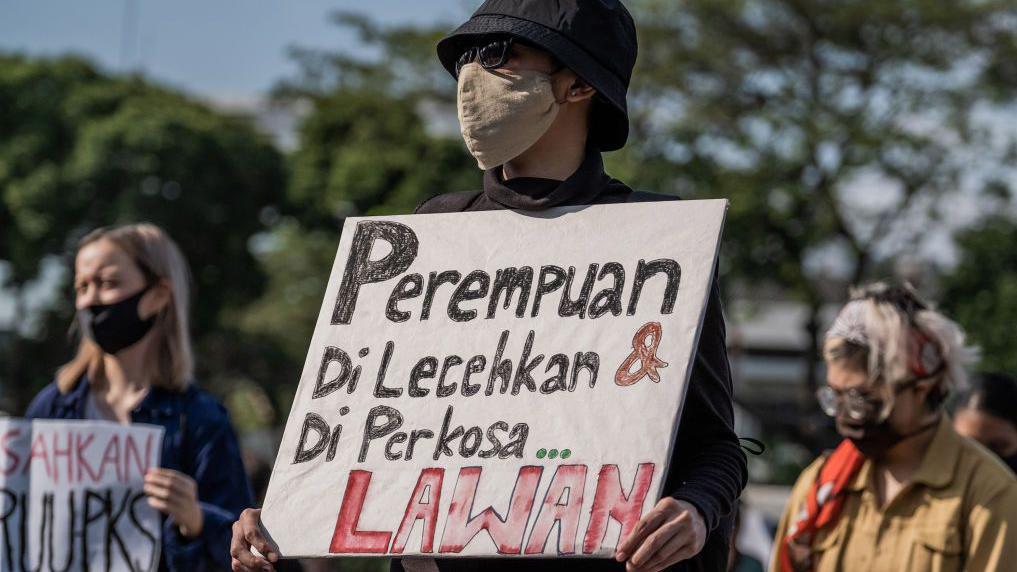
Allegations of sexual harassment within digital chat groups involving students from the University of Indonesia (UI) and Bogor Agricultural Institute (IPB) demand stringent legal action, either through the Sexual Violence Crimes Law (UU TPKS) or the Electronic Information and Transactions Law (UU ITE). This assertion comes from prominent figures including Uli Pangaribuan, Director of LBH Apik Jakarta; Ahmad Sofian, a criminal law expert from Binus University; and the National Commission on Violence Against Women (Komnas Perempuan).
These experts unanimously agree that the actions of the alleged perpetrators fall squarely under the umbrella of online gender-based violence (OGBV), specifically defined as non-physical sexual harassment and sexual violence perpetrated through electronic means. Beyond delivering justice to the victims, criminal prosecution is vital for creating a powerful deterrent effect and dismantling “rape culture.” This destructive social environment normalizes, trivializes, or even justifies sexual violence and harassment. The gravity of the situation is underscored by Komnas Perempuan’s records, which reveal an alarming 376,529 cases of gender-based violence against women throughout 2025. Sexual violence emerged as the most frequently reported form, accounting for a significant 37.51% of these cases.
The controversies at both IPB and UI universities began with separate but equally disturbing incidents. At IPB University, screenshots of a digital student chat group, allegedly containing sexually harassing content, went viral across social media platforms. These conversations reportedly revolved around discussing various women as sexual objects. Muhammad Abdan Rofi, the President of the IPB University Student Executive Board (BEM KM), disclosed that this alleged harassment involved 16 suspected perpetrators and two victims. All parties involved were from the same cohort within the Department of Mechanical and Biomedical Engineering, Faculty of Engineering and Technology (FTT) at IPB University. In response, IPB University swiftly affirmed its commitment to address the sexual harassment allegations, stating, “Every form of violation against campus regulations will be processed according to applicable provisions.”
Days prior, a similar scandal unfolded at the Faculty of Law, University of Indonesia (FH UI), where 16 students were allegedly involved in sexually harassing dozens of female students and even lecturers within the faculty. This case also came to light through viral screenshots of the alleged perpetrators’ digital chat group conversations on social media. The content of these screenshots reportedly contained elements of harassment and the objectification of women. Particularly disturbing was a statement that became a significant point of online discussion: “silence means acceptance,” or “silence means consent.” The reported number of victims in the UI case soared to 27 individuals, comprising 20 students and seven lecturers from FH UI. Timotius Rajaguguk, legal counsel for the sexual violence victims, affirmed their readiness to take the case to court. Even without receiving a formal report, the Jakarta Metropolitan Police (Polda Metro Jaya) has already begun collecting evidence and information pertaining to these serious allegations.
Experts have clearly delineated the nature of the violence perpetrated by the alleged individuals. The National Commission on Violence Against Women (Komnas Perempuan) emphatically states that the alleged sexual harassment at FH UI constitutes online gender-based violence (OGBV). OGBV is defined as violence occurring in the digital realm that targets an individual based on their gender or sexuality. Its manifestations include sexual harassment, non-consensual dissemination of intimate content, doxing, intimidation, and hacking. Devi Rahayu, a member of Komnas Perempuan, highlighted that OGBV is explicitly recognized and prohibited under Law Number 12 of 2022 concerning Sexual Violence Crimes (UU TPKS). This includes both Article 5, which addresses non-physical sexual harassment, and Article 14, which covers sexual violence committed through electronic means. Rahayu firmly asserted that perpetrators cannot hide behind the excuse of “just kidding,” as the digital space is not beyond the reach of the law. “We urge that this case be handled fully according to applicable law, not merely reduced to an ethical violation,” Devi stated in her remarks on Wednesday (April 15). Reinforcing the urgency, Komnas Perempuan’s data shows 376,529 cases of gender-based violence against women in 2025, marking a 14.07% increase from the previous year. Of these, 3,682 cases were directly reported to Komnas Perempuan, with sexual violence again being the most reported form (37.51%). Furthermore, SAFEnet’s report recorded 2,382 complaints of OGBV in Indonesia throughout 2025, representing a significant 25.2% surge compared to 2024, which registered 1,902 cases.
A crucial aspect emphasized by experts is that OGBV can manifest even within seemingly closed digital chat groups. Wida Arioka, Coordinator of Awas KBGO (SAFEnet), highlighted that sexual harassment can occur in both open and closed digital communication spaces. She further elaborated that actions such as “creep shots”—secretly recording individuals in their private spaces—also constitute OGBV, even if the content is not subsequently disseminated. Wida identified sexual harassment as the most fundamental act within the “rape culture” pyramid. Harassment, often disguised as “jokes” and normalized as acceptable behavior, inevitably contributes to the escalation of more severe forms of sexual violence. Echoing this sentiment, Talissa Febra, a member of the Samahita Foundation—an organization dedicated to sexual violence issues—stressed that sexual violence is not confined by physical or digital boundaries; it can occur in both public and private spheres. “In the context of chat groups [WAGs], even if considered private, such actions are still categorized as sexual violence due to their substance: conversation content that demeans, harasses, and objectifies women as sexual objects,” Talissa asserted. She unequivocally stated that privacy does not serve as a shield for committing violence, adding that “privacy does not grant perpetrators immunity from accountability for the violence they perpetrate.”
Legal experts are resolute that the alleged perpetrators must face prosecution under the law for their non-physical acts of violence. Uli Pangaribuan, Director of LBH Apik Jakarta, specifically references Law Number 12 of 2022 concerning Sexual Violence Crimes (UU TPKS) as the primary legal basis. Under this law, the harassment allegedly committed falls under non-physical sexual harassment, as stipulated in Article 5 of the UU TPKS. This article states: “Any person who commits non-physical sexual acts directed at the body, sexual desires, and/or reproductive organs with the intent to degrade a person’s dignity based on their sexuality and/or decency, shall be penalized for non-physical sexual harassment, with imprisonment for a maximum of 9 (nine) months and/or a fine of up to Rp10,000,000.00 (ten million rupiah).” Uli clarified that examples of non-physical acts include sexually suggestive comments, jokes that objectify women, and verbally harassing conversations.
Furthermore, Uli also cited Article 14 of the UU TPKS, which reads: “Any person who unlawfully records and/or takes sexually explicit images or screenshots without the will or consent of the person who is the object of the recording or image or screenshot shall be penalized for committing electronic-based sexual violence, with imprisonment for a maximum of 4 (four) years and/or a fine of up to Rp200,000,000.00 (two hundred million rupiah).” According to Uli, this means that screenshots of the group conversations serve as robust evidence for criminal processing, as outlined in Article 24 of the UU TPKS, supplemented by victim testimonies, expert opinions, and digital forensic results. Uli firmly rejected the argument that the alleged perpetrators could seek refuge behind the claim of a private chat space. “There were dozens of people in that group; it was not private in the sense of just two individuals, for example. This means the information could reach many people. It was a restricted-access group, but certainly not truly private,” she elaborated.
Expanding on the legal avenues, Ahmad Sofian, a criminal law expert from Binus University, stated that the alleged perpetrators could also be charged under the Electronic Information and Transactions Law (UU ITE). Article 27 of the UU ITE stipulates: “Every person who knowingly and unlawfully broadcasts, displays, distributes, transmits, and/or makes accessible Electronic Information and/or Electronic Documents containing indecent content for public knowledge.” Sofian explained that ‘transmission’ in this context means “sending electronic information and/or electronic documents addressed to another party through an Electronic System,” while ‘indecent content’ refers to “acts that display nudity, genitalia, and sexual activities contrary to the values living within society at the place and time the act was committed.” The penalties under Article 45 of the UU ITE include “imprisonment for a maximum of 6 (six) years and/or a fine of up to Rp1,000,000,000.00 (one billion rupiah).” Sofian concluded, “Therefore, chats that attack dignity and honor based on sexuality or indecency can be prosecuted under the UU ITE.”
While legal experts from Parahyangan University, Agustinus Pohan, and Padjadjaran University, Nella Sumika Putri, unequivocally agree that the alleged actions of the perpetrators are morally and legally wrong, they foresee several challenges in the evidentiary process should the cases proceed to criminal court. First, concerns arise regarding the restricted nature of the chat groups where the messages circulated. Since these groups were not open to the public and victims were not direct members—making it a potential ‘victimless crime’ in terms of direct immediate impact—Pohan questioned, “If it wasn’t leaked, how would one prove that it degraded dignity?” Putri, similarly, pondered, “Will these chats be categorized as private or public space? And when does it become a public issue? This needs clarification. If it is then defined as a closed space and can be criminalized, I fear there will be no private space left.” She quickly added, “This is not to justify the act; it is clearly wrong. But from a legal perspective, if conversations in a closed space can be criminalized, the implication is that the state could intrude into every private aspect of an individual’s life.”
Second, the process by which the conversations became public poses another hurdle. Putri noted, “Victims likely became aware when the links were leaked on social media. The question is, who disseminated it, and was the process of dissemination legal or illegal? This raises whether the content itself is prohibited, or its dissemination.” Third, proving mens rea, or malicious intent, presents a significant challenge. Pohan questioned, “Do their conversations already demonstrate malicious intent? Or to what extent does their internal chatter qualify as malicious intent?”
However, criminal law expert Sofian countered these concerns, emphasizing that laws pertaining to sexual violence do not differentiate whether the acts occur in public or private spaces. “Therefore, it doesn’t matter where the incident occurred, whether private or public. What is important is proving whether transmission [of harassing content] occurred and whether indecency was violated,” Sofian asserted. Uli of LBH Apik also urged against fixating on who leaked the conversations, as it risks obscuring the core issue of the alleged harassment. “This has already been revealed; there are perpetrators, there are victims. The focus moving forward must be on how to achieve justice for the victims and accountability for the perpetrators.” Uli further stressed that the malicious intent within the conversations was evident. “From creating the group, inviting like-minded individuals who enjoy harassing others, to consciously engaging in harassment together – the malicious intent to demean women is very clear,” she concluded.
The imperative for legal prosecution in these cases is strongly advocated by experts to prevent the normalization of such sexual violence within society. Uli Pangaribuan of LBH Apik emphasized the dire consequences of inaction: “When sexual harassment is regarded as normal and goes unpunished, it is truly terrifying.” She further elaborated on the far-reaching impact: “Beyond the destruction of victims’ dignity, if one instance is forgiven and then considered ordinary, it will recur. How long will we continue to lack mutual respect, endure discrimination, and face stigmatization?” Furthermore, tolerating such behavior would significantly entrench “rape culture” in society. “A culture that condones all means and assumes that rape itself is not wrong, if harassment like this is considered normal,” Uli explained. “This culture of normalization will also lead to a lack of sympathy for other victims. Therefore, the alleged perpetrators must be legally prosecuted to achieve a deterrent effect and eradicate rape culture.” Beyond legal action, Uli also stressed that these cases should serve as a wake-up call for universities to promptly evaluate and integrate a gender- and sexual violence-based educational curriculum.
In agreement, Sofian from Binus University underscored the necessity of strict criminal law enforcement in these cases. “This is intended to serve as a profound reflection for students and the wider community that such acts constitute sexual violence, urging caution against engaging in them. There is no excuse of ‘jest’ behind such violence,” Sofian stated. Talissa Febra of the Samahita Foundation highlighted that the impact of OGBV is incredibly broad and severe, equivalent to physical violence. “At a social level, OGBV obliterates safe spaces for women, both online and offline. If it continues to be normalized without firm sanctions, the culture of sexism and misogyny will become even more deeply rooted. The absence of consequences makes perpetrators feel immune behind anonymity, ultimately perpetuating rape culture,” she warned. For victims, the consequences are devastating, ranging from psychological trauma and social isolation to financial losses, Talissa added. This agonizing situation is further compounded by the permanent nature of digital footprints. She explained that harassing content, once online, is incredibly difficult to erase completely, leaving victims perpetually haunted by past trauma, hindering their healing process, and keeping them vulnerable to repeated attacks or social stigma in the future. This creates a lasting sense of insecurity, as the threat seemingly ‘lasts forever’ in cyberspace. “To prevent OGBV cases from continuously recurring, legal enforcement alone is insufficient. We need preventive actions that address the root causes: society’s perspective on gender and sexual relations. Without this education, violence will always emerge in new forms because the perpetrators’ mindsets remain unchanged,” Talissa concluded.
Summary
Allegations of sexual harassment within digital chat groups involving students from the University of Indonesia (UI) and Bogor Agricultural Institute (IPB) demand stringent legal action. Experts from LBH Apik Jakarta, Binus University, and Komnas Perempuan agree these acts constitute online gender-based violence (OGBV) and fall under the Sexual Violence Crimes Law (UU TPKS) and potentially the Electronic Information and Transactions Law (UU ITE). The UI case reportedly involved 16 perpetrators and 27 victims (students and lecturers), while the IPB incident involved 16 alleged perpetrators and two victims.
Criminal prosecution is deemed vital to create a deterrent effect and dismantle “rape culture” that normalizes sexual violence. While some legal experts anticipate evidentiary challenges regarding the private nature of chat groups, others assert that sexual violence laws apply irrespective of public or private spaces, and malicious intent is evident. Ultimately, experts emphasize that prosecuting these cases is crucial to prevent the normalization of harassment, protect victims’ dignity, and foster societal education on gender and sexual relations.
