
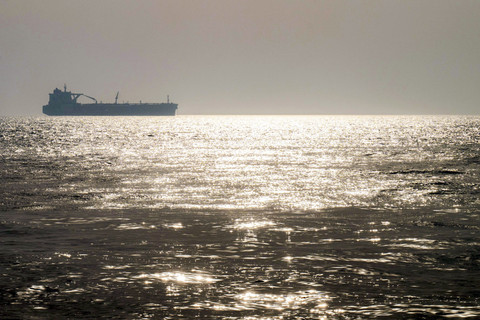
In a much-anticipated development, two Indian Liquefied Petroleum Gas (LPG) tankers have successfully navigated the perilous Strait of Hormuz and are now en route to India. Their passage offers a crucial moment of respite amidst a severe domestic gas supply crisis, exacerbated by geopolitical tensions in the Persian Gulf region that have significantly disrupted vital distribution channels.
Confirming the breakthrough, India’s Ministry of External Affairs Spokesperson, Randhir Jaiswal, stated on Saturday, as reported by Bloomberg, that these state-owned vessels had secured guaranteed safe passage through the highly strategic waterway. This diplomatic achievement underscores the critical importance of the Strait of Hormuz for global energy flows.
However, the situation remains fraught with lingering concerns. Jaiswal further noted on Sunday, March 15th, that a staggering twenty-two other Indian-flagged vessels are still caught within the Persian Gulf. Among these detained ships are six LPG carriers, one Liquefied Natural Gas (LNG) carrier, and four vital crude oil tankers, highlighting the broader impact on India’s energy supply chain.
India is currently grappling with a significant scarcity of LPG, a commodity indispensable for millions of households for cooking, as well as a critical component for industrial processes and as a raw material for plastics in petrochemical units. As the world’s second-largest LPG importer, India’s vulnerability is pronounced, with a staggering ninety percent of its supply originating from the Middle East.
Beyond LPG, a substantial portion of India’s crude oil requirements is also met through imports transiting the Persian Gulf. Consequently, the Indian government has been engaged in intensive diplomatic discussions with Iran to secure and safeguard these vital tanker routes, underscoring its relentless pursuit of national energy security.
According to Bloomberg reports, the two tankers were finally permitted to traverse the strait, which had been almost entirely closed for the preceding two weeks. Sources familiar with the intricate negotiations reveal that this clearance was granted following a special, highly sensitive agreement forged between the governments of New Delhi and Tehran. The specific details of this crucial accord, however, remain undisclosed to the public.
The tankers in question, the Shivalik and the Nanda Devi, are integral assets of the Shipping Corporation of India, chartered by the state-owned Indian Oil Corporation. Both vessels loaded their valuable cargo of gas from Ras Laffan in Qatar. The Shivalik is anticipated to reach Mundra port on March 16, 2026, with the Nanda Devi expected to arrive just one day later. To ensure their unhindered and safe passage, these ships are actively transmitting signals via automatic tracking systems, clearly identifying themselves as official Indian government vessels.