
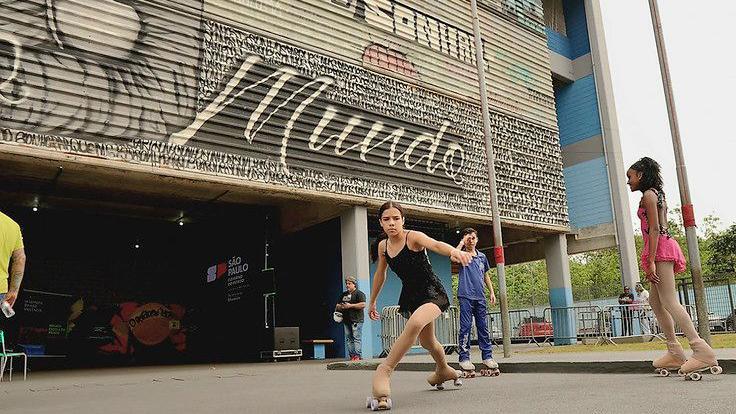

In 2025, a remarkable institution known as Parque dos Sonhos Public School achieved global recognition, receiving the prestigious ‘World’s Best School’ award in the ‘Overcoming Adversity’ category, presented by UK-based T4 Education. This accolade marks the culmination of a dramatic positive transformation, nearly a decade after a pivotal call in 2016 from the local education board changed the life and perspective of history teacher Régis Marques.
Marques initially harbored significant doubts about accepting the position as Headmaster at Parque dos Sonhos. His online research into the school, located in Cubatão on the coast of São Paulo State, Brazil, painted a stark and troubling picture. “The first stories I found mentioned an unsafe environment prone to violence,” Marques recalled. “Other reports detailed thefts and robberies within the school.”
The situation was even more alarming: “Another report spoke of drug dealers entering the school and causing chaos during a festival.” Such a deplorable reputation earned Parque dos Sonhos the grim moniker ‘Parque dos Pesadelos,’ or Nightmare Park.
“I thought, ‘My God, am I really going to go to that school?'” Marques remembered his initial trepidation.
Parque dos Sonhos was established in 2014 to serve children from a community formed in 2013, comprising families relocated from landslide-prone areas in the Serra do Mar mountains, located in southeastern Brazil.

The area where this community settled lacked essential infrastructure, characterized primarily by forests, rivers, and a scattering of homes. Consequently, outsiders found it easy to trespass onto school grounds, contributing to an atmosphere of insecurity and disorder.

Marques vividly recounted the pervasive issues. “We often found cocaine bottles, used condoms, discarded clothes, bedsheets, alcohol bottles, and similar items,” he shared. The severity of the situation became terrifyingly real on his second day as headmaster: “My office was attacked with stones.”
The school’s dire reputation directly impacted enrollment. In early 2016, a mere 116 students were registered, significantly below the school’s capacity. “Half of the students had requested transfers because they didn’t want to study here due to the violence, attacks, and consequences of theft,” Marques explained.
Despite the overwhelming challenges, Marques set an audacious goal: to transform one of the region’s most vulnerable schools into the best in the state within five years.
A Transformative Force
To many, Marques’s target seemed utterly unrealistic. Maria de Lourdes Amorim, a Portuguese teacher with 32 years of experience, vividly recalled the disbelief. “Imagine, a young man from São Paulo speaking to a group of teachers older than him, with far more experience in education,” Amorim recounted. “We looked at him and said, ‘Are you crazy?'”
Undeterred, Marques pressed on.

The initial step involved physical improvements to the building itself: repairing walls, floors, and furniture. Facing limited funds, the school embarked on a determined fundraising effort, sending out 135 letters to private companies. This relentless pursuit ultimately secured approximately US$18,800 (equivalent to Rp316.5 million), providing much-needed resources for the renovations.
Simultaneously, the school focused on strengthening its ties with the community. Various initiatives were launched, including preparatory courses for university entrance exams and public sector career development programs, all run by school staff. Furthermore, the school opened its doors to local residents on weekends, transforming it into a vibrant community hub.
Ana Gabriela Lima, a local resident whose eldest child was among the first group of students, witnessed the school’s early struggles firsthand and joined the initial volunteer team. “The school needed support. So, I asked other mothers to help. We cleaned the school, worked in the kitchen, and assisted with whatever the teachers needed,” she stated. Today, Lima is a dedicated staff member at the school, providing crucial support to students with disabilities.

Beyond infrastructural and community engagement, Parque dos Sonhos also significantly expanded its curriculum, moving far beyond traditional subjects. Now, the school that once grappled with such a poor reputation proudly offers 23 diverse subjects, ranging from cooking to various sports, including activities rarely found in public schools like badminton and ice skating.
“At the same time, we began listening to our students and adopting a more humanist approach that truly focused on them,” Marques explained, highlighting a shift towards student-centric education.

For the students themselves, these profound changes have reshaped their interaction with the school environment and their demanding schedules. “Initially, I thought this was just a regular classroom and didn’t like it much,” admitted Ester, a 12-year-old student who has been at Parque dos Sonhos for seven years. “But the school started offering new subjects, and now it’s really cool because we’re not just confined to the classroom.” Ester, for instance, discovered her passion for theater through classes held after regular school hours.
Inspired by the Cuban Model
Drawing inspiration from the Cuban education model, Marques initiated a unique program called “School Comes to Your Home.” This initiative involved school staff visiting students’ families in their homes, specifically targeting those with frequent absences or particular behavioral challenges. Weekend meetings were scheduled with parents or guardians, providing a crucial opportunity to understand the students’ realities beyond the school walls, as many faced difficult conditions even before entering the classroom.
“This was a way to put ourselves in the students’ shoes, to see the challenges they face and what their home life is like,” Marques elaborated. “There are many problems that are often invisible to teachers.”
The school’s corridors themselves tell a powerful story. Each classroom door at Parque dos Sonhos is adorned with graffiti portraits of historical figures linked to global human rights struggles. These influential figures include Mahatma Gandhi, Nelson Mandela, Malala Yousafzai, Pepe Mujica, and prominent Brazilian personalities like Marielle Franco and Paulo Freire.

These illustrations, however, sparked controversy. Some groups, such as the Escola Sem Partido (School Without Party) movement, criticized them for creating political polarization and called for an end to “ideological indoctrination” in schools. Unfazed by the criticism, Marques emphasized the school’s unwavering focus on unity and non-violence. “Non-violence is not about fighting back. Non-violence is about questioning the systems that oppress you,” he asserted, defending the school’s ethos.
‘Best in the World’

When news broke in September that Parque dos Sonhos was a finalist, and subsequently the winner, of the 2025 World’s Best School award, the reaction from students gathered in the school hall was jubilant. “The situation was very emotional. People were crying. I also felt emotional when I found out we took the top spot. I felt like crying,” Ester recounted, reflecting the collective joy.
The transformation that propelled this school to international acclaim is also clearly reflected in its academic results. Over the past decade, the school’s scores on educational indices, which measure school quality, have nearly doubled in learning outcomes.
For many teachers at Parque dos Sonhos, success is equally measured by the countless lives changed and futures redirected. “Our school has grown. For us, what matters is how our students are today, and what their future holds,” shared educator Maria de Lourdes.
Marques candidly acknowledged that the school remains imperfect and still has areas for improvement. However, witnessing the incredible distance the school has traveled, he expressed immense optimism for the future, with plans to collaborate with neighboring schools. “Imagine a school that was almost closed in 2016 because there were no students, and now it will begin 2026 with 1,200 students. That is incredibly encouraging,” he concluded, looking forward to continued growth and positive impact.
- Portuguese makes its way into schools – ‘Fewer than five teachers in Indonesia’
- Many Indonesian students can’t do math, Prabowo to introduce math from kindergarten – ‘I asked how much is 6+8, they answered 12’
- Why are children in Singapore good at mathematics?
- MBG poisoning victims throughout January 2026 reached almost 2,000 students, why does it keep happening?
- People’s School to start July 14 – ‘School for building civilization, but done hastily and with minimal study’
- West Java Governor Dedi Mulyadi sent ‘naughty’ students to military barracks – What were the consequences?
- The story of a former beggar with polio who is now a doctor
- The story of a mother and daughter who both passed medical college entrance exams in India
- The story of a young couple establishing an alternative school in remote Papua
- The story of a volunteer teacher in Asmat, Papua: ‘Will I eat today, Teacher?’
- The story of a young couple establishing an alternative school in remote Papua
- The story of a former beggar with polio who is now a doctor
Summary
Sekolah Umum Parque dos Sonhos di Cubatão, Brasil, berhasil meraih penghargaan ‘Sekolah Terbaik Dunia’ pada tahun 2025 dalam kategori ‘Mengatasi Kesulitan’, menandai transformasi dramatis. Pada tahun 2016, sekolah ini dikenal sebagai ‘Parque dos Pesadelos’ (Taman Mimpi Buruk) karena lingkungan yang tidak aman, kekerasan, pencurian, dan transaksi narkoba, dengan hanya 116 siswa. Kepala Sekolah Régis Marques mengambil alih kepemimpinan saat itu, bertekad mengubah sekolah yang rentan ini menjadi yang terbaik di negaranya dalam lima tahun.
Transformasi dimulai dengan perbaikan fisik gedung, penggalangan dana, dan penguatan hubungan dengan komunitas melalui program pendidikan serta membuka fasilitas sekolah di akhir pekan. Kurikulum diperluas hingga 23 mata pelajaran beragam, ditambah pendekatan humanis dan program kunjungan ke rumah siswa untuk memahami tantangan mereka. Berkat upaya ini, skor indeks pendidikan sekolah meningkat hampir dua kali lipat dalam satu dekade, dan jumlah siswa diproyeksikan mencapai 1.200 pada tahun 2026, mencerminkan dampak positif yang luar biasa.