
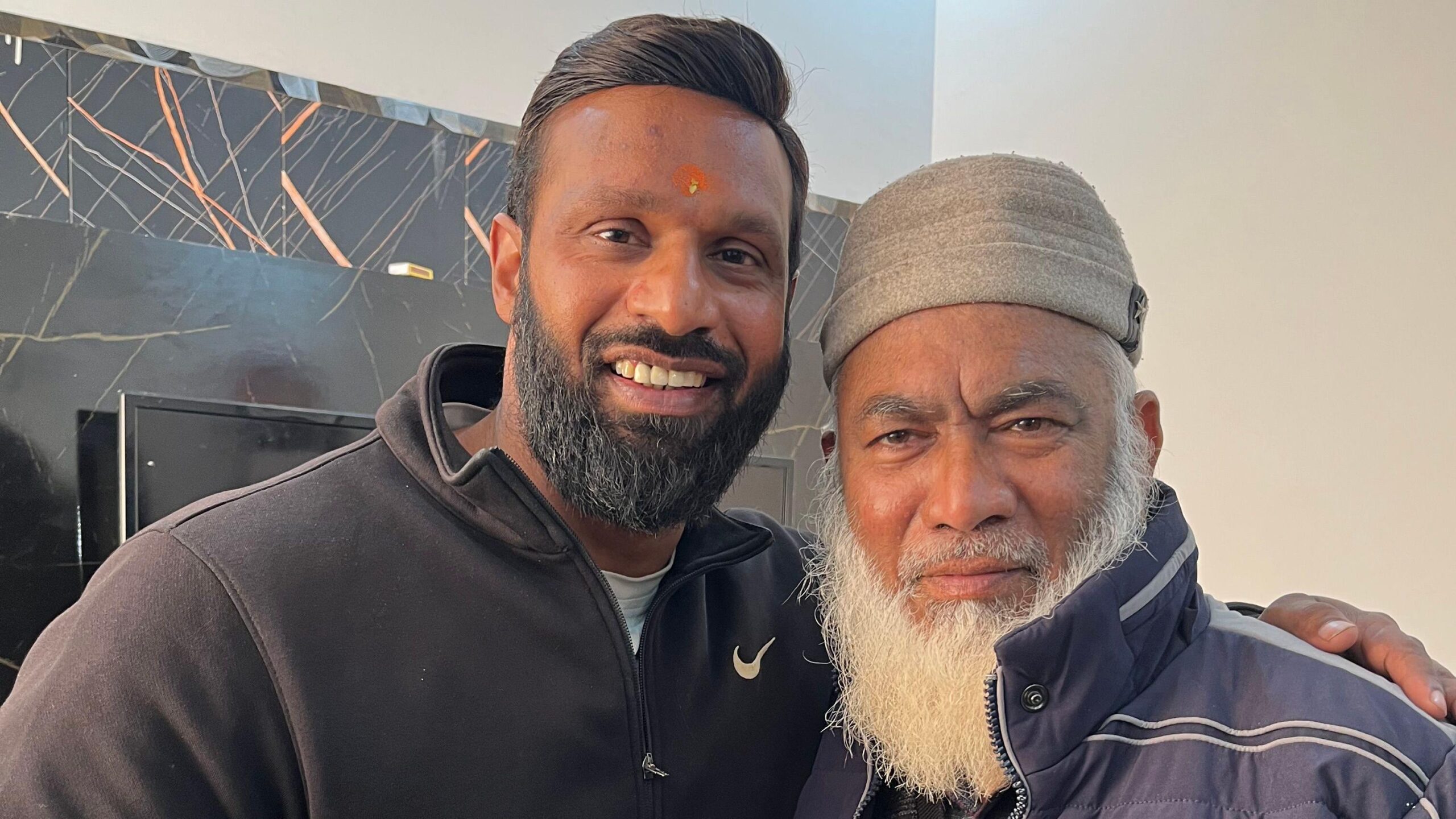

“My name is Mohammad Deepak.”
With these four simple words, Deepak Kumar shot to fame, becoming an unexpected hero across India. This Hindu man has been hailed as an “icon of secular India” and an “exemplary figure of Indian pluralism” for his courageous defense of a Muslim shopkeeper. Yet, his actions have simultaneously drawn fierce protests, leading him to be branded a “traitor to Hinduism” and subjected to chilling death threats.
The incident that thrust him into the national spotlight unfolded on 26 January 2026, in the small town of Kotdwar, located in the northern Indian state of Uttarakhand. The event quickly made headlines after a video capturing the confrontation went viral, spreading rapidly across social media platforms.
The video shows Deepak engaging in a heated debate with activists from Bajrang Dal, a hardline Hindu group frequently in the news for its harassment of Muslims. The 42-year-old explained that he was at a friend’s shop and felt compelled to intervene when he witnessed approximately six young men taunting an elderly individual named Vakeel Ahmed.
Ahmed, the owner of the Baba School Dress and Matching Centre, a shop that had stood for 30 years, was being coerced by the activists to remove the word “Baba” from his establishment’s name. “Baba” is a widely used term in India, referring to religious figures and also affectionately used by both Hindus and Muslims for fathers or grandfathers. However, the Bajrang Dal activists adamantly insisted that “Baba” in Kotdwar was synonymous with Siddhabali Baba, a local temple dedicated to the Hindu deity Hanuman, arguing that a Muslim had no right to use it in their shop’s name.
Ahmed’s son was heard pleading with the men for more time to comply, but they remained inflexible, demanding immediate removal. It was at this crucial juncture that Deepak approached the scene. “I was drawn by the sight of so many people gathered in front of the shop,” he later recounted to BBC Hindi. In the viral video, he can be heard challenging the aggressors with a poignant question: “Aren’t Muslims also citizens of India?”

Deepak asserts that his involvement was entirely spontaneous, driven by no ulterior motive. “I didn’t like these young men speaking so rudely to an elderly person. They were targeting him because of his religion. They were targeting Muslims,” he explained, underscoring his principled stand against religious discrimination.
Sixty-eight-year-old Vakeel Ahmed expressed profound relief, stating that it was difficult to imagine what might have happened had Deepak not been there. “We were scared. They could have done anything to impose their will,” Ahmed confessed, highlighting the vulnerability he felt in the face of the aggressive group.
Following Deepak’s defiant opposition, the Bajrang Dal activists demanded to know his name. “By introducing myself as Mohammad Deepak, I wanted to tell them that I am an Indian. That this is India, and everyone has the right to live here, irrespective of their religion,” he powerfully articulated. Stunned by this unusual blend of a Hindu and Muslim name, the activists were taken aback and ultimately chose to disperse from the scene.
However, the matter did not end there. A few days later, more than 150 Bajrang Dal supporters staged a protest outside the gym managed by Deepak. In the wake of these events, police acted on a complaint filed by Ahmed against “several unknown individuals.” Concurrently, they also registered a report against Deepak himself, following a complaint lodged by two Hindu activists, illustrating the complex legal repercussions of his intervention.
The incident has since dominated Indian media, with Deepak’s courageous stand against the protesters earning widespread praise as a rare act of heroism. Rahul Gandhi, a Member of Parliament from the Congress Party, lauded him as a “hero of India” who “fights for the constitution and humanity.” On X (formerly Twitter), Gandhi wrote that Deepak was “spreading love in a market of hate,” adding that “we need more Deepaks—those who do not bow down, are not afraid, and who stand firm with the constitution.”
An article in the Indian Express echoed this sentiment, stating that the viral video offered “a lot of hope.” The report emphasized, “Deepak’s words come as a shot of spirit in a society that often appears to have been overtaken by hatred and intolerance. His words remind us that this is ‘the real India,’ where everyone has the right to live and breathe as they please, and name their shops as they please.” Countless others also took to social media, expressing solidarity with Deepak and commending him for standing up to the bullies. His phone has been ringing incessantly, and he has become a sought-after figure by journalists, photographers, and ordinary citizens alike.
His Instagram followers have surged, and a short video he shared on 29 January garnered over five million likes. In the video, he passionately declares: “I am not a Hindu, I am not a Muslim, I am not a Sikh, I am not a Christian. First and foremost, I am a human being.” Deepak is now striving to adapt to his newfound fame, stating he never imagined his involvement in the incident would escalate to such a magnitude. “I just did what I thought was right. I never thought this issue would become so big. But now it is national news,” he reflected, highlighting his humble intentions behind a now widely recognized act.

However, his act of bravery has not been without severe consequences. Deepak has faced intense condemnation from critics who label him a “traitor to his faith,” leaving abusive messages across social media. He has also received numerous death threats; on Wednesday, he posted a recording of one such menacing phone call on X. “Bajrang Dal shouldn’t let you get away… I will teach you a lesson very soon,” the caller chillingly warned him.
Deepak revealed that the relentless attention has left his family “traumatized.” “They are scared. And I am now under immense mental pressure,” he confided. His once bustling fitness center now stands largely deserted, posing significant financial challenges. “Previously, more than 150 people came to train here every day. That number has now shrunk to 15. Many people are not coming out of fear,” Deepak lamented, illustrating the direct impact on his livelihood.
Last weekend, opposition Member of Parliament John Brittas visited Deepak, hailing him as “a beacon of hope in the struggle against Hindutva communalism.” Brittas also confirmed that he had become a member of Deepak’s gym, “which is now deserted due to threats from communal elements.” As news of Deepak’s financial hardship spread, people from across India have come forward, offering to purchase gym memberships, embodying the sentiment articulated by journalist Joy Das: “We cannot let good people lose.”
Despite the threats and anxieties, Deepak remains resolute, affirming that if he were to face a similar situation in the future, he would unequivocally stand against injustice. “If we remain silent today, tomorrow our children will also learn to be silent,” Deepak declared, emphasizing his unwavering commitment to his principles and setting an example for future generations.
- What is it like to be a Muslim in Narendra Modi’s India?
- Why are India’s Muslims opposing changes to Waqf laws?
- Muslim family homes and shops in Madhya Pradesh demolished ‘without legal basis’
- The history of Ayodhya’s Ram Temple, built after Hindus demolished a 500-year-old mosque
- India’s Muslim-majority village bulldozed to the ground
- What is it like to be a Muslim in Narendra Modi’s India?
Summary
Deepak Kumar, a Hindu man, gained national attention after