
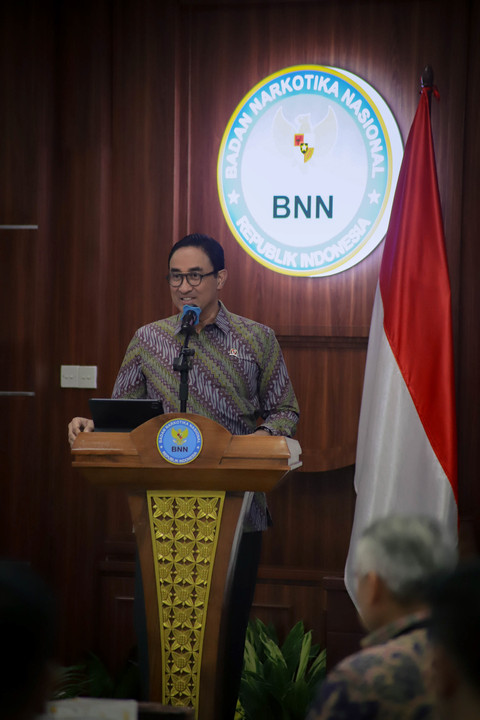

The head of Indonesia’s National Narcotics Agency (BNN), Commissioner General of Police Suyudi Aril Seto, is strongly advocating for the implementation of strict regulations concerning the circulation of electronic cigarettes, commonly known as vapes, and Dinitrogen Monoxide (N2O) within the country. Suyudi highlighted that such robust regulatory frameworks have already been successfully adopted by numerous other nations, setting a precedent for Indonesia to follow.
During a recent Focus Group Discussion hosted by BNN RI titled ‘Regulation of Electronic Cigarettes (Vapes) and Restriction of Dinitrogen Oxide (N2O) Use’ on Wednesday, Suyudi emphasized the inadequacy of relying solely on law enforcement to combat these issues. “A purely law enforcement approach is simply not enough. We desperately need radical and decisive policy breakthroughs,” Suyudi asserted in his address. “It is imperative that we learn from other countries that have already taken a firm stance.” This urgent call for action comes in the wake of concerning discoveries, including the infiltration of narcotics into vape products and widespread abuse of N2O.
Suyudi specifically referenced Singapore’s proactive measures, noting the island nation’s comprehensive ban on electronic cigarettes since 2018. Singapore has gone a step further by classifying e-cigarettes as a direct “drug enforcement issue,” underscoring the severity with which the product is viewed. “Even our neighboring country, Singapore, has enforced a total ban on electronic cigarettes since 2018, categorizing it as a drug enforcement issue,” Suyudi explained, highlighting a strong regional precedent.

Further illustrating his point, Suyudi also cited Thailand and the Maldives, which have both imposed outright prohibitions on the sale and importation of vapes. “Other nations like Thailand and the Maldives have likewise established bans on the import and sale of vapes,” Suyudi stated, showcasing a growing trend in the region. He also drew attention to Malaysia, where despite the current circulation of vapes, a concerted effort is underway to develop and implement a comprehensive nationwide ban. “Currently, they are moving forward with the process of drafting new, certainly stricter, regulations. This includes a total ban on the sale, importation, and production of electronic cigarettes,” Suyudi revealed, indicating a broad movement towards stricter controls.
Given the widespread global and regional trend of banning vapes, Suyudi strongly recommended that Indonesia adopt similar, decisive measures. His message was clear and direct:
“Indonesia must not become a dumping ground for products that are banned in other countries.”
Suyudi underscored that these more stringent regulatory efforts are essential for safeguarding public health. He concluded by explaining that this policy shift signifies a critical pivot from a permissive approach to a restrictive one, fundamentally aimed at protecting the well-being of citizens. “This step demonstrates that awareness of the dangers of vapes has prompted a change in policy direction from what was initially permissive to restrictive, all for the sake of protecting its citizens’ health,” Suyudi affirmed.

Summary
The Head of the National Narcotics Agency (BNN),