
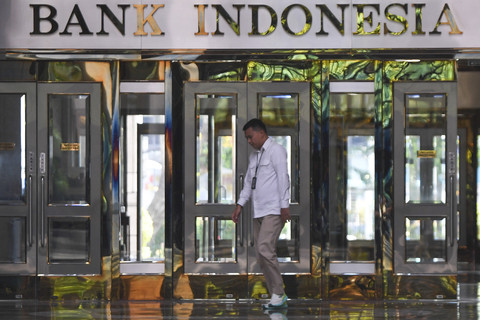
The Indonesian rupiah experienced a notable weakening today, prompting an official response from Bank Indonesia (BI). According to Bloomberg data, the rupiah currency closed 70 points lower, or 0.41 percent, reaching Rp 17,105 per US dollar in Tuesday’s trading (April 7). This depreciation underscores the ongoing vigilance required in the nation’s financial landscape.
Addressing the situation, BI Senior Deputy Governor Destry Damayanti affirmed that monetary stability remains Bank Indonesia’s paramount priority amidst prevailing global uncertainty. She emphasized the central bank’s commitment to strategically deploy its full suite of monetary operation instruments to safeguard the rupiah’s exchange rate. “BI will optimize the utilization of all available monetary operation instruments and policies to maintain exchange rate stability,” Destry stated in an official release on Tuesday (April 7).
Destry further assured that Bank Indonesia will maintain a consistent and measured presence within the money market. This proactive approach includes interventions across the spot market, Domestic Non-Deliverable Forward (DNDF), and Non-Deliverable Forward (NDF) in the offshore market, demonstrating a resolute commitment to upholding currency stability.
Moreover, Destry highlighted the nuanced, two-way impact of the Middle East conflict on the global and domestic economies. While such conflicts often trigger volatility, she noted that the subsequent rise in commodity prices, coupled with Indonesia’s significant position as an exporting nation, could yield positive effects for the domestic economy. “The increase in commodity prices and Indonesia’s status as an exporter can provide a positive impact on our economy, thereby offsetting the pressure on the exchange rate stemming from this escalation,” she asserted. This balanced perspective suggests potential buffers against external shocks.
Summary
The Indonesian rupiah weakened significantly, closing at Rp 17,105 per US dollar on Tuesday (April 7), marking a 0.41 percent depreciation. Bank Indonesia (BI) Senior Deputy Governor Destry Damayanti responded, stating that monetary stability remains BI’s top priority amidst global uncertainty. BI is committed to optimizing all available monetary operation instruments to safeguard the rupiah’s exchange rate stability.
BI will maintain a consistent presence in the money market, intervening across the spot, Domestic Non-Deliverable Forward (DNDF), and offshore Non-Deliverable Forward (NDF) markets. Destry also highlighted that while the Middle East conflict causes volatility, the subsequent rise in commodity prices could positively impact Indonesia, an exporting nation, thus offsetting exchange rate pressures.