
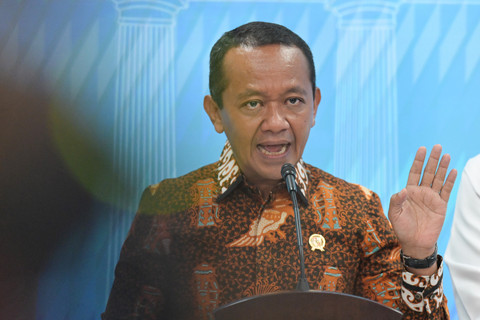

Indonesia’s Minister of Energy and Mineral Resources (ESDM), Bahlil Lahadalia, recently highlighted the nation’s reliance on Middle Eastern crude oil, with 20-25 percent of its supply transiting through the critical Strait of Hormuz.
This vital distribution artery, a potential target for retaliatory measures by Iran amidst escalating tensions with the United States and Israel, is indispensable. Bahlil emphasized the Strait of Hormuz’s immense global importance, noting it facilitates the daily passage of approximately 20.1 million barrels of crude oil worldwide, a volume that includes a significant portion destined for Indonesia.
During a press conference on Tuesday (3/3), Minister Lahadalia elaborated on Indonesia’s crude oil import portfolio. He stated, “Our total imports from the Middle East account for approximately 20-25 percent. The remainder is sourced from other regions, including Africa, specifically Angola, as well as the United States and various other nations like Brazil. Therefore, overall, 20-25 percent of our crude imports originate from the Strait of Hormuz region.”
In light of these evolving geopolitical dynamics, Bahlil affirmed Indonesia’s proactive stance in seeking alternative crude oil supplies. He announced that, for crude oil, all affected shipments would be redirected from the United States.
Based on thorough assessments, the Indonesian government is currently adopting a worst-case scenario approach regarding the situation in the Middle East. This strategic foresight is being pursued despite numerous analyses suggesting that the potential conflict might conclude within a few weeks.
Elaborating on this strategy, Bahlil clarified, “The scenario involves diverting a portion of the crude oil we typically procure from the Middle East to be sourced from America. This ensures greater certainty regarding our crude supply availability.”
Shifting focus, Bahlil also assured the public that Indonesia does not import gasoline (BBM bensin) from the Middle East region via the Strait of Hormuz. Consequently, there are no immediate concerns regarding the procurement of this particular commodity. Furthermore, for diesel (Solar), he confirmed that Indonesia is currently self-sufficient and no longer requires imports.
He emphasized, “Coincidentally, we do not import these types of fuel products from the Middle East. Instead, our imports come from countries outside the Middle East, including those in Southeast Asia. Therefore, this area presents relatively no issues.”
Moving on to Liquefied Petroleum Gas (LPG), Bahlil noted that Indonesia currently relies on Saudi Aramco for approximately 30 percent of its import allocation, with the remaining portion supplied by the United States. Indonesia’s total LPG imports for the current year are projected at 7.8 million tons.

However, a new challenge has emerged: Saudi Aramco, the Saudi Arabian state oil company, recently closed its largest refinery following drone attacks reportedly originating from Iran. Given these ongoing dynamics, Bahlil stated that the LPG import allocation previously designated from Saudi Arabia would be diverted to other nations.
Bahlil further explained, “We are aware that the ongoing tensions in the Middle East have also impacted Saudi Aramco, which experienced disruptions yesterday. Our alternative is to switch suppliers again to mitigate risks, redirecting a portion of our procurement to countries not connected with the Strait of Hormuz.”
Related to the Trade Deal
Bahlil also revealed that Indonesia’s decision to shift crude oil imports from the Middle East to the United States is intrinsically linked to the Agreement on Reciprocal Trade (ART), a significant trade pact between the Indonesian and US governments.
Despite a US Supreme Court decision that annulled former US President Donald Trump’s policy concerning reciprocal import tariffs, Bahlil assured that the planned purchases of energy commodities from the US would proceed as scheduled.
Bahlil emphasized, “The ART document we signed includes a commitment for us to purchase fuels, crude oil, and LPG from America, totaling approximately USD 15 billion. This commitment stands, even though there was a court decision in their country to annul a related policy, because we must uphold our commitments.”
He added, “Furthermore, if the prices are economical and the deal is mutually beneficial – a win-win situation – then why not? We have already engaged in extensive communication regarding this.”
Summary
Indonesia currently relies on the Middle East for 20