
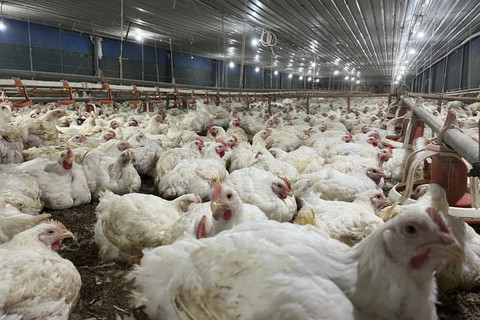
The Kingdom of Saudi Arabia, through its vigilant Saudi Food and Drug Authority (SFDA), has enacted a sweeping ban on the import of poultry and eggs. This critical measure includes a total prohibition from 40 nations and a partial restriction targeting specific provinces and cities within an additional 16 countries. This strategic move underscores Saudi Arabia’s unwavering commitment to public health and the rigorous reinforcement of food safety standards across its domestic market.
Citing reports from the Saudi Gazette, the SFDA emphasized that these proactive steps are part of ongoing preventative measures. The authority also confirmed its dedication to regularly reviewing and updating the list of banned countries and regions, adapting to the ever-evolving global health landscape and emerging disease threats.
According to the latest insights published by the newspaper Okaz, some of these import restrictions have been in place since as early as 2004. Other nations and regions have been progressively added to the list over the years, a process driven by thorough risk assessments and comprehensive international reports on animal diseases. A primary concern in these evaluations has been outbreaks of highly pathogenic avian influenza, commonly known as bird flu, which poses a significant threat to both animal populations and potentially human health.
This meticulous and adaptive approach clearly demonstrates Saudi Arabia’s sustained commitment to closely monitoring dynamic global epidemiological patterns. It reflects a proactive stance in safeguarding its borders from potential disease vectors carried by imported food products, ensuring consumer confidence and well-being.
The extensive list of 40 countries facing a total ban on poultry and egg imports includes Afghanistan, Azerbaijan, Germany, Indonesia, Iran, Bosnia and Herzegovina, Bulgaria, Bangladesh, Taiwan, Djibouti, South Africa, China, Iraq, Ghana, Palestine, Vietnam, Cambodia, Kazakhstan, Cameroon, South Korea, North Korea, Laos, Libya, Myanmar, the United Kingdom, Egypt, Mexico, Mongolia, Nepal, Niger, Nigeria, India, Hong Kong, Japan, Burkina Faso, Sudan, Serbia, Slovenia, Ivory Coast, and Montenegro.
Concurrently, a partial ban has been imposed on certain provinces and cities across 16 other countries. These nations include Australia, the United States (US), Italy, Belgium, Bhutan, Poland, Togo, Denmark, Romania, Zimbabwe, France, the Philippines, Canada, Malaysia, Austria, and the Democratic Republic of Congo, highlighting the SFDA’s targeted approach based on localized risk assessments.
The SFDA has, however, clarified certain exemptions to these temporary restrictions. Poultry meat and related products that have undergone sufficient heat treatment or other processing methods proven to eliminate the Newcastle disease virus may be exempted. Such products must strictly adhere to all applicable health, regulatory, and quality standards established by the Kingdom.
Crucially, any exempted product must be accompanied by an official health certificate issued by the competent authorities in the country of origin. This certificate must explicitly attest that the heat treatment or processing method applied was adequate to eradicate the Newcastle disease virus. Furthermore, this exemption does not override the fundamental requirement that all products must originate from SFDA-approved facilities, reinforcing the multi-layered approach to ensuring imported food safety.
Summary
Saudi Arabia, through its Saudi Food and Drug Authority (SFDA), has enacted a comprehensive ban on poultry and egg imports from 40 nations, including Indonesia. This critical measure also includes partial restrictions on specific provinces and cities within an additional 16 countries. The ban is a proactive step to ensure public health and uphold food safety standards, primarily in response to outbreaks of highly pathogenic avian influenza (bird flu) and other animal diseases.
These import restrictions, some in place since 2004, are regularly reviewed and updated based on thorough risk assessments and international reports on animal diseases. While a total ban applies to 40 countries, certain poultry products may be exempted if they have undergone sufficient heat treatment to eliminate the Newcastle disease virus. Such exempted products must be accompanied by an official health certificate and originate from SFDA-approved facilities.