
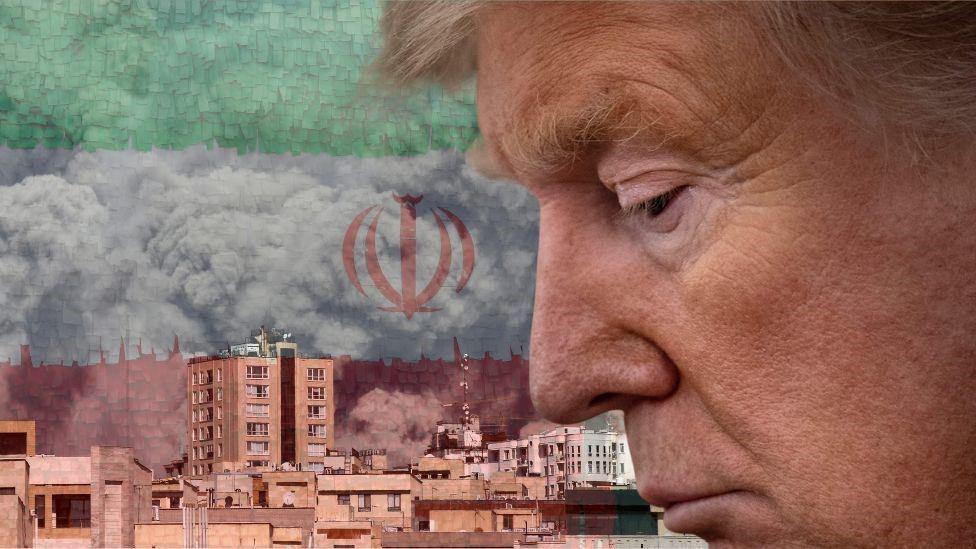

On Tuesday, March 24th, former US President Donald Trump asserted that Iran was “desperate for” negotiations and that Iranian negotiators had presented the US with a “very significant gift.” Trump indicated this “gift” pertained to oil, gas, and the strategic Strait of Hormuz, though he refrained from divulging further details.
However, Iran’s parliament speaker swiftly dismissed the notion of any ongoing talks.
“No negotiations are underway with the US, and fake news is being utilized to manipulate financial and oil markets, as well as to escape the quagmire entrapping the US and Israel,” declared Mohammad Bagher Ghalibaf on social media platform X.
Clearly, messages are indeed being conveyed from the US to Iran, albeit indirectly. These communications are facilitated through various intermediaries, such as Pakistan, which maintains strong diplomatic ties with both governments.
This mode of communication stands in stark contrast to formal “negotiations”—a distinction that likely explains why both Iran’s parliament speaker and its military spokesperson vehemently denied any official talks were underway.
While indirect contact and communication channels certainly exist between the two adversaries, reaching a substantive agreement appears to remain a distant prospect.
For instance, a 15-point plan by former US President Donald Trump to end the conflict recently surfaced. This proposal reportedly included Iran’s commitment to refrain from developing nuclear weapons and to reopen the highly strategic Strait of Hormuz.
However, Iran promptly rejected the plan, according to the state-run Press TV.
Citing an unnamed “senior political-security official,” the media outlet outlined five conditions from Tehran for de-escalating the conflict, including the payment of war reparations for damages incurred.
These conditions bore no resemblance to Trump’s proposal, which was initially publicized by Israeli media outlet Channel 12 and subsequently confirmed by US officials.
What Does Trump’s 15-Point Peace Plan Entail?
The BBC has not yet gained access to the full document of the plan that President Trump claimed was sent to Iran, nor has there been any official confirmation of its precise contents. Nevertheless, several international media outlets have begun to reveal some key details.
According to Israeli news channel Channel 12, the proposed plan reportedly encompasses the following core requirements:
The proposal demands that Iran “commit to never developing nuclear weapons,” pledge to dismantle its nuclear facilities, and surrender its enriched uranium stockpiles to the International Atomic Energy Agency (IAEA)—the UN’s nuclear watchdog.
Furthermore, Iran would be required to agree to restrictions on its missile program, encompassing both its range and quantity.
Additionally, Iran must cease funding proxy groups across the Middle East, including Hezbollah in Lebanon, Hamas in Gaza, and the Houthis in Yemen.
Iran would also be mandated to reopen the Strait of Hormuz, ensuring it functions as a “free maritime corridor.”
The closure of the Strait of Hormuz—a vital passage through which ships carrying one-third of the world’s oil and gas supplies traverse—has already led to surging fuel prices and intensified fears of a global economic recession.
In return, the US would assist in developing a nuclear project in Bushehr to supply civilian electricity needs.
Subsequently, according to the plan, all international sanctions against Iran would be lifted.
Comprehensive sanctions were reimposed last November after Iran suspended inspections of its nuclear facilities, following the bombing of several nuclear sites and military bases by the US and Israel.
What Was the White House’s Response?
On Wednesday, March 25th, White House spokesperson Karoline Leavitt addressed a reporter’s questions regarding the 15-point peace plan that had been leaked to the media.
Leavitt characterized the reports as “speculative,” stating that some of the published information was “not entirely accurate,” though she conceded that the plan did “contain elements of truth.”
However, she firmly asserted that she would not delve into the “minute” details of the ongoing discussions.
The press secretary also declined to answer questions regarding the potential deployment of US troops on Iranian soil. Nevertheless, she indicated that such a measure would not require formal congressional authorization.
When pressed about the proximity of the conflict’s end, Leavitt reiterated the White House’s stance that the US was “ahead of schedule,” deeming it a highly successful operation.
What Was Iran’s Counter-Proposal?
Initially, Iran outright rejected the 15-point peace plan.
However, on Wednesday, March 25th, Iranian Foreign Minister Abbas Araghchi informed state media that “a number of ideas” had been conveyed to several senior government officials.
“Should an official position be required regarding these ideas, such a stance will certainly be determined,” he stated.
Araghchi reiterated that Iran “currently has no intention of negotiating.”
Yet, he confirmed that “the American side has begun transmitting various messages through diverse intermediaries.”

Previously, as reported by Press TV, Iran had put forth five conditions to bring an end to the conflict.
The unnamed Iranian official told Press TV that these conditions were supplementary to demands previously made by Tehran during negotiations in Geneva in February, shortly before the conflict commenced.
The conditions include a complete cessation of “aggression and killings by the enemy.” Several high-ranking Iranian officials have perished since the conflict’s first day, including Supreme Leader Ayatollah Ali Khamenei.
Another Iranian condition involves a “concrete mechanism to ensure the war is not reimposed on the Islamic Republic,” though it remains unclear what guarantees could be offered and which nations would be involved in or oversee their fulfillment.
Economically, Iran also demands war damages and reparations, alongside the right to remain the sole entity controlling the Strait of Hormuz.
Most critically, Tehran seeks Israel to cease its assaults on Iran’s allies in the region. Israel has escalated military operations against Hezbollah in Lebanon. On Tuesday, March 24th, Israel announced that its military would maintain a buffer zone within Lebanon until attacks against northern Israel cease.
What Do the Belligerents Seek?
Analysis by Frank Gardner, BBC security correspondent
The current impasse between the US and Iran strikingly resembles the efforts by Russia and Ukraine to end their conflict—both sides profess a desire for resolution, but only on their own terms, which remain unacceptable to the opposing party.
Despite the optimism articulated by the White House, the chasm between the US and Iran appears remarkably wide.
Iran, paradoxically, feels more confident now. While it has undeniably suffered significant military losses and the demise of its supreme leader, and its military bases, weapons depots, and command centers have been ravaged, with much of its navy incapacitated, it persists. It has endured, demonstrating remarkable resilience.
Across Iran’s 31 provinces, a significant degree of autonomy and a decentralized system allow Revolutionary Guard commanders to operate independently, executing pre-issued orders—orders that remain effective.
Iran continues to launch drones and missiles towards Arab nations in the Gulf, and critically, it retains control over the Strait of Hormuz.
This geopolitical posture places Iran in a position where it perceives no necessity to offer concessions to the US, Israel, or any other party.
The more frequently the White House proclaims to the world that Iran desperately needs a deal, the less inclined Iran becomes to forge one.