

Ayatollah Alireza Arafi has been appointed to Iran’s Provisional Leadership Council, a newly established body tasked with fulfilling the duties of the Supreme Leader until the influential Assembly of Experts convenes to select a permanent successor. This swift move underscores the urgency of maintaining stability in the wake of significant political upheaval.
This crucial transitional measure follows the untimely demise of Iran’s Supreme Leader, Ayatollah Ali Khamenei, who reportedly passed away on Saturday, February 28, subsequent to a purported attack by Israel and the United States on Iranian soil. The circumstances surrounding his death have intensified an already volatile regional climate.
Arafi, a prominent cleric who also serves on the powerful Guardian Council, will serve on this interim council alongside President Masoud Pezeshkian and the Head of the Judiciary, Gholam-Hossein Mohseni-Ejei. Their collective responsibility is to guide the nation through this sensitive period of leadership transition.
The appointment of the 67-year-old cleric was officially confirmed by the Council of Expediency, an influential arbitration body central to Iran’s complex political system. This confirmation highlights the broad consensus and strategic coordination within the nation’s leadership to manage the succession process.
Significantly, Arafi himself is expected to play a key role in the ultimate selection process for Iran’s next permanent Supreme Leader, as reported by Al-Jazeera on Sunday, March 1. His current appointment positions him as a central figure in both the immediate and long-term political trajectory of the Islamic Republic.
Meanwhile, the formidable Iranian Revolutionary Guard Corps (IRGC) and the Secretary of Iran’s National Security Council, Ali Larijani, are anticipated to retain significant influence in the evolving power dynamics of the nation. However, the precise configuration and balance of power among these key players in the coming months remain uncertain.

Adding to the complexity, Iran’s internal security situation continues to be turbulent. The commander-in-chief of the elite IRGC has reportedly been assassinated for the second time in less than a year, creating a further void. A successor to lead this powerful military and economic force has yet to be publicly named, amplifying the uncertainty.
IRGC-affiliated Telegram channels have identified Ahmad Vahidi, currently serving as the Deputy Head of the IRGC, as a strong candidate for the top leadership position within the Corps. Vahidi’s recent appointment to his current deputy role by the late Supreme Leader Khamenei just two months prior lends significant weight to his potential promotion.
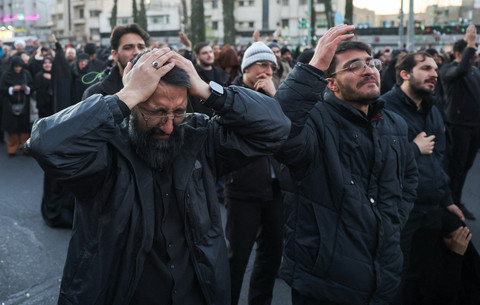
Prior to these developments, the Iranian government had already initiated preparations for an interim leadership mechanism following Khamenei’s passing. Furthermore, the government has officially declared a 40-day period of mourning in observance of the Supreme Leader’s death, according to Al-Jazeera.
This declaration of mourning was confirmed by Iranian news agencies Tasnim and Fars on Sunday, March 1. Fars reported that the decision was swiftly made and announced shortly after Khamenei’s death was officially communicated to the public, signaling a period of national remembrance and political transition.
Summary
Ayatollah Alireza Arafi has been appointed as a