
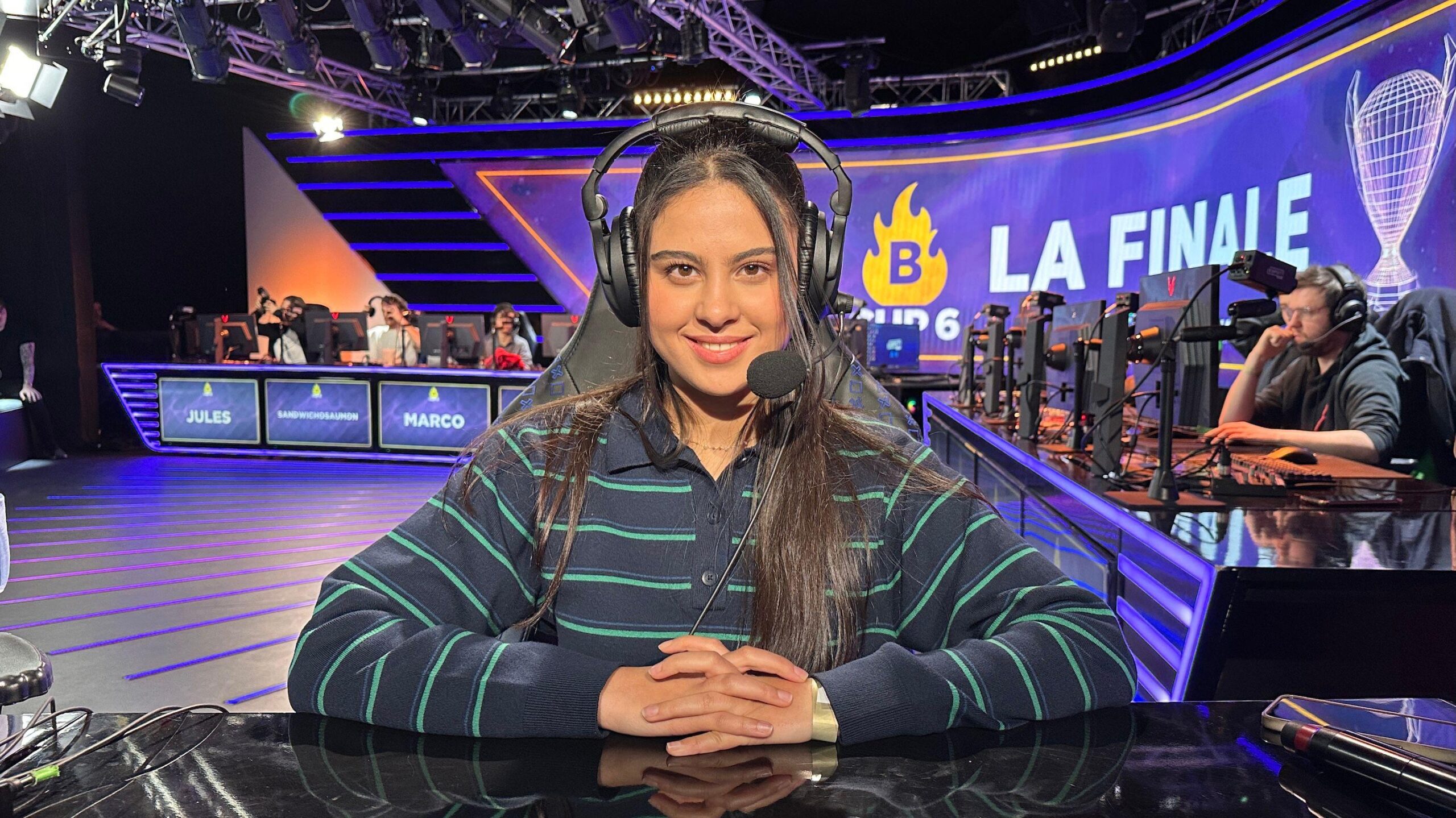

When Woman Grandmaster Nemo Zhou decided to stream chess games during the Covid-19 pandemic, she never imagined that casual step would blossom into a full-fledged career. “It all happened by chance,” Zhou revealed to BBC Global Women.
“During Covid, I felt like everything was so chaotic. I started to get stressed at home with nothing to do, and I thought it would be nice to make a little money.” At the time, Zhou, who holds the highest title specifically for women in chess, was pursuing a degree in economics and mathematics at the University of Toronto.
She began her solo live streams in 2020, following an initial guest appearance on a friend’s channel. Her timing was impeccable. Just a few months later, Netflix released the acclaimed series The Queen’s Gambit. This, combined with the global pandemic, ignited a surge in public interest in chess.

Nemo’s channel rapidly soared in popularity, prompting her to leave her studies and fully dedicate herself to her burgeoning new career. “I just thought, okay, I’m going to be a streamer. People are probably going to be playing online chess until the end of this decade,” she recalled.
Six-Figure Earnings
Five years on, 26-year-old Nemo has amassed over two million followers across major platforms including Twitch, Instagram, YouTube, and TikTok. She typically live streams for five to six hours a day, at least five days a week, with her largest audiences tuning in on weekends.
Her engaging content seamlessly blends online chess matches with captivating real-world challenges, such as facing renowned street chess players in New York’s iconic Washington Square Park. Beyond streaming, Zhou actively secures commercial sponsorships, collaborates with diverse creators, and frequently travels internationally.
While Zhou remains discreet about her exact income, her multifaceted approach to monetization is clear. On YouTube, she earns revenue from viewership, advertisements, and brand partnerships. Instagram contributions come primarily from sponsored posts. On Twitch, her income sources include subscriptions, which in the United States start at around $5, and “bits,” the platform’s in-app digital currency.
Dr. Nina Willment, a researcher from the University of York, estimates that creators with a following comparable to Zhou’s can achieve six-figure incomes from a combination of platforms. However, she stresses that this is a rough estimate, as most streamers do not disclose their earnings. Dr. Willment also notes that Zhou’s substantial multi-platform following of over two million places her among the top 1-2% of global content creators.
Shattering the Image of Chess as an ‘Old Person’s Game’
Chess content creators like Nemo are at the forefront of a movement, helping to propel this ancient game into the 21st century. Historically, elite chess was almost exclusively played in silent, secluded rooms, with matches often stretching for hours and little effort made to engage a mainstream audience. Today, the landscape is dramatically different.
Major tournaments increasingly adopt “rapid” and “blitz” formats, where each player has as little as three minutes per game. Players are also often equipped with heart rate monitors, allowing viewers to witness the intense pressure they experience during crucial moments.

Last year, for the first time, chess was featured at the Esports World Cup in Riyadh, Saudi Arabia—one of the world’s largest competitive gaming events. It returned this year with an even greater number of participants. All these advancements are instrumental in shedding the perception of chess as solely an “old person’s game,” according to Fiona Steil Antoni, an International Master who works as a commentator and interviewer at international tournaments. “I think we needed a little bit of a refresh, and now it’s really happening,” she affirmed.
‘I Never Stop Thinking About Content Creation’
Among those following in the footsteps of streamers like Nemo is Sarah El Barbry. The 24-year-old Egyptian-Moroccan, who grew up in Paris, began creating chess content on TikTok in 2023. She only became a dedicated streamer last year, motivated by the scarcity of French-speaking female chess broadcasters. Today, she boasts over 75,000 followers across various platforms.
Her content creatively mixes online chess gameplay, educational material, and unique challenges like playing blindfolded, requiring players to visualize the board entirely in their minds. “Since I started, I have never stopped thinking about content creation,” she stated. Sometimes, she streams late into the night to connect with her North American audience. However, despite the potential for significant earnings at the pinnacle of chess content creation, success is far from guaranteed.

Initially, Sarah earned only about $117 (Rp1.8 million) per month from streaming before expanding her presence to YouTube. Currently, she earns approximately $1,700 (Rp26 million) per month from her content creation efforts, though this figure still falls below France’s minimum wage. While Sarah’s income is steadily increasing, Dr. Willment underscores that the success of streamers with large audiences “masks the reality” that “thousands, even millions of people” earn nothing despite continuously striving to break into the market.
‘My Audience is Bigger Because I’m a Woman’
As of January 2026, female-created channels account for roughly half of the top 20 most-watched chess streams on Twitch, excluding large corporate channels, according to Twitchmetrics, a platform monitoring viewer engagement. Nevertheless, the majority of both chess content creators and their audiences remain male.
Sarah estimates that initially, 95% of her audience across platforms was male, a figure that has since decreased to about 85%. She believes her viewership is larger than some male streamers precisely because she is a woman. “I don’t have a problem with that because, well, it’s part of the game,” she remarked candidly. Nemo notes that her YouTube audience is approximately 80% male, but her Instagram chess page surprisingly shows a 50:50 composition, which she finds “pretty crazy and really cool.”
Women Driving Chess Popularity
Evidence suggests that the recent boom in chess popularity is encouraging more women and girls to engage in competitive play. The proportion of female players registered with the World Chess Federation (FIDE) for “standard” time control matches—the format used in most official competitions—increased from 10% in 2020 to 16.5% in 2026. Despite this positive trend, the elite level of chess remains predominantly male.

Currently, no women rank among the top 100 players globally, and only three women in history have ever achieved this distinction. Various studies indicate that the performance gap between men and women is influenced by several factors, including lower participation rates, a scarcity of female coaches, and playing environments often perceived as unwelcoming for women. The participation gap is significantly narrower in countries where chess is taught in primary schools, such as Mongolia, where nearly 40% of FIDE-registered players are female, as well as 35% in Sri Lanka and 30% in Uganda.

Steil Antoni believes positive changes are well underway, adding that she is “cautiously optimistic” that the world of chess will move towards “some form of equality in my lifetime.”
‘This Year is Going to Be Absolutely Crazy’
Nemo Zhou’s ambitions now extend beyond the realm of chess. She has begun to diversify her content into lifestyle, travel, and fashion, even making an appearance at Paris Fashion Week last October. She now hopes to join a modeling agency and see her chess-focused Instagram page surpass one million followers.
Meanwhile, Sarah El Barbry is determined to give herself six months to truly break through in the streaming world. If her streaming career doesn’t take off as planned, her backup is a corporate career; she holds a bachelor’s degree in civil engineering and a master’s degree in business management. In January, she made her debut as a commentator at a major esports event. She describes the past few months as an “adventure.” “I feel like this year is going to be absolutely crazy. It’s going to be everything, or nothing at all,” she shared.

This article is part of BBC World Service’s Global Women, sharing important untold stories.
Summary
Woman Grandmaster Nemo Zhou transitioned from casual streaming during the