
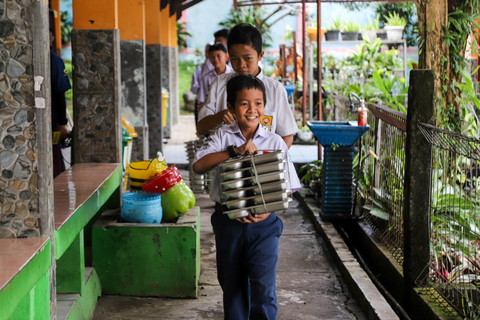

Coordinating Minister for Economic Affairs, Airlangga Hartarto, has affirmed the government’s commitment to implementing various measures aimed at achieving significant savings. Among these initiatives, the Free Nutritious Meals Program (MBG) is set to continue under a newly adjusted scheme.
Airlangga elaborated that while the MBG program will certainly proceed, it will undergo several key adjustments. Notably, the Free Nutritious Meals Program is now slated to operate five days a week, optimizing its reach and impact.
Addressing an online press conference on Tuesday, March 31, Airlangga stated, “The government is encouraging the optimization of the free nutritious meals program. This initiative is geared towards providing fresh food five days a week, while also carefully considering exceptions for specific areas such as dormitories, 3T (frontier, outermost, and disadvantaged) regions, and areas grappling with high rates of stunting.” This strategic refocus aims to enhance the program’s effectiveness while ensuring critical support reaches those most in need.
These comprehensive program adjustments are expected to yield substantial financial benefits. According to Airlangga, the revised implementation of the MBG program holds the potential for considerable budget savings.
Indeed, the Coordinating Minister for Economic Affairs highlighted the profound impact of these changes, noting that “the potential savings from this activity are estimated to reach an impressive Rp 20 trillion.” This significant figure underscores the government’s dedication to fiscal prudence and efficient resource management.

Beyond the MBG program, the government is also enacting a series of broader policies to achieve nationwide energy savings. These measures range from the implementation of a once-a-week Work From Home (WFH) policy for civil servants to stringent limitations on the use of official vehicles and restrictions on overseas travel for government personnel.
Airlangga emphasized that these holistic policies are integral to a larger structural transformation, propelling Indonesia towards an economy that is inherently “more efficient, productive, and resilient.” The government envisions these reforms as foundational for sustainable national development.
In a final call to action, the government urged all segments of society and the business community to remain productive, actively participate, and fully support this critical shift towards enhanced efficiency and a transformative work culture. Their collective engagement is deemed crucial for the success of these national initiatives.
Summary
Coordinating Minister for Economic Affairs, Airlangga Hartarto, affirmed the government’s commitment to cost savings, notably through adjustments to the Free Nutritious Meals Program (MBG). The program will now operate five days a week, aiming to provide fresh food while considering exceptions for specific regions like dormitories, 3T areas, and those with high stunting rates. This revised implementation is expected to yield substantial budget savings, estimated at Rp 20 trillion.
Beyond the MBG, the government is enacting broader policies for nationwide energy savings, including a weekly Work From Home policy for civil servants, limitations on official vehicle use, and restrictions on overseas travel. These holistic measures are part of a larger structural transformation, striving for a more efficient, productive, and resilient Indonesian economy. The government urges all segments of society and businesses to support this critical shift towards enhanced efficiency.