Some participants of the National Health Insurance (JKN) program, specifically those in the Contribution Assistance Recipients for Health Insurance (PBI-JK) segment, have been deactivated. This measure is part of a broader effort to ensure that social assistance is more precisely targeted to those who truly need it.
Crucially, this deactivation does not reduce the total number of assistance recipients. Instead, it involves a strategic reallocation of PBI-JK memberships, shifting beneficiaries from wealthier groups (desil 6-10 of the National Single Social and Economic Data/DTSEN) to more vulnerable populations (desil 1-5 of DTSEN), based on recommendations from communities and local governments. Consequently, the national count of PBI-JK participants remains at 96.8 million individuals. This extensive reallocation process is not new; it commenced in May 2025 and is being implemented in a phased manner.
For those affected by this policy who still require essential healthcare services, a swift reactivation process is available, adhering to established regulations and mechanisms.
Reactivation involves re-enabling the PBI-JK membership for individuals who were previously deactivated. The core objective of this policy is to ensure that participants whose memberships were temporarily suspended continue to receive their entitlement to healthcare services through BPJS Kesehatan.
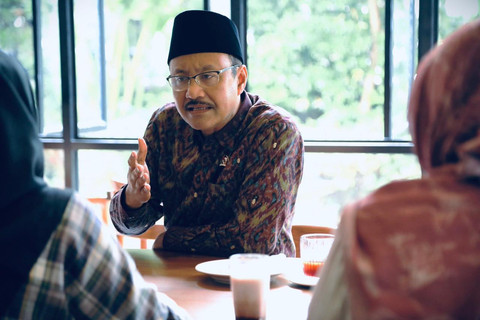
Minister of Social Affairs, Saifullah Yusuf (Gus Ipul), affirmed in Jakarta on Saturday, February 7, 2026, that “The reactivation process can be carried out easily and quickly, ensuring participants continue to receive free health insurance services.”
Eligibility for reactivation extends to deactivated individuals who require immediate healthcare services, particularly those suffering from chronic or catastrophic illnesses, or facing life-threatening medical emergencies, and are classified as financially vulnerable.
Furthermore, reactivation is also open to individuals whose data is not listed in the National Single Social and Economic Data (DTSEN), as well as infants born to mothers whose PBI-JK membership was previously terminated.
Moreover, PBI-JK participants whose memberships were removed but are subsequently deemed eligible for healthcare services, as stipulated in Article 20 of Minister of Social Affairs Regulation Number 3 of 2026 concerning Requirements and Procedures for Changing Health Insurance Contribution Assistance Recipient Data, can be reactivated within a maximum period of six months from their date of removal.
Joko Widiarto, Head of the Data and Information Center (Pusdatin) for Social Welfare at the Ministry of Social Affairs (Kemensos), outlined the detailed steps for the PBI-JK Recipient Reactivation Mechanism:
- Initial Reporting: Deactivated PBI-JK participants seeking medical treatment must first obtain a medical certificate from a hospital or other healthcare facility.
- Submission to Local Social Services Office: Participants then report to their local Social Services Office (Dinas Sosial) to initiate the re-activation request.
- Dinas Sosial Verification: Officers at the Dinas Sosial will verify the participant’s data.
- Letter Generation and Data Input: The Dinas Sosial will then issue a reactivation certificate and input the relevant data into the SIKS-NG application.
- Kemensos Verification: Officials at the Ministry of Social Affairs (Kemensos) will further verify the submitted reactivation request documents.
- Reporting to BPJS Kesehatan: Once verified and approved by Kemensos, these documents are forwarded to BPJS Kesehatan for their final review and verification.
- Reactivation: Upon approval from BPJS Kesehatan, the participant’s membership status will be officially reactivated.
Joko emphasized that Kemensos maintains continuous coordination with the Ministry of Health, BPJS Kesehatan, and Social Services Offices across Indonesia to significantly accelerate the reactivation process.
Beyond the SIKS-NG application, Kemensos and BPJS Kesehatan have also implemented systems to detect inactive participants suffering from chronic and catastrophic illnesses that pose life-threatening risks, enabling their automatic reactivation.
Through these concerted efforts, it is anticipated that effective solutions will be provided to the affected communities, especially the most vulnerable, ensuring their continued access to vital healthcare services.
Summary
The National Health Insurance (JKN) PBI-JK program has undergone participant deactivations, a measure to reallocate benefits more precisely to vulnerable populations while maintaining the total number of beneficiaries. This ensures social assistance is targeted effectively to those who truly need it. For affected individuals requiring healthcare services, a swift and easy reactivation process is available to guarantee their continued access to free health insurance.
Reactivation is open to financially vulnerable individuals needing immediate care for chronic or life-threatening illnesses, those not listed in DTSEN, and infants born to mothers whose PBI-JK membership was terminated. The process involves obtaining a medical certificate, reporting to the local Social Services Office for data verification and input, followed by verification from the Ministry of Social Affairs and final approval by BPJS Kesehatan. Kemensos actively coordinates with relevant bodies and utilizes automated systems to expedite reactivation, particularly for critical cases.
