

Teknowarta PADANG – West Sumatra Province recorded an economic growth of 3.37% in 2025, according to data from the Central Statistics Agency (BPS). This figure significantly trails the national average of 5.11%, highlighting a notable disparity in economic performance.
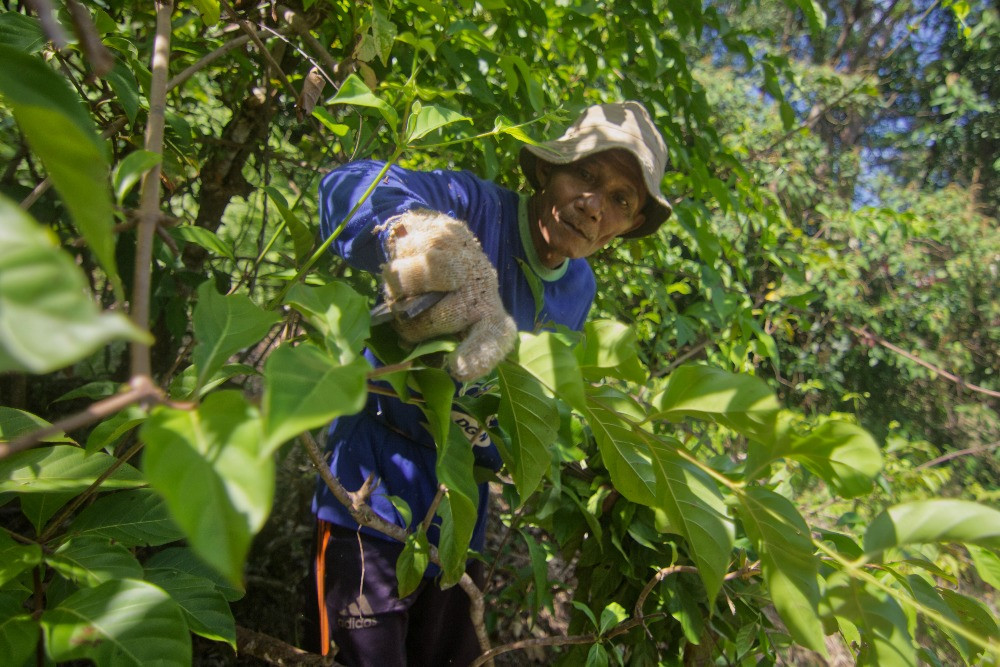
Nurul Hasanudin, Head of BPS West Sumatra, noted that the structure of West Sumatra’s Gross Regional Domestic Product (GRDP) by business sector, based on current prices in 2025, showed no significant changes. The provincial economy remains heavily reliant on the agriculture, forestry, and fisheries sector, which accounts for a substantial 22.12% of the GRDP.
“The agricultural sector indeed serves as a primary contributor to West Sumatra’s economy. However, we also observed significant growth in other service sectors, which expanded by 8.50%,” Hasanudin stated, referencing official BPS data released on Thursday, February 5, 2026. This indicates a burgeoning diversification despite the enduring dominance of traditional sectors.
: Riau’s 2025 Economy Grows Below National Average, Reaching Only 4.79%
Beyond the agricultural focus, the health services and social activities sector also registered considerable growth, reaching 8.09%. However, paradoxically, the dominant agriculture, forestry, and fisheries sector only managed a modest growth of 4.14%. This disparity underscores a challenge in maximizing the potential of its foundational industry.
In contrast, the transportation and warehousing sector, along with construction, experienced contractions of 0.01% and 1.40%, respectively. These declines indicate headwinds in critical infrastructure and logistics components of the regional economy.
: Bengkulu’s Coal-Fired Power Plant Seeks Exemption to Transport Coal via South Sumatra, Local Government: Find Other Alternatives!
Delving deeper into the economic breakdown, Nurul Hasanudin detailed that West Sumatra’s economy in Q4 2025 grew by 1.69% year-on-year (YoY) compared to Q4 2024. This growth rate remained considerably lower than the national achievement of 5.39%, signaling persistent regional economic challenges.
Notably, the financial services sector and other service activities recorded the highest growth rates, at 15.58% and 11.96% respectively. Following closely were health services and social activities at 11.66%, and the accommodation and food and beverage provision sector at 6.63%. Despite its dominant role, the agriculture, forestry, and fisheries sector saw a more subdued growth of 1.37% during this period.
: Hundreds of B3 Waste Containers Pile Up at Batam’s Batu Ampar Port
Examining the quarter-to-quarter (QtQ) performance, West Sumatra’s economy grew by 0.39% up to Q4 2025. The government administration, defense, and compulsory social security sector, along with health services and social activities, showed the most significant growth, at 18.98% and 9.98% respectively. This robust performance was followed by the electricity and gas procurement sector, which grew by 5.83%.
Conversely, the manufacturing industry and the information and communication sector experienced sharp contractions, declining by 6.57% and 4.14% respectively. Meanwhile, the crucial agriculture, forestry, and fisheries sector, despite its dominant economic role, only managed a modest 0.84% growth quarter-on-quarter.
The wholesale and retail trade, as well as car and motorcycle repair sectors, also contracted by 1.16%, while the transportation and warehousing sector saw a 0.75% contraction. These figures collectively paint a picture of an economy facing multiple challenges across various key sectors.
“The natural disasters that occurred in Q6 2025 undoubtedly played a role in impacting West Sumatra’s economy,” Hasanudin elaborated, acknowledging the external factors at play.
From a broader spatial perspective, Nurul highlighted that the economic structure of Sumatra Island in 2025 was predominantly shaped by North Sumatra Province, contributing 23.54% to the island’s GRDP. This was followed by Riau (22.88%), South Sumatra (13.71%), Lampung (9.98%), Riau Islands (7.27%), Jambi (6.66%), West Sumatra (6.71%), Aceh (4.90%), Bangka Belitung Islands (2.22%), and Bengkulu Province (2.13%). This breakdown illustrates West Sumatra’s position within the larger Sumatran economic landscape.
Regarding economic growth across Sumatra, the highest rate was achieved by Riau Islands Province, at 6.94%. Other provinces followed with robust growth: South Sumatra (5.35%), Lampung (5.28%), Jambi (4.93%), Bengkulu (4.80%), Riau (4.79%), North Sumatra (4.53%), Bangka Belitung Islands (4.09%), West Sumatra (3.37%), and Aceh (2.97%). This comparative data further underscores West Sumatra’s relatively slower economic expansion within the region.
Looking ahead, Bank Indonesia (BI) anticipates positive economic growth for West Sumatra in Q1 2026. This optimism is fueled by the upcoming Ramadan and Eid al-Fitr celebrations, which typically stimulate economic activity, coupled with the gradual recovery efforts post-disasters.
Mohamad Abdul Majid Ikram, Head of BI’s West Sumatra Representative Office, highlighted that the festive periods of Ramadan and Eid al-Fitr are expected to boost economic momentum significantly, particularly in the trade and transportation services sectors. This seasonal surge provides a crucial opportunity for recovery and growth.
“However, concerning the trade sector, local governments must proactively ensure a secure and sufficient supply of food to keep inflation in check,” Ikram cautioned. This emphasizes the critical link between stable food supply and overall economic stability.
He further elaborated that natural disasters occurring in November 2026 had severely impacted the agricultural sector. The Provincial Government of West Sumatra reported that a total of 6,713 hectares of agricultural land across most regions of the province were affected by these disasters.
Majid warned that if swift and precise measures are not taken to address food supply and availability issues, inflationary pressures would be challenging to contain. Conversely, a stable food supply, free from shortages, is vital for West Sumatra’s economy to achieve positive growth, underscoring the delicate balance required for sustained economic health.
“We have convened meetings with the Regional Inflation Control Team (TPID) to discuss these critical issues,” he added. “Our hope is that the upcoming Ramadan and Eid al-Fitr periods will indeed revitalize West Sumatra’s economy.” This collaborative effort highlights the commitment to mitigating economic risks.
Another crucial factor in driving economic growth is the accelerated recovery of infrastructure damaged by natural disasters. The aftermath has seen many residents displaced, with numerous roads — from national highways to district and city routes — extensively damaged. Rapid restoration of these vital infrastructures, alongside other affected conditions, is eagerly anticipated to pave the way for a more robust and resilient economic future for West Sumatra.
