

Please be advised: This story contains details that some readers may find disturbing.
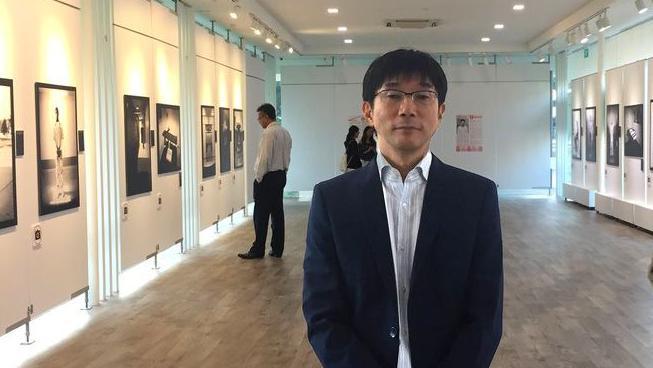
During the 1990s, Tokyo-born photographer Toshi Kazama had established a successful career as a commercial photographer in New York, USA. However, his life took an unexpected turn when a news report about a juvenile death row inmate deeply disturbed him.
This profound curiosity compelled Kazama to seek out and meet the condemned individual, embarking on a career path he could never have foreseen.
Since that pivotal moment, Kazama has photographed 22 death row inmates, primarily across the United States, with one notable exception in Taiwan.
While some of these inmates have since faced execution, others remain incarcerated, awaiting their fate.
His journey has also connected him with the grieving relatives of the victims.
Kazama himself attests that this work has transformed him into an unwavering advocate against capital punishment.
‘Just an Ordinary Boy’
The first death row inmate to capture his attention was Michael Shawn Barnes, a juvenile offender sentenced to death by an Alabama state court in 1996.
Barnes was only 17 when he was arrested and subsequently sentenced to death by electrocution for murder and rape.
Driven by the newspaper article, Kazama tracked down Barnes. After overcoming numerous bureaucratic hurdles, he secured permission to visit Barnes in prison.

Upon meeting Barnes, Kazama was taken aback.
“I expected to see a monster,” Kazama recounted. “But the boy who appeared before me was just an ordinary kid, someone I could have encountered anywhere else.”
He added, “I couldn’t help but try to shake his hand before photographing him.”
Barnes had an exceptionally low IQ and severe learning disabilities.
Despite a jury’s recommendation for life imprisonment without parole, the judge opted for the death penalty, citing Barnes’ lack of mercy towards his victims.
However, on June 12, 1998, a revision by the first-tier court commuted Barnes’ sentence to life without parole, acknowledging mitigating circumstances.
No Remorse?
Sean Sellers, convicted of three murders, was another individual photographed by Kazama on death row.
Sellers considered Kazama a friend and invited him to witness his execution in Oklahoma in 1999.
Kazama chose not to attend but wrote a letter to Sellers, expressing his sympathy regarding the impending execution.
On February 4, 1999, the day of Sellers’ execution, Kazama lay awake in his New York apartment, his mind fixated on what was unfolding in the Oklahoma prison as the clock struck 1 AM.

Kazama vividly described the stages of the execution process for inmates like Sellers. First, the condemned received a chemical injection. Five minutes later, a second chemical was administered.
The initial injection was meant to “calm” the inmate, while the second induced sleep.
“The third injection, at 1:10 AM, was the lethal one, designed to contract all the muscles in the body,” Kazama stated.
Within minutes of the third injection, Sellers was pronounced dead. The news instantly devastated Kazama, leaving him feeling like a “walking dead man” for three months.
“I was completely numb. I couldn’t do anything. I was severely depressed,” he confessed.

Just before the execution, as he was strapped to the gurney, Sellers was given a microphone for his final statement.
“He didn’t show much remorse, which naturally angered the victims’ families,” Kazama noted.
Over the years, Kazama has interacted with many death row prisoners, observing that many are reluctant to discuss their crimes.
He recalled meeting and photographing Napoleon Beazley, who was executed by lethal injection in 2002 for the murder of a 63-year-old man in Texas, USA.
“He spoke to me about what he wanted to eat before the execution and other mundane things. They truly couldn’t face the murder,” Kazama explained.
Kazama highlighted that the public often misunderstands the demeanor of death row inmates, frequently questioning their apparent lack of remorse, even as execution looms.
Victims of Crime
In 2003, while walking home with his daughter in New York, Kazama was violently assaulted by an unknown assailant who struck him hard on the head.
“I myself became a victim of crime. I was attacked. I was in a coma for five days before regaining consciousness,” Kazama revealed.
The attack left Kazama with permanent hearing loss and balance issues, along with a lasting scar on his head. “This scar will never disappear. However, I have been able to change my perspective on the assault,” he stated.
Kazama longed for an apology from his attacker, but the individual was never apprehended by the police.

Kazama’s approach to overcoming his trauma was inspired by figures like Bud Welch, whose 23-year-old daughter, Julie Marie, was among the 167 fatalities in the 1995 Oklahoma City federal building bombing.
Initially, Welch was consumed by his daughter’s death and advocated for the bomber’s execution. However, he later became a prominent campaigner for the abolition of the death penalty in the US.
According to Kazama, capital punishment does not genuinely help victims’ families cope with their loss. Instead, he believes these families deserve different forms of support, including financial assistance.
“It is the victims’ families who suffer the most. But the public often misunderstands, thinking that because I was a victim, I seek revenge,” Kazama lamented.
“This is a crazy mentality we possess,” he added.
‘Just One Step’
The most significant recognition of Kazama’s photographic work came in 2005 when the US Supreme Court utilized his images as evidence in the landmark case of Roper v. Simmons.
In that ruling, the justices declared that the death penalty could not be imposed on offenders under the age of 18.
“I am glad that the photographs had a positive effect,” he remarked.
“There is still much more for me to do. This was just one step. I felt a slight sense of relief at the time of that decision,” Kazama added, clarifying, “I did not feel it was a victory.”

Interactions with prison guards made Kazama realize that they, too, are psychologically affected by their roles in the execution process. During his first visit to an Alabama prison, Kazama observed guards preparing for an execution.
“As I entered the execution chamber, I could smell burning human flesh,” Kazama recalled.
Adjacent to the execution chamber was the waiting area for condemned inmates. Kazama never forgot the expression on the face of an inmate he encountered there.
“The guards told me he was a walking dead man,” Kazama conveyed.
The guards also confided in Kazama about the “unpleasant” task of collecting the charred remains of the executed after the procedure.
Following that initial visit, Kazama photographed more death row inmates in other prisons, and officials frequently reiterated the same plea to him.
“Please tell the whole world, so we don’t have to kill humans anymore,” Kazama quoted the prison officials.
In US prisons, electric chairs are often equipped with two or three buttons, only one of which is functional. This tactic is designed to ensure that no single executioner feels solely responsible for the condemned’s death.
Japan carries out capital punishment by hanging. Japanese prisons have three switches to open the trapdoor above where the condemned is hanged, but only one is operational, preventing guards from knowing who is directly responsible, he explained.
According to Amnesty International data, 1,518 executions were carried out in 2024. The majority, 1,380 cases, occurred in Iran, Iraq, and Saudi Arabia, with 25 executions in the US.
Amnesty also noted that these figures exclude the thousands of inmates believed to have been executed in Chinese prisons, as the country does not release its annual execution statistics.
The Next Battle
One of the prisoners documented by Kazama is Christa Pike, who was sentenced to death for the murder of 19-year-old Colleen Slemmer.
This brutal murder occurred in 1995 when Pike was 18 years old.
A Tennessee court has set September 30, 2026, as the execution date for Pike.
If carried out, this would mark the state’s first execution of a female inmate in over 200 years.
Upon meeting Pike, Kazama observed, “She seemed like a very friendly woman. I couldn’t believe she was capable of the murder. But she told me she did it.”
Kazama noted that Pike has yet to show remorse.
Kazama hasn’t spoken with Pike in years, but news of her impending execution has prompted deep reflection.
He is now actively working to postpone Pike’s execution.
“I need to speak with her legal counsel about the best course of action to save Pike from execution,” Kazama affirmed.
Baca juga:
- Hukuman mati: ’13 tahun bukanlah waktu yang singkat untuk menanti keadilan’
- Ancaman hukuman mati di Indonesia: Dari korupsi sampai kekerasan seksual anak
- Mengapa penyaliban menjadi hukuman yang paling ‘kejam dan mengerikan’?
- Negara mana yang masih menerapkan hukuman mati? Bagaimana dengan Indonesia?
- Parlemen Malaysia hapus hukuman mati untuk kejahatan serius – Apakah ratusan WNI di Malaysia akan terhindar dari eksekusi mati?
