
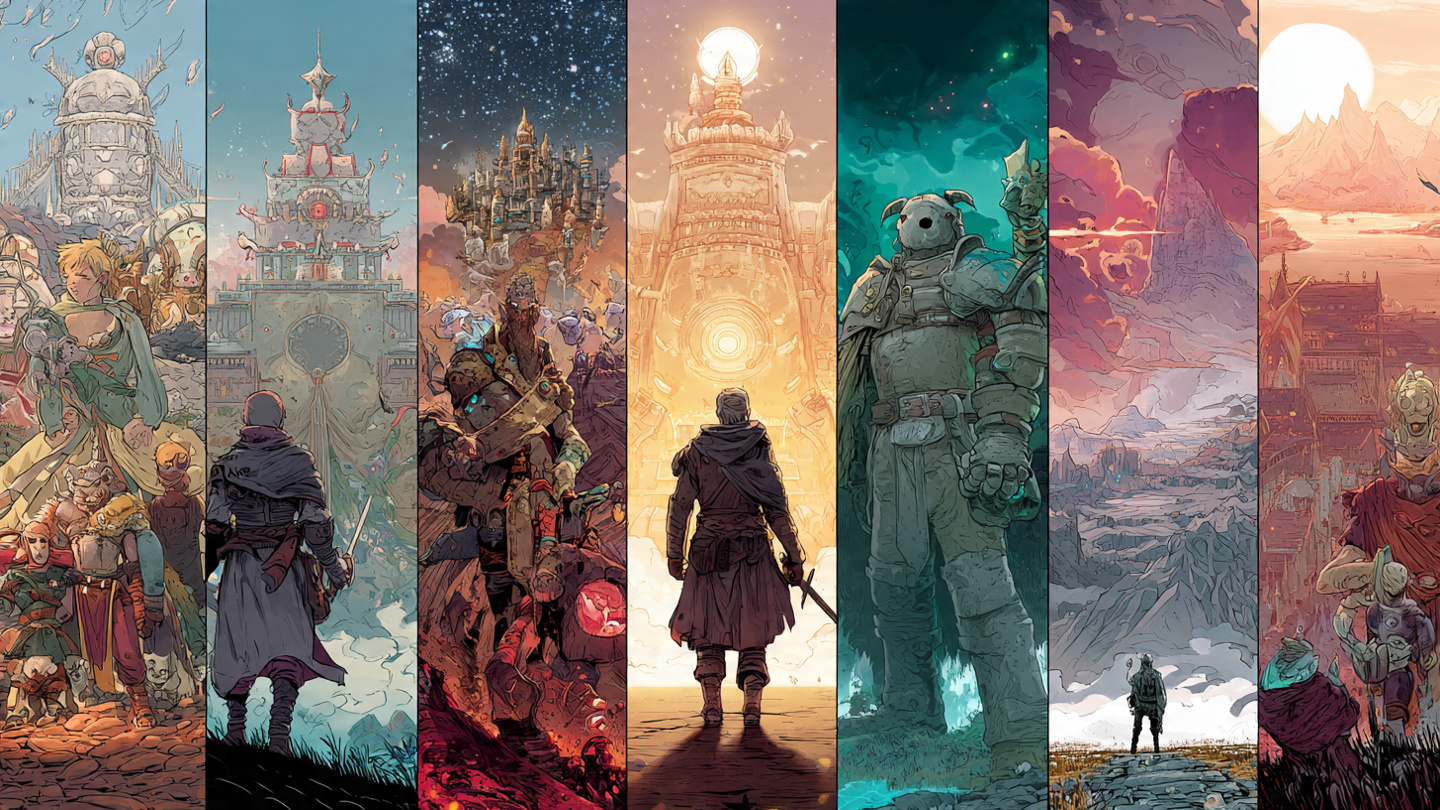
The quiet hum of a gaming PC in a dimly lit room, the flicker of a monitor casting an ethereal glow on a focused face – this scene, familiar to millions, is about to gain new dimensions. For many, the allure of role-playing games (RPGs) lies in their ability to transport us, to allow us to inhabit lives and worlds far removed from our own. As we look towards 2026, the landscape of RPG Games 2026 promises not just incremental upgrades, but a significant evolution in how we interact with these digital realms and the stories they tell.
Beyond Pixels: The Immersive Leap
The quest for immersion has long been a driving force in game development, and by 2026, this push will likely manifest in truly groundbreaking ways for RPG Games 2026. We’re not just talking about sharper graphics, although that will undoubtedly continue. The real frontier lies in the integration of advanced AI and sophisticated narrative systems that adapt dynamically to player choices, moving beyond pre-scripted branching paths to genuinely emergent storytelling. Imagine an NPC whose personality and motivations are not fixed, but shaped by your interactions over dozens of hours, leading to unique consequences and personal connections previously confined to tabletop experiences.
Consider the implications for long-running franchises. A beloved open-world RPG might leverage AI-driven companions whose loyalty and effectiveness are directly influenced by your in-game actions, rather than a simple “you did X, so Y likes you” system. This fosters a deeper sense of agency, where the player’s journey feels truly their own, not a pre-determined route with minor detours. While the technology is still maturing, the groundwork laid by games exploring complex NPC interactions, like those seen in some recent narrative-driven adventures, hints at the rich possibilities for RPG Games 2026. The challenge for developers will be to balance this computational power with compelling gameplay and accessible design, ensuring that emergent narratives enhance, rather than overwhelm, the player experience.
The Shifting Sands of Player Choice
The very definition of “choice” within RPGs is undergoing a subtle yet profound re-evaluation. Historically, player agency has often been presented as a series of binary decisions or dialogue options. By 2026, however, we can anticipate RPGs that offer far more nuanced forms of influence. This could involve intricate economic systems where player-driven market manipulation has tangible effects on the in-game world, or complex political simulations where alliances and betrayals are forged through sophisticated diplomacy rather than simple quest completion.
Take, for example, a hypothetical grand strategy RPG set in a fantastical realm. Instead of simply choosing to support one faction over another, players might engage in espionage, manipulate public opinion through in-game media, or broker multi-kingdom trade agreements, all of which could have cascading effects on the geopolitical landscape. This mirrors the complexities of real-world decision-making, demanding strategic foresight and a deeper understanding of interconnected systems. Such advancements will elevate RPG Games 2026 beyond simple combat and exploration, offering players the chance to truly shape the destiny of entire civilizations. The ethical considerations of these complex simulations, particularly when they mirror real-world social and political dynamics, will also be a topic of discussion within the gaming community.
Procedural Generation: A Canvas for Infinite Worlds
Procedural generation has been a staple of RPG design for years, offering replayability and vast explorable spaces. However, by 2026, the sophistication of these algorithms will likely reach new heights, moving beyond often repetitive landscapes to create truly unique and compelling environments. We might see procedural generation that not only crafts varied terrain but also imbues it with distinct ecosystems, unique lore, and historically generated ruins that tell their own stories.
Consider a survival RPG where each generated planet or region has its own set of flora, fauna, and geological hazards, all interconnected through a dynamic environmental simulation. This means that a player exploring one instance of a particular biome might face entirely different challenges and discover unique resources compared to another player, even within the same game. This level of procedural depth ensures that exploration remains a genuine adventure, with the thrill of discovery being a constant companion. This trend is already visible in games that push the boundaries of procedural content, and its continued refinement promises to make future RPG Games 2026 experiences incredibly diverse. The challenge for developers will be ensuring that these procedurally generated elements feel coherent and purposeful, rather than a chaotic collection of randomized parts.
The Evolution of RPG Mechanics: A Comparative Look
The core mechanics of RPGs – combat, progression, and inventory management – are not static. As we project into 2026, these systems are likely to undergo significant refinement, borrowing inspiration from various genres and pushing the boundaries of player interaction.
| Mechanic Category | Current State (Early 2020s) | Projected Evolution (2026) | Potential Implications for Players |
|---|---|---|---|
| Combat | Primarily action-based (hack-and-slash, shooter) or turn-based. Emphasis on skill trees and gear. | Deeper integration of environmental factors, more fluid hybrid combat systems blending real-time action with strategic elements, AI-driven enemy tactics that learn player patterns. | More dynamic and challenging combat encounters, requiring players to adapt their strategies on the fly. Greater emphasis on environmental awareness and tactical positioning. |
| Progression | Leveling up, skill points, gear acquisition. Clear tiers of power. | More organic skill development influenced by player actions and choices (e.g., using a specific weapon type repeatedly might unlock unique abilities related to it), reputation systems with tangible in-game effects on progression, intertwined classless progression systems. | A sense of individual character development that feels more earned and less like a grind. Greater player freedom in defining their character’s strengths and weaknesses. |
| Inventory Management | Grid-based, weight limits, item rarity. Focus on optimizing stats. | Streamlined inventory systems with contextual item usage, crafting systems deeply integrated into exploration and resource gathering, AI-assisted gear management, and the potential for dynamic item degradation or evolution. | Less time spent managing inventory and more time engaging with the world. Crafting becomes a more integral part of gameplay, encouraging exploration and resourcefulness. |
This table illustrates a potential trajectory, highlighting a move towards systems that are more fluid, responsive, and deeply integrated into the player’s overall experience. These evolutions will contribute significantly to the overall appeal and depth of RPG Games 2026.
Accessibility and the Wider Audience
The burgeoning interest in RPGs among a wider demographic suggests that accessibility will be a key consideration for RPG Games 2026. This doesn’t necessarily mean simplifying complex mechanics, but rather offering more options for players to engage with these intricate worlds. We may see more robust accessibility settings, customizable UI elements, and perhaps even AI-assisted tutorials that adapt to a player’s learning pace.
Consider a game that offers a “story mode” that significantly reduces combat difficulty while preserving the narrative depth, or a “guided exploration” option that subtly hints at points of interest without directly hand-holding the player. This approach ensures that players who are primarily drawn to the lore, characters, and world-building can still fully appreciate the experience, regardless of their prior gaming experience or specific skill sets. The expansion of the player base for RPG Games 2026 hinges on this thoughtful approach to inclusivity.
The future of role-playing games in 2026 is not a singular vision, but a confluence of technological advancements, evolving design philosophies, and a growing understanding of what players truly seek: meaningful interaction, emergent narratives, and worlds that feel alive. As these elements coalesce, the immersive potential of digital storytelling will continue to expand, inviting players into experiences that are as unique as their own choices. The journey ahead promises to be an exciting one for anyone who finds solace, challenge, or pure escapism within the bounds of a compelling RPG.
