

Norway is widely recognized as one of the world’s most environmentally friendly nations. A remarkable almost all of its electricity needs are met through renewable energy sources.
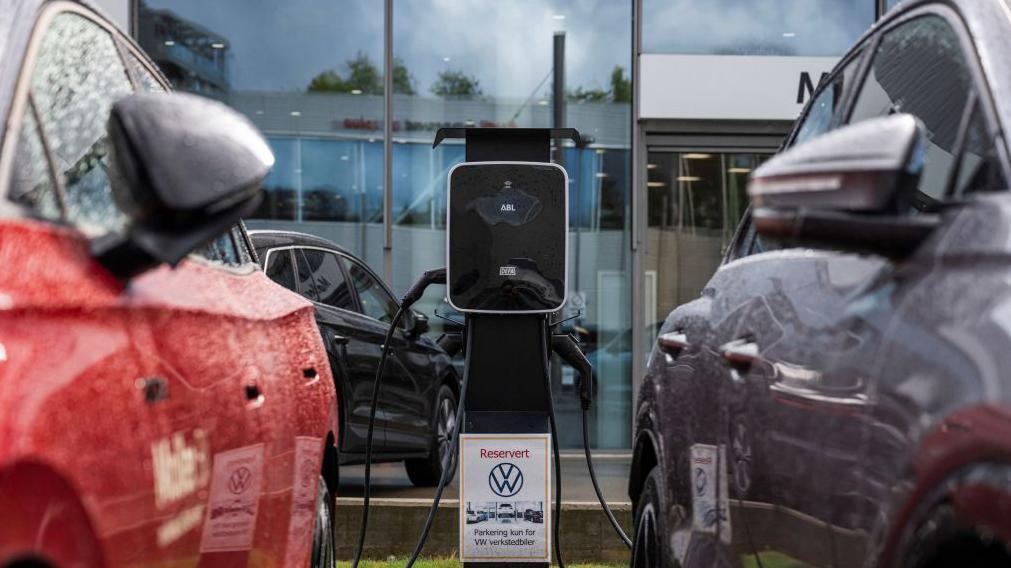
Within Norwegian cities, bicycles reign as a primary mode of transportation, sharing paths seamlessly with pedestrians. The nation’s commitment to green mobility extends to its automotive sector, with an astonishing nine out of every 10 new cars registered in Norway being electric vehicles.
Furthermore, Norway pioneered carbon taxation 35 years ago, holding companies accountable for the millions of tons of greenhouse gases they release into the atmosphere. This progressive domestic environmental policy stands in stark contrast to another critical aspect of its economy.
Despite these commendable green initiatives, Norway paradoxically continues to ramp up its production of fossil fuels—namely natural gas and crude oil—which are significant environmental pollutants. This “dirty energy” is not primarily for domestic consumption but is exported on a massive scale, generating trillions of rupiah in revenue for the nation.
This striking duality reveals a future for Norway intrinsically linked to the very fossil fuels it actively discourages within its own borders. The deep contradiction between Norway’s internal decarbonization efforts and its prominent role as a global exporter of fossil fuels has given rise to the widely discussed ‘Norwegian Paradox.’ This intricate issue has fueled intense political and social debates for years.
Given this backdrop, what are the implications of the Middle East conflict, the potential closure of the Strait of Hormuz, and rising global oil prices for Norway’s substantial wealth? Could these volatile circumstances reignite one of the nation’s most profound and divisive debates?
As one of the world’s most developed nations, according to the UN Human Development Index, Norway’s energy sector stands as the primary engine of its prosperity and growth. Exports from this vital sector account for approximately 60% of all goods sold abroad, representing more than 20% of Norway’s national Gross Domestic Product (GDP).
The Norwegian state maintains a majority share in the international energy company, Equinor, which serves as the principal operator on the Norwegian continental shelf. A substantial portion of Equinor’s profits is channeled directly into the country’s colossal sovereign wealth fund. By the close of 2025, this intergenerational fund is projected to hold assets valued at an astonishing US$1.9 trillion (equivalent to Rp33,895 trillion).
This equates to approximately US$350,000 (Rp6.24 billion) for every Norwegian citizen, underscoring the immense scale of this financial reserve. In practice, this towering accumulation of funds underpins Norway’s robust pension system and serves as a crucial pillar for the nation’s comprehensive social welfare programs, directly benefiting its populace.
Now, amidst the escalating Middle East conflict stemming from alleged US and Israeli attacks on Iran, experts are closely scrutinizing how Norway’s vast financial reserves will inevitably be impacted. Indeed, since the conflict’s inception, Norway appears to have reaped substantial profits from crude oil sales. Concurrently, the Oslo Stock Exchange has seen a significant uplift, largely propelled by the robust performance of several domestic energy companies that dominate trading.
Yet, the Labour Party-led Norwegian government, presiding over a nation renowned for hosting the Nobel Peace Prize, is actively working to dispel the perception that it is excessively profiting from the ongoing war. This delicate balancing act highlights the ethical complexities inherent in its economic model.
Norway’s Finance Minister and former NATO Secretary General, Jens Stoltenberg, candidly described the situation as “a paradox,” emphasizing that Norway would ultimately benefit more from global peace. “It is not yet clear whether rising oil prices will be profitable for us,” Stoltenberg stated in an interview with El Pais. He elaborated, “Norway currently has significant exposure in international financial markets through our sovereign wealth fund. A decline in stock markets hurts us more than the gains we might achieve from rising crude oil prices.”

This sentiment was echoed by Nicolai Tangen, head of Norway’s Sovereign Wealth Fund, who told Reuters that any profits flowing into the fund from elevated oil revenues due to the Iran conflict would still be dwarfed by the negative impact of declining foreign stock prices and the strengthening of the Norwegian Krone. Yet, as NRK columnist Cecilie Langum Becker starkly observed, “The bitter reality is that when the world is ablaze, money flows profusely into our state budget.”
This dynamic is not entirely new; a similar pattern emerged in 2022 following Russia’s invasion of Ukraine, which severely curtailed Moscow’s energy exports to Europe. In the wake of that crisis, Norway swiftly emerged as a critical primary supplier of oil and gas to Europe, solidifying its role amid ongoing energy challenges. Indeed, Norway now stands as Europe’s largest gas supplier and Western Europe’s largest producer of crude oil.
“Today, we supply approximately 30% of the gas and 15% of the oil consumed in Europe, with 90% of our exports directed to the continent,” explained Thina Saltvedt, an analyst at Nordea financial company, in an interview with BBC Mundo, highlighting the nation’s indispensable position in the European energy landscape.
The alleged US and Israeli attacks on Iran, the broader expansion of the conflict, and the deepening instability across the Middle East have, nonetheless, created significant repercussions for Norway, prompting a reevaluation of its priorities and image.
Firstly, the volatile situation has forcefully reopened a fundamental debate concerning Norway’s broader moral responsibilities. The influential humanitarian organization, the Norwegian Refugee Council, has publicly urged the government to allocate a portion of the nation’s wealth fund profits to assist civilians affected by the conflict in Iran. They argue that this humanitarian gesture would mirror Norway’s commendable response to Russia’s war in Ukraine.

The official Norwegian government response to these demands, as conveyed by Stoltenberg to Reuters, has been to underscore Norway’s consistent standing as one of the world’s largest international aid donors and a “steadfast supporter of countries in need,” subtly navigating the pressure for specific allocations.
Secondly, the deteriorating circumstances in the Middle East are rigorously testing Norway’s carefully cultivated reputation as a global leader in green energy. Several observers contend that the geopolitical stalemate in the region appears to be decelerating the progress of green technology and potentially undermining Oslo’s long-term commitment to a comprehensive energy transition.
Truls Gulowsen, President of Friends of the Earth Norway, expressed his dismay to BBC Mundo, stating, “For a Norwegian environmental activist like myself, it’s clear that this situation is deeply embarrassing.” According to Gulowsen, the prevailing narrative within Norway is now shifting towards an acceptance that global instability justifies a greater reliance on hydrocarbons, a concerning development for environmental advocates.
“There is now talk of opening up exploration areas in deep Arctic waters—an incredibly vulnerable environment where exploitation should not be permitted under any circumstances,” he asserted, highlighting the potential backtracking on environmental commitments.
Looking ahead, environmental activists and organizations within Norway have intensified their calls for concrete commitments and a clear timeline to reduce the nation’s reliance on the oil industry. They advocate for a swift transition away from fossil fuels to align with Norway’s progressive environmental image.

In response to these demands, the powerful oil and gas sector staunchly defends its crucial role in the national economy, highlighting the hundreds of thousands of jobs it generates and sustains. This industry-backed argument often frames a rapid exit as economically destabilizing.
Prime Minister Jonas Gahr Støre’s government recently underscored its current priorities by issuing 57 new exploration licenses. Støre has explicitly pledged, “We will continue to look for more oil to supply Europe,” arguing for the sustained development of the industry rather than setting a firm deadline for its phased discontinuation. Despite facing pressure from the youth wing of his own party, Støre has shown little inclination for an immediate withdrawal from the lucrative fossil fuel business.

The Norwegian government appears focused on the Barents Sea—the country’s least exploited region—as a strategic area to offset declining production from its older, more mature oil fields. This move suggests a commitment to maintaining output in the short to medium term.
“We are talking about more than 200,000 direct jobs. This is not the time to leave Europe without energy supplies,” asserted Frode Alfheim of the Industry Energy union to BBC Mundo, emphasizing the significant employment impact and Europe’s ongoing energy needs.
On a more cautious note, Thina Saltvedt offered a stark warning: “More and more people realize that the twilight for this industry is imminent. However, the process will be painful.” This forward-looking perspective suggests an inevitable shift, albeit one fraught with economic and social challenges.
For the foreseeable future, Norway appears more preoccupied with effectively responding to critical global events and their immediate shocks rather than formulating a definitive long-term strategy for its energy future.
Additional reporting by BBC Global Journalism.
Perhaps you are interested:
- How can an oil-producing country like Norway be a leader in electric vehicle adoption?
- A Norwegian weather rocket nearly triggered nuclear war – How did it happen?
- What is the EU’s ‘trade bazooka’ when confronting Trump’s tariff threats over Greenland?
Read also:
- Cost of living rises due to US-Iran conflict, yet several companies are making trillions in profit
- The Rupiah is not the only currency rattled by the US-Iran conflict
- Global oil prices surge after ships attacked near the Strait of Hormuz
- Subsidized fuel prices will not rise throughout 2026; the state budget is predicted to only sustain this for ‘weeks’
- Asian nations begin to anticipate oil price volatility, President Prabowo mentions fuel from palm and sugarcane
Summary
Norway, a global leader in domestic green initiatives like renewable energy and electric vehicles, maintains a paradoxical role as a major exporter of fossil fuels. This “Norwegian Paradox” sees its vast oil and gas production primarily exported, fueling a substantial sovereign wealth fund that underpins the nation’s robust welfare system and economy. The energy sector accounts for over 20% of Norway’s GDP and 60% of its exports.
Recent geopolitical events, particularly the Middle East conflict, have generated significant profits for Norway’s energy sector, despite the government’s efforts to downplay benefiting from war. This situation intensifies debates over Norway’s moral responsibilities and its commitment to an energy transition, with environmentalists criticizing plans for new exploration areas. While Norway is a crucial energy supplier to Europe, its government currently prioritizes maintaining fossil fuel output over setting a firm exit timeline, focusing on immediate global events rather than a definitive long-term strategy.
