
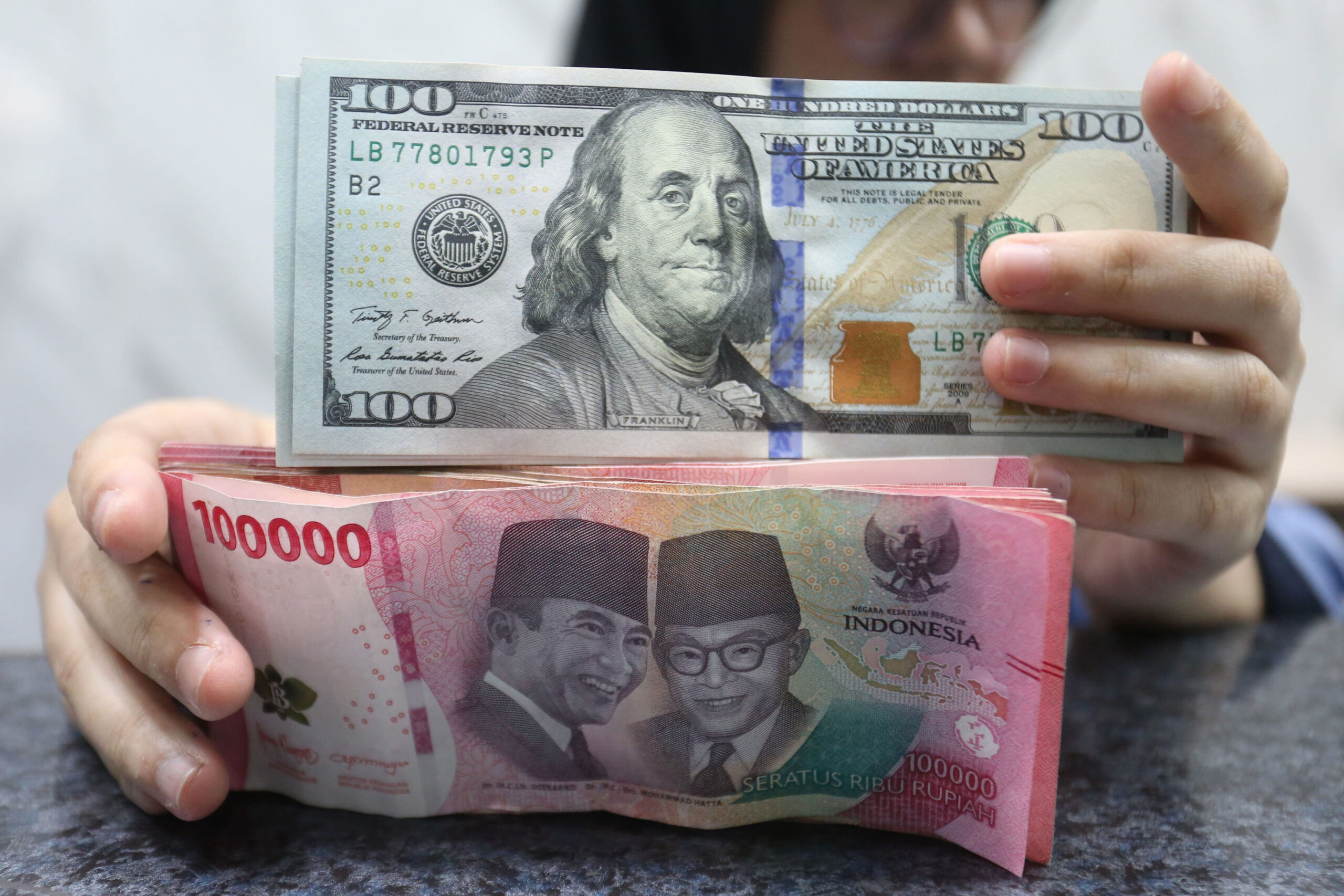
Bank Indonesia (BI) has issued a statement addressing the factors contributing to the rupiah’s significant weakening over the recent Eid al-Adha 1447 Hijriah holiday period and continuing into today’s trading. The Indonesian currency notably breached the IDR 17,900 per US dollar level, marking its worst performance in history.
According to Bloomberg data, the rupiah briefly touched IDR 17,900 per US dollar in spot market trading during the Eid al-Adha holiday on Thursday, May 28, although it later closed at IDR 17,845 per US dollar. Today, the rupiah initially opened stronger at IDR 17,820 per US dollar, gaining 25 points, but subsequently weakened, once again surpassing IDR 17,900 per US dollar before closing at IDR 17,880 per US dollar.
The central bank affirmed that the persistent pressure on the rupiah is primarily driven by a dual impact: a combination of prevailing global factors and a heightened domestic demand for the US dollar. Ramdan Denny Prakoso, Head of BI’s Communications Department, specifically highlighted that the currency’s depreciation is largely a consequence of ongoing global uncertainty, particularly stemming from the unresolved conflict in the Middle East.
“The pressure on the Rupiah’s exchange rate continues to be influenced by persistent global uncertainty due to developments in the Middle East conflict,” Ramdan stated in an official release on Friday, May 29. Beyond global dynamics, BI also noted a seasonal surge in foreign exchange demand during the mid-year period. This increased need for dollars is primarily attributed to obligations such as foreign debt payments (ULN) and corporate dividend repatriations, occurring amidst limited inflows of US dollars.
BI Affirms Continued Market Intervention
Ramdan emphasized BI’s unwavering commitment to maintaining rupiah stability through continuous market presence. He confirmed that the central bank is aggressively intervening in both domestic and offshore foreign exchange markets, operating “around the world, around the clock” to mitigate volatility. These interventions include Non-Deliverable Forward (NDF) transactions in the offshore market, spot and Domestic Non-Deliverable Forward (DNDF) transactions in the domestic market, as well as purchasing Government Securities (SBN) in the secondary market.
In addition to direct intervention, BI is also fortifying the effectiveness of its monetary policy mix. This involves strengthening the interest rate structure of monetary instruments, which are described as being more “pro-market.” Such policies are strategically designed to preserve the attractiveness of domestic financial assets and encourage foreign capital inflows into Indonesia, especially given the current elevated global uncertainty.
From the perspective of US dollar demand, BI is also implementing stricter regulations on foreign currency purchases that lack clear underlying transactions. Effective June 2026, BI will cap the limit for cash foreign currency purchases against the rupiah without an underlying transaction at a maximum of US$25,000 per individual per month. Furthermore, BI stated it would continue to strengthen coordination with relevant authorities to closely monitor significant US dollar purchasing activities by banks and corporations. The central bank remains vigilant in observing global and domestic financial market developments and stands prepared to implement additional measures should they become necessary.
Summary
The Indonesian Rupiah recently plunged past IDR 17,900 against the US Dollar, marking its worst historical performance during the Eid al-Adha holiday and subsequent trading. Bank Indonesia (BI) attributes this significant weakening to persistent global uncertainty, particularly from the Middle East conflict, and heightened domestic demand for the US dollar. This demand is seasonal, driven by foreign debt payments and corporate dividend repatriations, occurring amidst limited dollar inflows.
In response, BI is actively intervening in both domestic and offshore foreign exchange markets to maintain rupiah stability. The central bank is also strengthening its pro-market monetary policy mix to attract foreign capital inflows and implementing stricter regulations on foreign currency purchases without clear underlying transactions. BI will cap these transactions at US$25,000 per individual per month by June 2026, while vigilantly monitoring significant dollar purchasing activities.
