
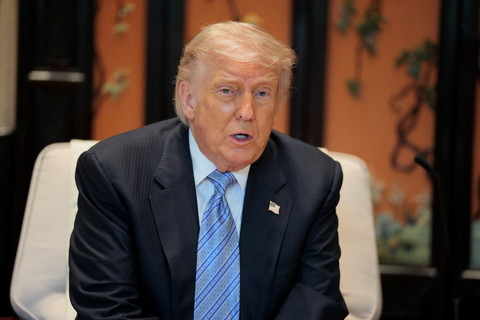

US President Donald Trump has announced that negotiations between the United States and Iran, aimed at concluding the protracted conflict in the Middle East, are largely complete. This significant development, if finalized, could reshape regional dynamics and global energy markets.
Trump highlighted the crucial reopening of the Strait of Hormuz as a pivotal element of the prospective agreement. The strait, a vital global oil chokepoint, was previously blockaded by Iran, an action that sent considerable shockwaves through international energy markets and fueled geopolitical tensions.
“The deal is largely negotiated, just awaiting finalization between the United States, the Islamic Republic of Iran, and a number of other countries,” Trump stated on Truth Social on Saturday, May 23. He further elaborated, “Among many other elements of the deal, the Strait of Hormuz will be opened.” While the broad strokes are in place, Trump affirmed that the conclusive details of the agreement are still being deliberated and are expected to be unveiled in the near future.
Discussed with Middle Eastern Leaders
The extensive negotiation process reportedly involved key regional players. Trump confirmed that several Middle Eastern heads of state participated in a series of phone calls to advance the discussions. According to an AFP report, these nations included Saudi Arabia, the United Arab Emirates, Qatar, Egypt, Jordan, and Bahrain, alongside representatives from Turkey and Pakistan, underscoring the broad regional engagement in these critical talks.

Pakistan, playing a key mediating role, has expressed its willingness to continue facilitating the dialogue. Prime Minister Shehbaz Sharif conveyed his country’s eagerness to host further rounds of negotiations between US and Iranian delegations soon. He also noted the involvement of Pakistan Army Chief Asim Munir in the discussions, following Munir’s recent visit to Tehran, signaling Pakistan’s deep commitment to the peace process. Separately, Trump also confirmed a productive conversation with Israeli Prime Minister Benjamin Netanyahu, indicating a broader diplomatic outreach.
Iran Nuclear Issue Still Undecided
Despite the optimistic pronouncements of a near-complete deal, the contentious issue of Iran’s nuclear program reportedly remains a subject for ongoing deliberation. A report from The New York Times suggests that the intricate details concerning Iran’s stockpile of highly enriched uranium are likely to be addressed only after an initial, broader agreement has been firmly established. The Iranian government itself has acknowledged that some differences with Washington persist.

Esmaeil Baghaei, spokesperson for Iran’s Ministry of Foreign Affairs, indicated a “trend towards rapprochement” with the United States but cautioned that this does not automatically guarantee an immediate, comprehensive agreement. Speaking to Iranian state television, Baghaei expressed optimism, stating, “We hope the final details of the agreement can be concluded within 30 to 60 days after the initial framework is completed.” Amidst these delicate negotiations, Mohammad Bagher Ghalibaf, Speaker of Iran’s Parliament, issued a stern warning to the United States against any renewed military action. He emphatically stated, “If Trump takes another foolish action and restarts the war, the response to the US will be far more devastating,” underscoring the precarious balance of the ongoing diplomatic efforts.
Summary
US President Donald Trump announced that negotiations between the United States and Iran, aimed at resolving the protracted Middle East conflict, are largely complete. A crucial element of the prospective agreement is the reopening of the Strait of Hormuz, a vital global oil chokepoint previously blockaded by Iran. Trump stated the deal is largely negotiated and awaiting finalization among the US, Iran, and other nations, with conclusive details expected soon.
The negotiation process reportedly involved various Middle Eastern leaders, with Pakistan playing a key mediating role and offering to host further talks. While optimism for an agreement exists, the contentious issue of Iran’s nuclear program, particularly its highly enriched uranium stockpile, remains undecided and is expected to be addressed later. Iranian officials acknowledge a “trend towards rapprochement” but caution that some differences persist, hoping for final details within 30 to 60 days.
