
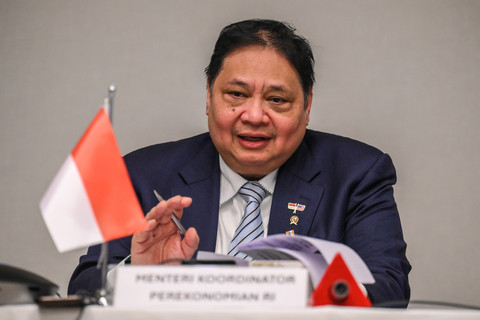
Indonesia is poised to implement a pivotal shift in its strategic commodity export framework through a new, phased approach led by a dedicated state-owned enterprise (BUMN). Coordinating Minister for Economic Affairs, Airlangga Hartarto, recently elaborated on the technical implementation details of this significant strategic move.
The initial phase is set to commence on June 1, 2026, and will run for three months. During this period, private companies will continue to conduct export transactions directly with their international buyers. However, a crucial change will see Danantara Sumberdaya Indonesia, the newly established state-owned export enterprise, assume responsibility for all export documentation. “I reiterate that export transactions will still be carried out by companies with their buyers, but export documentation will now be managed by the state-owned enterprise Danantara Sumberdaya Indonesia,” Airlangga stated during a press conference at the Parliament Building in Jakarta on Wednesday, May 20. He further explained that this three-month period would be followed by a comprehensive evaluation of the process.
Following the conclusion and evaluation of the first phase, the subsequent stage is scheduled to begin on September 1, 2026. From this date onwards, Danantara Sumberdaya Indonesia will take full charge of the entire strategic commodity export process. This means the state-owned enterprise will meticulously oversee every aspect, encompassing “export transactions, contract negotiations, the delivery of goods, and the collection of payments,” as emphasized by Airlangga.
Initially, the strategic commodities designated for export through Danantara Sumberdaya Indonesia will be limited to three high-value categories: crude palm oil (CPO), coal, and ferro alloy. However, the government has clear intentions to expand this list in due course. Airlangga confirmed, “For the initial stage, the commodities are the three highest: coal, palm oil, and ferro alloy. The next phase will extend to cover all strategic natural resource commodities.”
This ambitious new export scheme builds upon an earlier announcement by President Prabowo Subianto, who declared that strategic natural resource exports would exclusively be channeled through a single state-owned export entity. President Prabowo described this innovative mechanism as a “marketing facility,” primarily designed to bolster oversight and eradicate detrimental practices such as under-invoicing, transfer pricing, and the illicit outflow of export earnings (DHE).
“This policy will significantly optimize both tax revenue and state revenue derived from the meticulous management and sale of our valuable natural resources,” President Prabowo explained. He expressed his strong hope that this new approach would elevate Indonesia’s state revenue to levels comparable with economically robust nations like Mexico, the Philippines, and other regional neighbors. President Prabowo further asserted that current state revenues were suboptimal due to a perceived reluctance by past administrations to effectively manage the nation’s own vast wealth and resources.
Summary
Indonesia is set to implement a new strategic commodity export framework through Danantara Sumberdaya Indonesia, a newly established state-owned enterprise. The initial phase begins on June 1, 2026, for three months, during which private companies will continue direct transactions with buyers, but Danantara will manage all export documentation. Following an evaluation, the second phase will commence on September 1, 2026, making Danantara fully responsible for the entire export process, including transactions and contract negotiations.
Initially, strategic commodities exported via Danantara will be crude palm oil (CPO), coal, and ferro alloy, with plans for future expansion to all strategic natural resource commodities. This new scheme aims to enhance oversight, eradicate detrimental practices like under-invoicing and transfer pricing, and optimize tax and state revenue from natural resource management. President Prabowo Subianto expressed hope that this policy would elevate Indonesia’s state revenue to levels comparable with economically robust nations.
