

President Prabowo Subianto has unveiled a significant overhaul of Indonesia’s natural resource commodity export governance, announcing that the process will now be centrally controlled by state-owned enterprises (BUMN). This transformative policy will specifically impact key commodities such as palm oil, coal, and iron alloy, aiming to strengthen national economic oversight.
The comprehensive new export governance framework will be formalized through a government regulation slated for release on Wednesday, May 20th. This move is positioned as a critical step in rectifying long-standing financial discrepancies and bolstering the nation’s economic resilience.
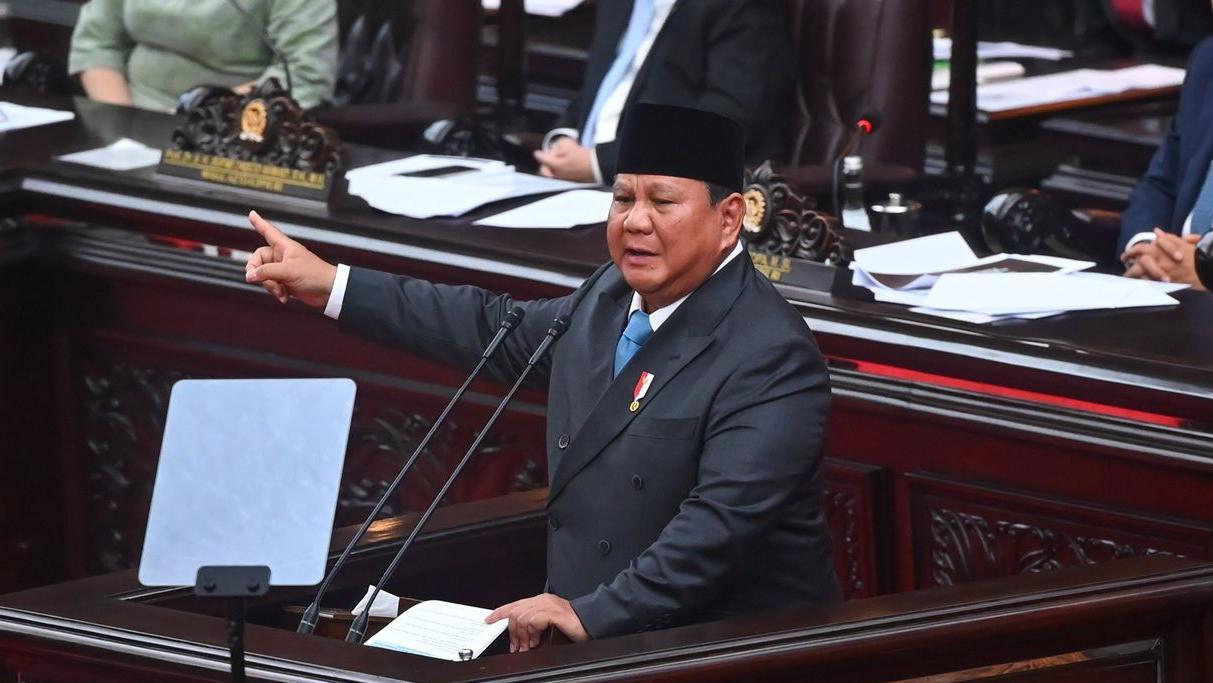
“The issuance of this regulation is a strategic step to strengthen the governance of our natural resource commodity exports,” Prabowo declared during his address at a DPR plenary session on Wednesday, May 20th. He further elaborated on the policy’s ambitious objectives.
“The primary goal of this policy is to enhance supervision and monitoring, and to eradicate practices such as underpayment, under-invoicing, transfer pricing, and the evasion of foreign exchange earnings from exports.” This directive underscores a concerted effort to curb financial malfeasance that has historically plagued the sector.
Under the new regulation, export sales of these commodities will be channeled exclusively through government-appointed BUMNs, which will serve as “single exporters.” This centralized approach is designed to provide greater transparency and control over the entire export value chain.
“This means that the proceeds from every export sale will be forwarded by the Government-appointed BUMN to the business operators managing these activities,” Prabowo explained. This mechanism ensures that while BUMNs manage the transactions, the benefits still flow back to the producers.
Prabowo highlighted that the impetus for this new regulation stems from pervasive “under-invoicing” in Indonesia’s export transactions. He unequivocally stated, “Under-invoicing is, in fact, fraud or deception,” emphasizing the severe economic consequences of such practices.
Under-invoicing refers to the illicit practice of declaring a lower value for goods or transactions on an invoice than their actual worth, often to evade taxes or duties.

Presenting compelling data, Prabowo claimed that the staggering financial losses attributable to under-invoicing over the past 34 years amount to an estimated IDR 15,400 trillion. This enormous figure underscores the urgency of the government’s intervention.
“We know that the difference between what is reported and what is not reported often reaches 50%,” he added, illustrating the massive scale of the illicit financial outflows. He reiterated that “the issuance of this regulation is a strategic step to strengthen the governance of our natural resource commodity exports,” affirming its crucial role in preventing further “leakages” of state revenue.
The implementation of this transformative policy will unfold in two distinct phases, as outlined in Prabowo’s presentation:
- Phase One: Commencing on June 1st and extending until August 31st, 2026, this transitional stage requires exporting companies to redirect their export-import trade transactions with foreign buyers through the designated BUMNs.
- Phase Two: Beginning in September 2026, this phase will see BUMNs assume full control over all transactions and contracts with international buyers, solidifying their role as the exclusive channel for Indonesia’s key commodity exports.
What Other Points Did Prabowo Address?
During his address at the DPR Plenary Session, Prabowo also presented the Macroeconomic Framework (KEM) and Principles of Fiscal Policy (PPKF) for the 2027 State Budget Draft (RAPBN), outlining an ambitious vision for Indonesia’s economic future.
“With the right economic strategy, prudent and sustainable fiscal policy, I am confident that Indonesia’s economy can grow within the range of 5.8-6.5 percent in 2027, moving towards 8 percent economic growth by 2029. And this growth must be reflected in a tangible improvement in the welfare of the people,” he asserted, signaling a commitment to inclusive prosperity.
Here are the detailed components of the KEM and PPKF presented by Prabowo:
2027 State Budget Posture
- State revenue: 11.82–12.40 (% of GDP)
- State expenditure: 13.62–14.80 (% of GDP)
- Deficit: 1.80–2.40 (% of GDP)
2027 Macroeconomic Assumptions
- Economic growth: 5.8–6.5%
- Inflation: 1.5–3.5%
- 10-year SBN interest rate: 6.5–7.3%
- Exchange rate: IDR 16,800–17,500/US$
- Indonesian crude oil price (ICP): US$70–95/barrel
- Crude oil lifting (in thousand barrels/day): 602-615
- Natural gas lifting (in thousand barrels of oil equivalent/day): 934-977
2027 Development Targets
- Poverty reduction to 6.0–6.5%
- Open unemployment rate: 4.30–4.87%
- Gini ratio: 0.362–0.367
- Human capital index: 0.575
- Farmer welfare index: 0.8038
- Proportion of formal job creation: 40.81%
Beyond these figures, Prabowo also touched upon crucial strategic pillars, including accelerated industrialization and downstreaming, robust job creation initiatives, achieving food self-sufficiency, and the implementation of his flagship social program, free nutritious meals (MBG), alongside development plans for fishing villages.
A significant portion of Prabowo’s speech was dedicated to a fervent call for state and bureaucratic reform within his administration. He emphasized the imperative to eradicate corruption and illegal levies, to improve key institutions such as customs and the legal system, and to streamline licensing processes to foster a more efficient and transparent environment.
“We must eliminate corruption, abuse of authority, and practices that hinder our economic progress,” he affirmed, stressing his commitment to good governance.

This marked a historic occasion as it was Prabowo Subianto’s first attendance at a DPR Plenary Session as president. Typically, presidents deliver state addresses during the annual routine agenda, such as the August 17th independence day celebrations, making his presence a unique event.
DPR-RI Speaker Puan Maharani, who opened the session, acknowledged its special nature, stating that the Plenary Session was “very special because it was attended directly by the President of the Republic of Indonesia.”
She underscored the critical importance of presenting the Macroeconomic Framework (KEM) and Principles of Fiscal Policy (PPKF) for the 2027 State Budget Draft (RAPBN) as a proactive measure to “anticipate the risks of economic impacts from both domestic and international sources.”
“This will signal to the business world what to expect in 2027,” Puan noted, highlighting the policy’s role in providing clarity and confidence to investors and enterprises.

Looking ahead, Puan announced that the DPR would present the views of its various factions on the government’s economic policy framework on June 4th, facilitating a comprehensive legislative review.
Earlier, Minister of State Secretary Prasetyo Hadi clarified that Prabowo’s presence coincided with National Awakening Day, commemorated on May 20th. According to Prasetyo, the President intended to leverage this auspicious moment to foster national unity.
“So the President wants to use this momentum for us to once again unite our views and strengths as one nation, especially in carrying out the task of safeguarding our nation’s economy,” he explained, emphasizing a collective approach to economic stewardship.
This article will be updated periodically.
- The Issues Behind President Prabowo’s Statement: ‘People in villages don’t use dollars’
- Rupiah Hits Record Low, What Happens Next?
Summary
President Prabowo Subianto has announced a significant overhaul of Indonesia’s natural resource commodity export governance, centralizing control through state-owned enterprises (BUMNs). This policy targets key commodities such as palm oil, coal, and iron alloy, aiming to combat under-invoicing, transfer pricing, and the evasion of foreign exchange earnings. Prabowo cited an estimated IDR 15,400 trillion in financial losses over 34 years due to these illicit practices. The new framework, to be formalized by regulation, will see BUMNs act as “single exporters” in a two-phase implementation, starting June 2026.
During his address, President Prabowo also presented the Macroeconomic Framework and Principles of Fiscal Policy for the 2027 State Budget Draft, outlining ambitious economic targets. He projected economic growth of 5.8-6.5 percent in 2027, aiming for 8 percent by 2029, supported by detailed macroeconomic assumptions and development goals. Strategic pillars include accelerated industrialization, job creation, food self-sufficiency, and the free nutritious meals program. Additionally, he stressed the importance of state and bureaucratic reform, focusing on eradicating corruption and improving institutional efficiency.
