
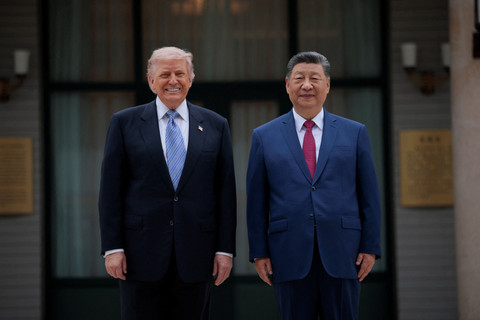

The recent summit between Donald Trump and Xi Jinping in Beijing has commanded the world’s undivided attention. While U.S.-China relations are a perennial subject of global interest, this particular meeting carries a distinct gravity. The international landscape is currently navigating a period of profound instability, marked by simmering tensions in Iran, volatile energy markets, and lingering concerns over Taiwan.
This summit represents much more than a routine clash between two superpowers; it is widely viewed as a critical effort to prevent global volatility from spiraling out of control. For years, the dynamic between Washington and Beijing has been defined by friction. From trade wars and technology restrictions to the cutthroat race for AI dominance, the relationship has been a narrative of increasing hostility, with Trump initially employing a confrontational approach characterized by tariffs and aggressive economic containment.
However, the global climate has shifted. China no longer appears as defensive as it did just a few years ago. Despite experiencing a domestic economic slowdown, Beijing remains a cornerstone of the global supply chain. The world continues to rely heavily on Chinese manufacturing, as well as its essential access to rare earth minerals and critical technology components.

Concurrently, the United States faces its own set of mounting pressures. As conflict in Iran threatens the stability of the Strait of Hormuz and puts global energy security at risk, the need for a functional relationship between the world’s two largest economies has become vital for maintaining global market stability.
Many analysts argue that Washington can no longer rely solely on a strategy of pressure. Given how deeply intertwined the global economy is with both the U.S. and China, open communication is essential to prevent international market chaos. Consequently, this summit has been marked by a newfound sense of caution. While the two leaders remain rivals—competing over sensitive issues like Taiwan and territorial disputes in the South China Sea—there appears to be a mutual recognition that open conflict would be catastrophic in such a fragile world order.
China’s confidence has also evolved. Leveraging its significant economic influence and strengthening ties in the Middle East, Beijing now commands a stronger bargaining position than it held in the past. This shifted landscape has complicated Washington’s efforts to curb China’s influence in AI and emerging technology sectors, setting the stage for a long-term, structural rivalry.

Despite these entrenched differences, stability has emerged as a shared objective. Global markets are watching these developments closely, with investors banking on a de-escalation of hostilities to avoid shocks to international trade, energy pricing, and currency valuations.
Ultimately, the health of the U.S.-China relationship is inseparable from the trajectory of the global economy. The outcomes of the Beijing summit reach far beyond the borders of the two nations involved, affecting every country that relies on international stability. This meeting serves as a clear signal that, in an increasingly fractured world, high-level diplomatic dialogue remains the most important tool for preventing the global situation from deteriorating further.
Summary
The recent summit between Donald Trump and Xi Jinping in Beijing serves as a crucial effort to address rising global instability, including tensions in Iran, volatile energy markets, and concerns over Taiwan. Despite long-standing friction over trade and technology, both leaders have recognized that a direct conflict would be catastrophic for the fragile global order. Consequently, the meeting highlights a mutual shift toward cautious diplomacy to prevent further international market chaos.
While the two nations remain engaged in a deep structural rivalry, both recognize that maintaining a functional relationship is essential for global economic stability. China’s significant role in supply chains and its strengthened bargaining position have forced the United States to prioritize dialogue over pure economic containment. Ultimately, this summit underscores that high-level communication remains the primary tool for managing international volatility and protecting the stability of the global economy.
