
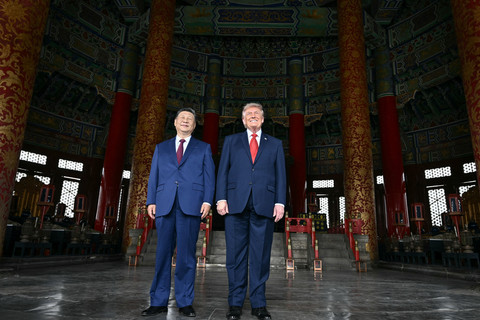

The leaders of the world’s two largest economies, US President Donald Trump and Chinese President Xi Jinping, reached a crucial consensus during their meeting in Beijing on Thursday, May 14: the Strait of Hormuz must remain open to ensure the uninterrupted flow of global energy. This significant agreement was highlighted in an official statement released by the White House following the high-stakes summit.
A White House official, quoted by NBC News, characterized the discussions as a “good meeting” between President Trump and President Xi. Beyond the critical issue of energy routes, both leaders explored various avenues to enhance economic cooperation between the United States and China. Notably, a delegation of prominent US business leaders also participated in parts of the discussions, underscoring the commercial importance of the summit.
Further delving into regional stability, the two presidents also addressed the conflict in Iran and the broader situation in the Strait of Hormuz. The White House official reiterated that “Both sides agreed that the Strait of Hormuz must remain open to support the smooth flow of energy.” Adding a layer to China’s perspective, NBC News reported that President Xi firmly opposed both the militarization of the Strait of Hormuz and any attempts to impose tariffs on its use, advocating for free navigation. Furthermore, Xi expressed China’s keen interest in purchasing more American oil, a strategic move aimed at reducing its future reliance on the energy transit routes through Hormuz.

In a critical move for global non-proliferation, the White House, as cited by Reuters, confirmed that the “two countries also agreed that Iran should not possess nuclear weapons.” Beyond geopolitical concerns, Trump and Xi underscored the importance of advancing efforts to halt the illicit flow of fentanyl precursor chemicals into the US. Simultaneously, discussions focused on boosting China’s procurement of American agricultural products, addressing trade imbalances and supporting US farmers.
Intriguingly, despite its historical sensitivity, the contentious Taiwan issue was conspicuously absent from the official White House summary of the discussions. This omission stands out, especially given that prior to the meeting, Chinese state media had reported a stark warning from President Xi to President Trump: mishandling the Taiwan situation could potentially trigger severe clashes or even conflict, emphasizing the delicate nature of cross-strait relations.
Summary
US President Donald Trump and Chinese President Xi Jinping met in Beijing, agreeing that the Strait of Hormuz must remain open to ensure the uninterrupted flow of global energy. The White House confirmed this crucial consensus, alongside an agreement that Iran should not possess nuclear weapons. Both leaders also explored avenues to enhance economic cooperation between the two nations.
President Xi expressed opposition to the militarization of the Strait of Hormuz and any tariffs on its use, while also indicating China’s interest in purchasing more American oil. Discussions further covered advancing efforts to halt illicit fentanyl precursor chemicals entering the US and boosting China’s procurement of American agricultural products. Notably, the contentious Taiwan issue was absent from the official White House summary of the discussions.
