
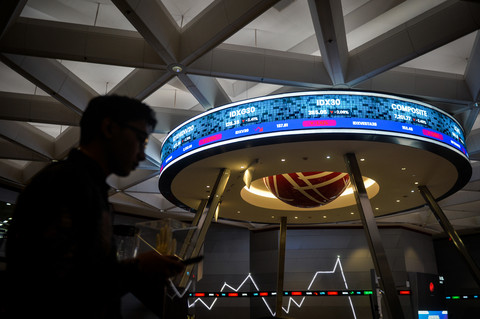
 The Jakarta Composite Index (IHSG) concluded trading on Wednesday, May 13th, with a modest decline, edging lower by just 1.9 percent to settle at 6,723. This subdued reaction occurred despite the delisting of several prominent Indonesian stocks from the MSCI Global Standard Index, a testament to investors having largely anticipated this significant market development.
Hendra Wardana, an analyst and founder of Republik Investor, found the market’s response particularly noteworthy, highlighting that the IHSG did not trigger a trading halt following the announcement. This demonstrated a surprising resilience compared to previous market shocks.
“Interestingly, the market pressure this time has been relatively more controlled compared to previous episodes that led to trading halts,” Hendra explained to kumparan on Wednesday, May 13th, underscoring the market’s improved composure.
He further elaborated that this contained reaction signals that market participants had already begun to anticipate the potential removal of these stocks over recent weeks. This foresight was especially prevalent after MSCI had earlier indicated a freeze on adjustments to the foreign inclusion factor for Indonesian equities. In essence, a significant portion of market players had engaged in proactive repricing, effectively diminishing the element of surprise and softening the overall impact on the market.
From a technical standpoint, Hendra acknowledged that the exit of six issuers from the MSCI index inherently carries the potential to trigger passive foreign capital outflows. This is primarily because numerous global fund managers are mandated to adjust their portfolios to align with the revised composition of the MSCI index, necessitating the sale of affected shares.
However, Hendra stressed that this “forced selling” pressure is primarily short-term in nature. It typically intensifies closer to the effective date of the changes, which is usually towards the end of May, aligning with the actual rebalancing.
“Once this adjustment phase is complete, the market generally begins to seek a new equilibrium,” he stated. “Therefore, today’s sharp weakening is not necessarily the harbinger of a prolonged bearish trend, but rather reflects a process of valuation normalization and the adjustment of foreign portfolio weights.”
Beyond the MSCI-related adjustments, Hendra suggested that the nearly 2 percent decline in the IHSG on this particular day indicates that market pressure was not solely derived from MSCI factors. Instead, external factors continue to exert a highly dominant influence on both global and domestic market psychology, playing a crucial role in shaping investor sentiment.
“Investor concerns are currently elevated following the rupiah’s renewed pressure, nearing the Rp 17,500 per US dollar level, while global oil prices have surged towards the $100 per barrel mark due to escalating global geopolitical tensions,” Hendra pointed out. “The combination of these two factors raises significant worries regarding a potential widening of Indonesia’s current account deficit and future fiscal pressures.”
Looking ahead, Hendra projects that the IHSG still has the potential to experience further pressure, possibly testing psychological support levels between 6,700 and 6,585. Nevertheless, a window for a rebound remains open if geopolitical tensions begin to subside, global oil prices stabilize, and the MSCI-related pressure concludes after the rebalancing at the end of May.
“Investors are currently inclined to await clarity on the rupiah’s trajectory, the movement of energy commodity prices, and the stability of foreign fund flows before making aggressive re-entries into the Indonesian stock market,” Hendra concluded.
Echoing this sentiment, Herditya Wicaksana, an analyst at MNC Sekuritas, also highlighted that the current MSCI announcement regarding the delisting of several stocks differs significantly from previous announcements.
“Indeed, when discussing the current MSCI announcement compared to past ones, it’s certainly different,” Herditya explained. “Previous announcements were a ‘surprise’ for investors, leading to considerable panic among Indonesian investors, especially given the risk of being reclassified into frontier market status.”
For subsequent trading sessions, Herditya’s technical analysis suggests that the IHSG remains vulnerable to further correction, potentially testing the 6,644-6,711 range.
Beyond the MSCI impact, Herditya attributed today’s IHSG correction partly to the persistently high US inflation data, which registered at 3.8 percent year-on-year. This, he noted, suggests that the US Federal Reserve’s interest rates will likely remain “higher for longer,” further exacerbated by escalating geopolitical tensions between the US and Iran concerning a ceasefire.
Summary
The Jakarta Composite Index (IHSG) experienced only a modest 1.9% decline despite several Indonesian stocks being delisted from the MSCI Global Standard Index. This subdued reaction suggests investors largely anticipated the changes and had already engaged in proactive repricing, leading to a more controlled market response compared to previous events. While the delisting may trigger short-term passive foreign capital outflows due to portfolio adjustments, this “forced selling” pressure is expected to normalize after the rebalancing concludes by the end of May.
Beyond the MSCI announcement, the IHSG’s decline was also influenced by dominant external factors impacting investor sentiment. Concerns rose due to the rupiah nearing Rp 17,500 per US dollar and global oil prices surging towards $100 per barrel amidst escalating geopolitical tensions. Additionally, high US inflation data contributes to expectations of prolonged higher interest rates from the US Federal Reserve. These combined factors raise worries about Indonesia’s current account deficit and fiscal pressures, with investors awaiting clearer economic stability before aggressive re-entry into the market.
