
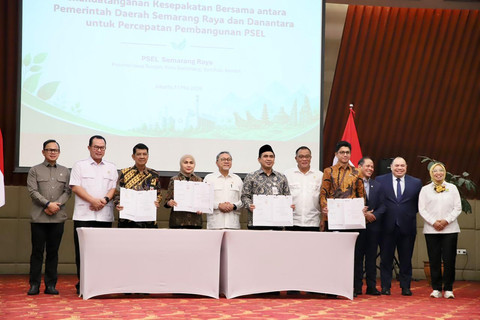

The Ministry of Home Affairs (Kemendagri) has strongly reaffirmed its unwavering commitment to accelerating the development of Waste-to-Energy (PSEL) facilities across regions in Indonesia. This crucial support was articulated by Deputy Minister of Home Affairs Bima Arya Sugiarto following his attendance at the signing of a pivotal joint agreement between local governments (Pemda) and Danantara, specifically aimed at expediting PSEL project implementation.
Bima emphasized that Kemendagri would actively oversee the execution of this vital program, ensuring that any challenges encountered at the regional level are promptly addressed and resolved. This comprehensive oversight will encompass various critical aspects, including land readiness, efficient waste transportation volumes, environmental considerations, and other essential requirements for seamless project delivery.
“God willing, Kemendagri will supervise everything from land issues and the volume of waste transported to environmental concerns and other aspects, all in accordance with the directives of the Minister of Home Affairs,” Bima stated during the event held at the Office of the Coordinating Ministry for Food in Jakarta on Monday, May 11, 2026.
Adding to the significance of the initiative, Coordinating Minister for Food Zulkifli Hasan highlighted President Prabowo Subianto’s profound dedication to resolving Indonesia’s long-standing waste crisis. He underscored the urgency, stating, “It is imperative that we swiftly tackle the waste problem, which has for too long imposed a severe environmental burden, causing soil, water, and air pollution, and posing a serious threat to public health.”

Zulkifli further reiterated that Presidential Regulation (Perpres) Number 109 of 2025 specifically mandates the expedited handling of waste. Consequently, accumulated waste in various regions will be transformed into electricity through the application of modern, safe, and internationally proven technology, marking a significant step towards sustainable waste solutions and renewable energy generation.
This ambitious program is designed to target 25 strategic locations, encompassing a total of 62 districts and cities nationwide. The initial phase of implementation will strategically prioritize areas currently classified under “waste emergency” categories, ensuring immediate intervention where it is most critically needed.
During the momentous occasion, joint agreements were formally signed by representatives from several local governments across six key regions. These regions include the Greater Serang area, Greater Semarang area, Bekasi Regency, Greater Bogor area, Greater Medan area, and Greater Lampung area, signifying a broad regional commitment to this transformative project.
Distinguished attendees at the signing ceremony included Minister of Environment Jumhur Hidayat, Chief Investment Officer (CIO) of Danantara Pandu Sjahrir, Head of the National Research and Innovation Agency (BRIN) Arif Satria, along with numerous governors, regents, and mayors representing the participating regions, all demonstrating unified support for Indonesia’s push towards effective waste management acceleration and environmental stewardship.
Summary
The Ministry of Home Affairs (Kemendagri) is strongly committed to accelerating Waste-to-Energy (PSEL) facilities across Indonesia. Deputy Minister Bima Arya Sugiarto confirmed Kemendagri will oversee project execution, addressing challenges such as land readiness and waste transportation volumes. This initiative reflects President Prabowo Subianto’s dedication to resolving Indonesia’s long-standing waste crisis, which causes severe environmental burdens.
Coordinating Minister for Food Zulkifli Hasan emphasized the urgency, noting Presidential Regulation Number 109 of 2025 mandates expedited waste handling. Waste will be transformed into electricity using modern technology, targeting 25 strategic locations with an initial focus on “waste emergency” areas. Joint agreements were recently signed by local governments from six key regions, including Greater Serang, Semarang, and Bogor, signifying broad regional commitment.
