
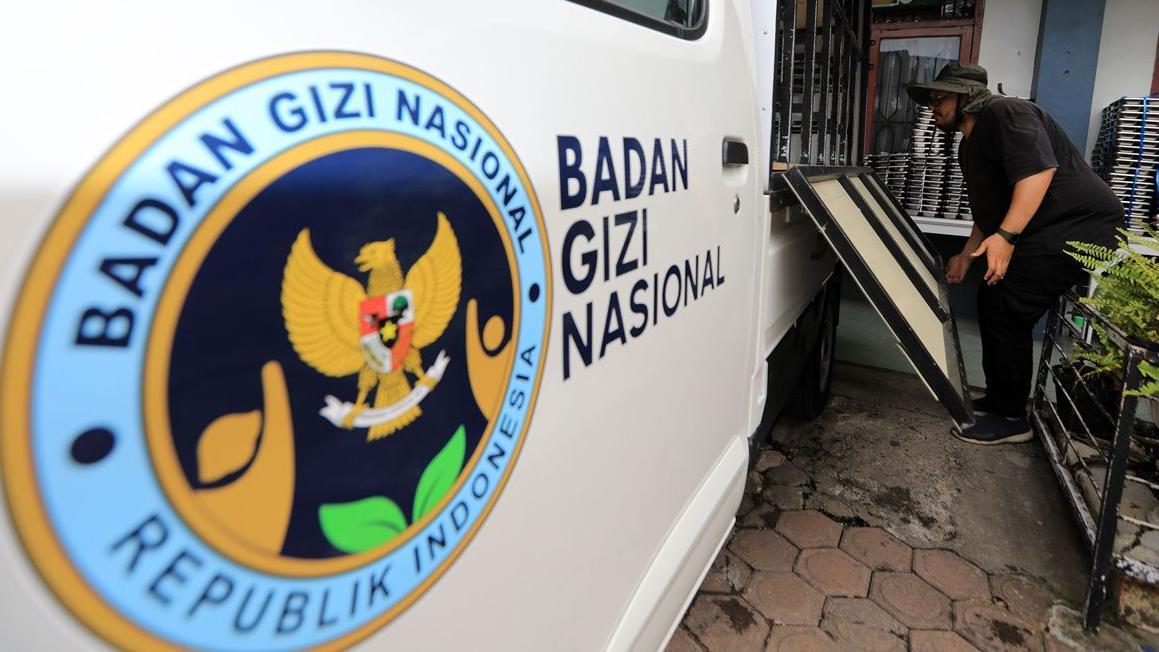

The National Nutrition Agency (BGN) has emerged as a central pillar in the administration of the Free Nutritious Meal (MBG) policy. Established roughly 1.5 years ago, the agency has consistently captured the public spotlight due to its ambitious mandate and the high-profile nature of its operations.
During a cabinet meeting on May 5, 2025, President Prabowo Subianto highlighted his flagship priority: the MBG program. Addressing his ministers, the President noted that out of more than 3 million beneficiaries, only 200 cases of food poisoning had been reported. Prabowo touted this as a 99.99% success rate, a claim that was met with applause from the assembly.
Despite this optimistic outlook, the President urged field operators not to become complacent. He specifically singled out Dadan Hindayana, the Head of BGN, noting, “I appreciate the BGN and its staff for committing to a goal of zero deviations and zero errors. We all understand that this is no easy task.”
The BGN has been a frequent subject of national discourse throughout its first year. From reports of food poisoning and menu controversies to debates over procurement, the agency remains a vital, if contentious, entity under the current administration.

Mirah Mahaswari, a political science lecturer at Udayana University and a PhD candidate at Monash University, describes the BGN as “one of the key political instruments in the Prabowo administration.” She argues that while the agency serves as the vehicle for implementing the MBG, it also functions as a tool for political consolidation, as the success of the program is intrinsically tied to the government’s political legitimacy.
This strategic importance has reportedly granted the BGN significant flexibility in managing its funding. Isnawati Hidayah, an economist and food security expert from the Center of Economic and Law Studies (CELIOS), suggests that the agency possesses “unlimited power” due to overwhelming government support. She clarifies that while this is a figure of speech, the agency enjoys significant leeway in executing its policies.
The Origins of the Free Lunch Idea
Just two months before the end of his term, President Joko Widodo issued a presidential decree formally establishing the BGN to “carry out the task of fulfilling national nutrition.” Article 2 specifies that the agency reports directly to the President, while Article 3 outlines its broad functions, including technical policy management, nutritional distribution, and other presidential mandates.
Soon after, an academic from IPB University, Dadan Hindayana, was appointed as the agency’s head. The agency’s inception is deeply rooted in the 2024 presidential campaign, during which Prabowo Subianto and Gibran Rakabuming Raka pledged to provide free meals and milk to students, as well as nutritional support for toddlers and pregnant women—a vision encapsulated in their “Asta Cita” document.
During the fifth presidential debate in February 2024, Prabowo emphasized the program’s necessity, stating, “We are addressing fundamental problems to improve the quality of life for the Indonesian people, aiming to eradicate poverty from the nation.”
The BGN is currently managed by eight top executives. Notably, the leadership lacks nutrition experts; Dadan Hindayana is an entomology researcher, while his deputies include former journalists, retired military officers, and police officials. With only one woman in its top leadership, the agency has faced criticism regarding its composition.
Technically, the BGN selects the operators of the MBG program through two channels: direct agency involvement or partnerships with foundations and other organizations. These entities operate under the Nutritional Service Fulfillment Units (SPPG), which function as local kitchens. As of April 2026, more than 27,000 SPPGs have been established across Indonesia.
The program is backed by a massive budget. According to the Ministry of Finance, the BGN received Rp 71 trillion in 2025, placing it among the top ten government institutions for funding. In 2026, that budget surged nearly fourfold to Rp 268 trillion, surpassing the budgets of both the Ministry of Defense and the Ministry of Education, Culture, Research, and Technology.
Why is the BGN considered so ‘powerful’?
Researchers point to the massive budget and political influence as indicators of the BGN’s strategic power. Isnawati Hidayah notes that the agency’s “unlimited” flexibility is evident in how the 2026 budget was largely drawn from the education sector. The government maintains that since the primary beneficiaries are students, using education funds for meals is justifiable, though the decision sparked legal challenges from civil society groups brought before the Constitutional Court.
Transparency International Indonesia (TII) has also raised concerns regarding procurement. Research shows that 68.2% of the BGN’s goods and services are acquired through e-purchasing, with minimal use of open, competitive bidding. TII suggests that such a massive budget should be managed with greater transparency.
Public criticism also flared recently after reports that the 2025 budget was divided into over 1,000 procurement packages worth Rp 6.31 trillion. Controversially, these included items such as shoe polish, belts, and towels, leading experts to question their relevance to “nutritional fulfillment.”
Beyond finance, Mirah Mahaswari notes that the BGN holds a dual role: it is a service delivery agency and a vehicle for political consolidation. The appointment of former military and police officers reflects a preference for “control and stability” in implementing the program, aligning with the leadership style of the Prabowo administration. Recent research by Indonesia Corruption Watch (ICW) indicates that many of the foundations acting as partners for SPPGs are affiliated with political parties or winning campaign teams, raising concerns about the potential for patronage.
A Culture of ‘Negative Thinking’
Despite criticism, the BGN claims that it operates with transparency and professionalism. Dadan Hindayana stated that the agency has partnered with the Attorney General’s Office and the Development Finance Comptroller (BPKP) to audit expenditures. To address public concerns, the agency launched the “Sahabat Sentra Aduan Gizi Indonesia” (SAGI) 127, a 24-hour grievance channel.
President Prabowo himself has dismissed claims that the program is a political maneuver. During the National Christmas Celebration in early 2025, he remarked, “Some accuse me of creating the MBG to be re-elected. They are always thinking negatively. But if the people choose me in 2029, what is my fault? I am driven by the fact that I cannot bear to see Indonesian children suffer from malnutrition.”
Reforming the Agency’s Design
The BGN faces significant challenges, including reports that nearly 34,000 students have suffered from food poisoning between early 2025 and April 2026. Experts like Professor Sri Raharjo of UGM have criticized the agency’s response to these incidents, describing it as reactive rather than preventative.
Furthermore, ICW recently reported an alleged corruption scandal involving the procurement of halal certification services by the BGN to the Corruption Eradication Commission (KPK), with potential state losses estimated at Rp 49.5 billion.
Isnawati Hidayah argues that the current system is overly complex and expensive. She proposes a radical redesign: limiting the scope of the MBG to focus specifically on underprivileged children and replacing the costly SPPG kitchens with existing school canteens. By shifting the focus to supervision and training rather than expansive infrastructure, the government could ensure the program is both cost-effective and truly beneficial to the target population.
Summary
The National Nutrition Agency (BGN) serves as the primary institution for implementing President Prabowo Subianto’s Free Nutritious Meal (MBG) program, which aims to eradicate malnutrition. Backed by a massive budget that reached Rp 268 trillion in 2026, the agency operates under direct presidential authority to manage food distribution through a vast network of local kitchens. Despite its strategic role in government policy, the agency has faced significant scrutiny regarding its opaque procurement processes, the questionable relevance of certain expenses, and concerns over political patronage in its partnerships.
Public and expert criticism has intensified following reports of food poisoning incidents and alleged corruption scandals involving agency contracts. While the government defends the program as a vital humanitarian initiative, analysts argue that the agency’s leadership composition and reliance on non-competitive procurement undermine its effectiveness. Experts suggest a structural reform is necessary, advocating for a more targeted approach that focuses on vulnerable children and utilizes existing school infrastructure to ensure greater accountability and cost-efficiency.
