

The hantavirus outbreak aboard the cruise ship MV Hondius is not the start of a new pandemic, according to Maria van Kerkhove, an infectious disease epidemiologist at the World Health Organization (WHO).
Van Kerkhove emphasized that the current situation is distinct from the Covid-19 pandemic. Unlike respiratory viruses that spread easily through the air, hantavirus is primarily transmitted through “close and intimate contact.” During a press conference, she clarified, “This is not Covid, this is not influenza; the mode of transmission is very, very different.”
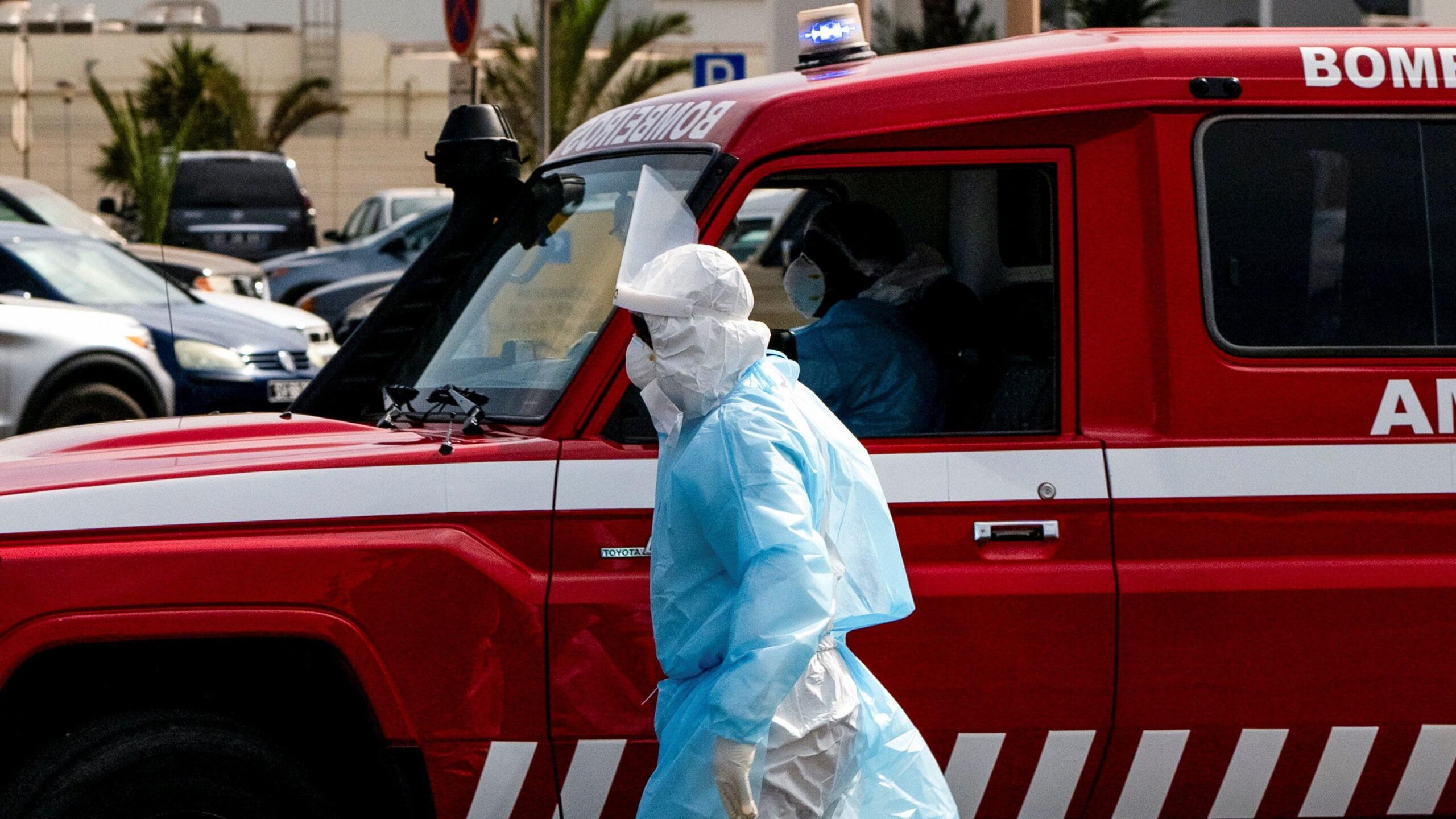
As a precaution, authorities have mandated that all individuals on board the MV Hondius wear masks. Furthermore, healthcare personnel attending to suspected cases have been instructed to utilize higher-level personal protective equipment to ensure safety.
WHO Director-General Tedros Ghebreyesus echoed these sentiments, stating that the organization currently assesses the public health risk as low. He noted that the first two confirmed cases had recently traveled through Argentina, Chile, and Uruguay, participating in bird-watching excursions that took them near habitats known to host the rodents that carry the virus.
Because the disease has an incubation period of up to six weeks, the WHO expects that additional cases may be identified as contact tracing continues. The organization is actively monitoring reports of other individuals who may have been exposed to the virus.

As of Thursday (May 7), the WHO confirmed that five out of eight suspected cases had tested positive for the virus. Tragically, three deaths have been recorded, including a 69-year-old Dutch woman. Her Dutch husband and a German woman also passed away, and their cases are currently under investigation.
The ship’s operator, Oceanwide Expeditions, confirmed that 30 passengers, representing at least 12 different nationalities, disembarked the vessel at St. Helena, a British Overseas Territory. The body of the deceased Dutch man was also removed from the ship at that location.
The MV Hondius set sail from Ushuaia, Argentina, on April 1, with an original arrival date in the Canary Islands, Spain, scheduled for May 10. The ship initially carried approximately 150 passengers and crew members from 28 countries.

A large-scale operation is now underway to track individuals who may have been exposed before returning home to countries including the United Kingdom, South Africa, the Netherlands, the United States, and Switzerland.
Prioritizing Contact Tracing
Professor Robin May, Chief Scientific Officer at the UK Health Security Agency (UKHSA), described the contact tracing effort as a “significant undertaking” that will remain a priority for some time. Oceanwide Expeditions confirmed that they have contacted all passengers who disembarked at St. Helena on April 24, including seven UK citizens.
The UKHSA reported that the two UK nationals who left the ship in St. Helena alerted health officials upon hearing of the outbreak and are now voluntarily self-isolating. They are currently asymptomatic. Similarly, health officials in Georgia and Arizona have confirmed to the BBC that they are monitoring three passengers who returned to the United States; none have shown symptoms thus far.
While human-to-human transmission is possible with the Andes strain of the virus, experts reiterate that the global risk remains low because it does not spread as easily as influenza or Covid-19. It is not yet clear exactly how the outbreak originated. Hantavirus is typically transmitted from rodents to humans through the inhalation of air contaminated by viral particles found in rodent urine, droppings, or saliva.

The cruise itinerary included remote wildlife areas, providing potential opportunities for exposure prior to boarding or during excursions. Experts believe that the infections aboard the MV Hondius may have spread between individuals due to the close quarters of the ship, where passengers share cabins and dining areas.
Understanding the Andes Strain
Unlike highly contagious diseases such as measles, the Andes strain of hantavirus is not easily transmitted. Infection typically requires prolonged, close physical proximity. The UKHSA has clarified that the virus does not spread through casual social contact in public spaces, workplaces, or schools.
Symptoms typically manifest two to four weeks after exposure, though they can sometimes appear later. Early signs often mirror flu-like symptoms, such as fever, fatigue, and muscle aches, which can progress to shortness of breath, abdominal pain, nausea, vomiting, or diarrhea. While there is no specific treatment, early supportive medical care significantly improves survival rates.

The UKHSA has advised UK passengers returning from the cruise to self-isolate for 45 days. Professor May emphasized that for the general public, the risk remains “extremely low.” Dr. Meera Chand, Deputy Director for Emerging Infections at the UKHSA, added, “It is important to reassure the public that the risk to the general population remains very low. We are conducting contact tracing to limit the risk of further transmission.”
The MV Hondius is currently en route to the Canary Islands after a three-day anchorage near Cape Verde. The remaining passengers and crew are expected to fly to their home countries following the completion of the voyage. Oceanwide Expeditions stated that as of May 7, no one remaining on board was showing symptoms, and the ship has undergone a deep professional cleaning in preparation for the upcoming evacuation.
Summary
The World Health Organization (WHO) has confirmed that the hantavirus outbreak on the MV Hondius cruise ship is not the start of a pandemic. Unlike respiratory illnesses, the Andes strain of hantavirus does not spread easily through the air and typically requires close, intimate contact for human-to-human transmission. Consequently, health authorities maintain that the public health risk remains low, emphasizing that the situation is fundamentally different from diseases like COVID-19 or influenza.
As of early May, five out of eight suspected cases have tested positive, with three reported deaths linked to the outbreak. Global health agencies are currently conducting large-scale contact tracing for passengers who have already disembarked and returned to their home countries. While there is no specific treatment, authorities are prioritizing monitoring and supportive care, noting that the virus does not spread through casual social contact in public settings.
