
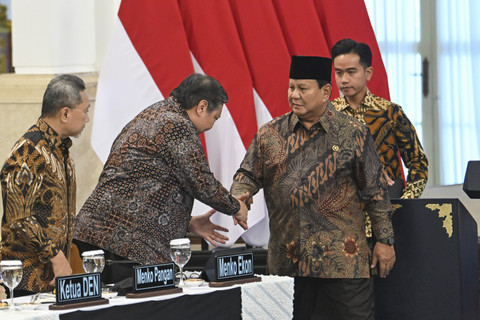

Indonesia’s economy has demonstrated remarkable resilience, recording a robust growth rate of 5.61 percent in the first quarter of 2026. Coordinating Minister for Economic Affairs Airlangga Hartarto officially presented these positive results to President Prabowo Subianto, highlighting that the nation’s performance has surpassed the projections of international institutions, which had initially estimated growth at 5.2 percent.
Speaking at a press conference at the State Palace in Jakarta on Tuesday (May 5), Airlangga noted that this growth trajectory places Indonesia among the top performers within the G20 nations. “Our growth rate has outpaced that of major economies, including China, Singapore, South Korea, Saudi Arabia, and the United States,” he stated.
This economic momentum is driven by a strong performance across key sectors. Private consumption grew by 5.52 percent, while government spending saw a significant surge of 21.81 percent, reaching Rp 815 trillion. Furthermore, the industrial, trade, public administration, transportation, logistics, agriculture, and construction sectors all contributed positively to the overall economic landscape, alongside a healthy balance in export and import activities.
Macroeconomic indicators further reinforce this stability. Inflation for April was successfully reined in at 2.42 percent, a notable decline from the 3.48 percent recorded in March. Consumer confidence remains strong with an index score of 122.9, and the country maintained a trade surplus for the 70th consecutive month in February, totaling USD 1.27 billion.
Capital investment also saw healthy gains, with first-quarter realization rising by 7 percent to reach Rp 498.8 trillion. Simultaneously, domestic credit growth reached 9.49 percent in March 2026, totaling Rp 8,659 trillion. These figures underscore the growing confidence in Indonesia’s economic future.
Despite these gains, the government remains vigilant regarding global market volatility. Airlangga confirmed that President Prabowo has placed a high priority on managing capital outflows. In response, a collaborative strategy between Bank Indonesia and the Ministry of Finance has been established to ensure macroeconomic stability and safeguard the economy against potential capital fluctuations moving forward.
Summary
Indonesia’s economy achieved a robust growth rate of 5.61 percent in the first quarter of 2026, significantly outperforming initial projections and surpassing major G20 nations. This positive performance was primarily driven by strong private consumption, a substantial increase in government spending, and consistent contributions from key sectors such as industry, trade, and agriculture.
Macroeconomic stability is further evidenced by a controlled inflation rate of 2.42 percent, high consumer confidence, and a continuous trade surplus. To sustain this momentum, the government is collaborating with Bank Indonesia to implement strategies that manage global market volatility and mitigate potential capital outflow risks.
