
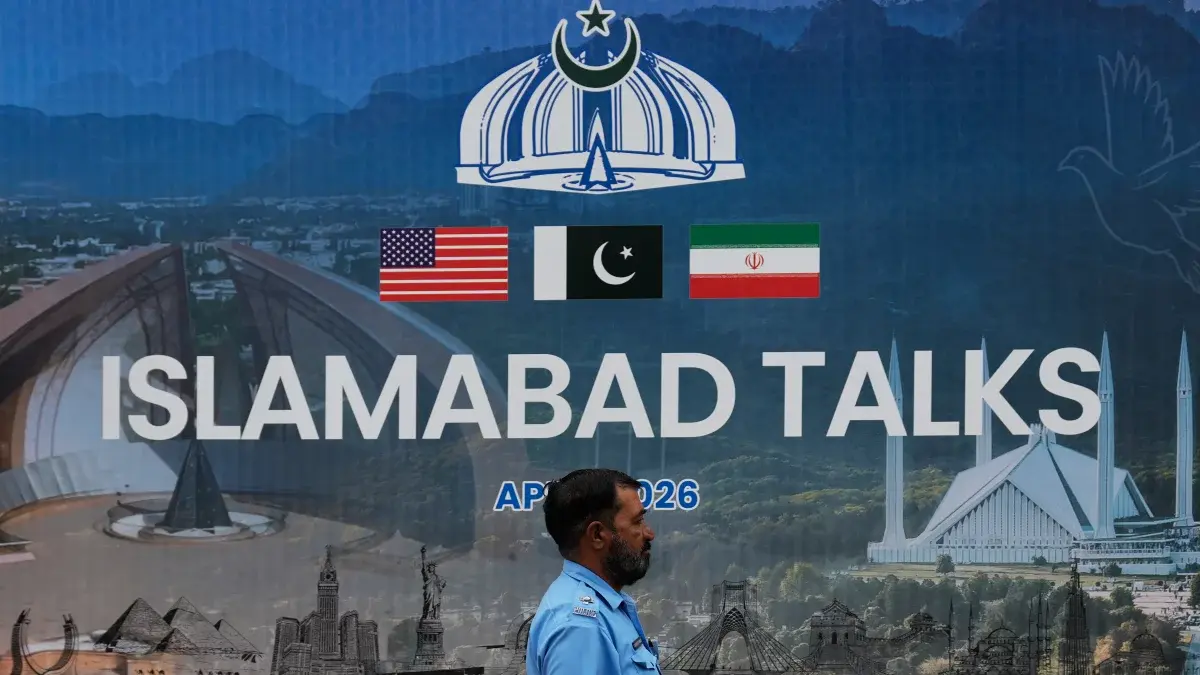
Tensions between the United States (US) and Iran are entering a critical phase. A temporary two-week ceasefire is scheduled to conclude tomorrow, Wednesday (April 22), without certainty over whether further negotiations will take place or if the conflict will reignite.
This ceasefire was initially agreed upon on April 8, following over 40 days of intense conflict. However, diplomatic efforts held in Islamabad, Pakistan, have yet to yield significant results. Iran reportedly remains hesitant to continue negotiations amidst military pressure and threats emanating from Washington.
On the other hand, the United States maintains optimism that talks can proceed. Nevertheless, strong signals have emerged directly from US President Donald Trump.
During Tensions in the Strait of Hormuz, Trump Reportedly Contacted a Pakistani General
Trump: No Time to Extend Ceasefire
In an interview with CNBC on Tuesday (May 21), Trump asserted his disinterest in extending the ceasefire without a concrete agreement in place.
“I don’t want to do that. We don’t have much time,” Trump stated when questioned about the possibility of extending the truce.
He also emphasized the US’s strong negotiating position, expressing confidence that it would lead to a favorable agreement. Yet, simultaneously, Trump warned that military attacks could resume if Iran does not swiftly agree to a deal.
“I hope we do the bombing because I think that’s a better attitude to accept. But we are ready to go. I mean, the military is eager to go,” he remarked, as quoted by Reuters.
Diplomacy Stalled, Iran Remains Hesitant
The mediated negotiations in Islamabad are led by US Vice President JD Vance. While Washington has expressed confidence in Iran’s attendance, officials in Tehran are reportedly still deliberating their participation.
Iran perceives the negotiations as taking place under the ‘shadow of threats,’ primarily due to the US naval blockade and Trump’s stark declarations.
This challenging situation significantly diminishes the prospects of reaching a swift agreement.
Four Possible Scenarios
Meanwhile, citing News18, as the deadline looms, analysts have outlined four potential outcomes that could unfold once the ceasefire expires:
1. Interim Deal
This represents the most optimistic scenario. Both parties could agree on a temporary memorandum of understanding (MoU) to extend the window for diplomacy. The focus would be on exchanging nuclear concessions for sanctions relief. However, the contentious issue of Iran’s uranium enrichment remains a primary obstacle.
2. Extended Ceasefire Without an Agreement
Negotiations might reach an impasse, yet both sides could opt to extend the ceasefire to avert open warfare. Despite such an extension, the situation would remain fragile and carry the inherent risk of triggering conflict at any given moment.
3. No Agreement, But Also No War
Should the talks completely fail, both parties might nonetheless refrain from direct escalation. In this scenario, Iran could strengthen its alliances with China and Russia, while the US would maintain its blockade. This creates a precarious ‘no war, no peace’ situation, which holds the potential to disrupt global energy markets significantly.
4. Ceasefire Fails, War Resumes
This is the gravest possible outcome. If the ceasefire concludes without an extension or a definitive agreement, military conflict could immediately reignite. Trump has even threatened to target vital Iranian infrastructure, while Tehran has warned of playing ‘new cards’ on the battlefield. Such an escalation also risks spreading across the broader Middle East, impacting regions including Lebanon and Iraq, as well as strategic waterways like the Strait of Hormuz and Bab al-Mandeb.
As of now, there is no certainty whether further negotiations will transpire before the critical deadline. Analysts generally believe that the chances of achieving a full agreement in the short term are considerably slim.
The two most realistic possibilities appear to be either a fragile extension of the current ceasefire or a complete failure leading directly to a renewed open conflict. The world now awaits a decision in a matter of hours, pondering whether diplomacy still holds sway, or if war will once again become the chosen path.
Summary
The temporary two-week ceasefire between the United States and Iran is scheduled to conclude on April 22, marking a critical phase in their ongoing tensions. Diplomatic efforts in Islamabad have largely stalled, as Iran remains hesitant to continue negotiations under the shadow of US military pressure and threats. US President Donald Trump has made it clear he will not extend the ceasefire without a concrete agreement, even warning of a resumption of military attacks if a deal is not swiftly reached.
As the deadline approaches, analysts have outlined four potential outcomes, from an optimistic interim deal involving nuclear concessions to a grim return to open warfare. Other scenarios include a fragile extension of the ceasefire without a definitive agreement, or a precarious “no war, no peace” situation if talks fail but direct conflict is avoided. With a full agreement deemed unlikely in the short term, the world awaits a decision that will determine whether diplomacy prevails or if renewed conflict will ensue.
