

Her name was not María Luisa.
She was not a nanny, nor a seamstress, nor simply a homemaker in Montevideo during the 1950s and 1960s. These identities were, in fact, merely a carefully constructed facade designed to conceal her true self.
She was África de las Heras, a formidable secret agent for the Soviet Union’s intelligence service (KGB), tasked with managing a sophisticated espionage network during the tumultuous Cold War era. Uruguay served as her strategic base of operations.
Before becoming a Soviet spy, África de las Heras was a Spanish communist activist who actively resisted General Francisco Franco’s regime in Barcelona. Within the clandestine world of the KGB, she operated under the evocative codename “Patria.”
Her extensive career dossier reveals a life steeped in intrigue and danger. During World War II, records indicate she worked as a telegraph operator deep within the Ukrainian forests, battling the Nazi occupation. Later, she was implicated in the planning of Leon Trotsky’s assassination in Mexico, conducted espionage in Paris, served as a spy instructor in Moscow, and ultimately, directed intelligence operations from Uruguay for two critical decades.
Holding the rank of colonel and adorned with numerous commendations, África de las Heras passed away shortly before the collapse of the Soviet Union. She carried countless secrets to her grave, many of which may never fully come to light.
Remarkably, many who knew her personally remained completely unaware of her true identity.
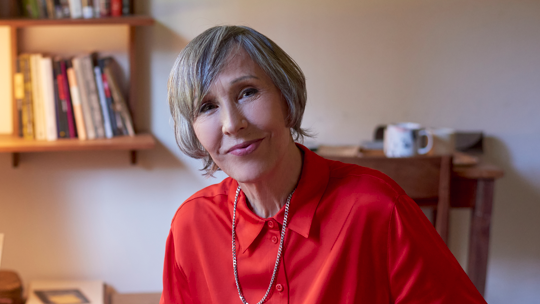
This profound deception also enveloped Argentine author Laura Ramos, until one day, the truth began to unravel.

In her compelling book, Mi niñera de la KGB (My KGB Nanny), Laura Ramos vividly recounts her childhood relationship with África de las Heras. Through a meticulous five-year investigation, Ramos painstakingly pieced together the real story of the woman who once offered her after-school snacks, revealing a hidden life far beyond her innocent memories.
This groundbreaking book offers the first account of África de las Heras written by someone who knew her intimately, daring to delve into the deepest corners of the Spanish spy’s enigmatic life during her tenure in Latin America. Throughout her investigative journey, Laura Ramos uncovered a series of discoveries that were both astonishing and chilling.
What did África de las Heras do in Uruguay?
The intricate story of África de las Heras’s arrival in Uruguay began in Paris, Laura Ramos shared with BBC Mundo. While in the French capital, “she seduced the poorest and most talented Uruguayan writer of that time, Felisberto Hernández. They married and arrived in Montevideo in late 1947.”
Uruguay’s strategic advantage lay precisely in its position off the United States’ intelligence radar. This made it an ideal location for the KGB to establish a base dedicated to coordinating and acquiring forged documents for Soviet agents. These agents were on a crucial mission to gather information about the US atomic bomb, a weapon that posed Moscow’s greatest concern at the dawn of the Cold War.
Read also:
- CIA operations in Indonesia: Porn films, communist hit lists, and the Jakarta Method
- The story of Mata Hari, a European spy who once lived in East Java
- The story of the Soviet Union’s bugging device in a work of art spying on the US
These crucial documents, the Argentine author explained, “she obtained by visiting cemeteries in Uruguay. When she found the graves of children, she would go to the local civil registry office, request their birth certificates, and then create false documents under the names of those deceased children.” This chilling method allowed her to forge identities with unsettling efficiency.

To maintain a convincing and unsuspected cover in Montevideo, the Spanish spy strategically cultivated relationships with Uruguayan intellectuals, many of whom were friends of her husband, Felisberto Hernández. Before them, De las Heras presented herself as someone utterly uninterested in political matters, often offering to care for their children or engaging in work as a seamstress.
Ramos’s mother knew De las Heras during this period. Subsequently, her mother moved to Argentina, where Laura Ramos and her elder brother were born. Years later, her mother returned to Montevideo with her children and re-established contact with the spy, who in Uruguay was widely known as María Luisa.
‘A Potent Weapon’
Laura Ramos vividly recalls that the KGB agent looked after her and her brother in 1964. They attended Escuela Francia, a school conveniently located near África de las Heras’s home.
“I remember very clearly seeing her standing at the door of our school,” Ramos recounted. “She would pick us up from school and take us to her house for a snack.”
Ramos described her as a middle-aged woman, “with grey hair, slightly plump but not fat, and short in stature; I distinctly remember her wearing skirts and blouses, and she did not speak with a Spanish accent.” Her demeanor was calm, and she would tell stories from La cuarta altura, a biography about a Soviet woman named Gulia Koroliova. “She wasn’t a sweet person, not at all, rather she tended to be cold,” Ramos added, painting a picture of a controlled, reserved individual.
Read also:
- The story of Aldrich Ames, the CIA spy who leaked secrets to the Soviet Union
- Robert Hanssen: The story of the FBI’s most dangerous spy’s capture
- Who was George Blake, the Soviet and British double agent who died in Russia?
Ramos and her brother eagerly anticipated visits to África de las Heras’s house, not just for the stories, but because she possessed “a potent weapon.” “Those were the very delicious and very expensive small cakes, from Oro del Rhin or La Mallorquina, which she gave us for snacks,” served alongside coffee with a touch of milk.
Two Deaths
Years later, Laura Ramos meticulously reconstructed the spy’s convoluted trail during her time in Uruguay.
Ramos discovered that De las Heras separated from the Uruguayan writer, Felisberto Hernández, soon after obtaining her citizenship. Several years later, she married an Italian spy named Valentino Marchetti, who had been dispatched by the Soviets as her superior. Together, they purchased a house on Williman Street in Montevideo—the very same house where Ramos and her brother had enjoyed their after-school snacks.
During her deep dive into the Spanish woman’s history, Ramos unearthed a chilling tape recording containing the statement of a Uruguayan woman. This woman, identified as “a librarian recruited to be a spy,” exposed dark secrets about África de las Heras and implicated her in two suspicious deaths.

In the recording, Ramos recounts, the Uruguayan woman alleged that África de las Heras “poisoned her husband,” the Italian operative Valentino Marchetti. De las Heras then reportedly sought the Uruguayan woman’s help “to move his body from one room to another.”
Furthermore, De las Heras was said to be involved in the death of Uruguayan university lecturer Arbelio Ramírez during an event featuring Ernesto “Che” Guevara in Montevideo in 1961, Laura Ramos revealed. It appears, Ramos added, that Arbelio Ramírez had also been recruited to work alongside her on clandestine assignments.
What is the proof of De las Heras’s involvement in the poisoning of her husband and Arbelio Ramírez?
“The doctor she called to issue her husband’s death certificate—the poisoned Italian spy—was the same doctor she had paid three years earlier to perform Arbelio Ramírez’s autopsy,” Laura Ramos stated, connecting a crucial thread between the two mysterious fatalities.
“In my book, I present the evidence contained in that recording. Everything is documented,” she affirmed. “According to the recording, she poisoned her husband in the very chair where I used to sit to drink milk as a child. That felt truly horrific to me.”
- Apollo-Soyuz: The historic moment when US and Soviet astronauts shook hands in space
- Six controversial Mossad operations – From hunting Nazis to smuggling Ethiopian Jews
- ‘Secret operation’ for 20 years to eliminate Iran’s top nuclear scientists
Summary
África de las Heras, codenamed “Patria,” was a high-ranking Soviet KGB agent who managed an espionage network from Uruguay during the Cold War. Under the guise of a nanny or seamstress named María Luisa, she had a long career spanning from a Spanish communist activist to a telegraph operator in WWII and a spy instructor. In Uruguay, her key mission was to acquire forged documents for Soviet agents gathering intelligence on the US atomic bomb, often by obtaining birth certificates of deceased children.
Her true identity was uncovered through the investigation of author Laura Ramos, who was cared for by De las Heras in her childhood, detailed in the book “My KGB Nanny.” Ramos discovered that De las Heras married Italian spy Valentino Marchetti, whom she allegedly poisoned. De las Heras was also implicated in the death of Uruguayan lecturer Arbelio Ramírez, with the same doctor involved in both suspicious fatalities.
