

Women are among the most vulnerable groups disproportionately affected by environmental crises. Yet, their tireless struggles to protect their livelihoods and ancestral lands often remain untold in mainstream media narratives.
Furthermore, significant reporting risks and the intricate dynamics within newsrooms pose substantial challenges to environmental journalism. These critical topics were at the forefront of discussions during the Pesta Media 2026 event, organized by the Alliance of Independent Journalists (AJI) at Taman Ismail Marzuki, Jakarta, on Saturday (11/04).
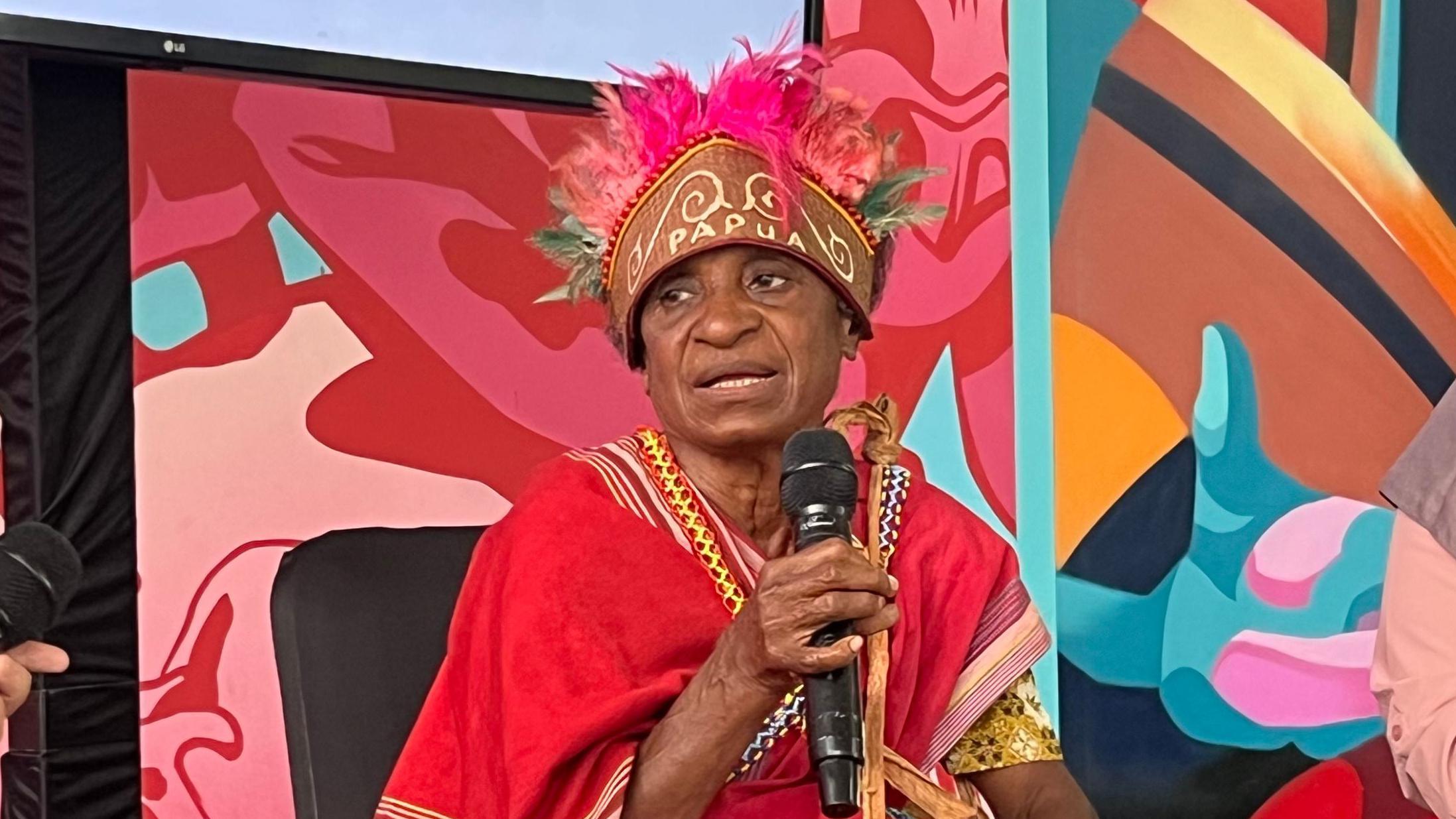
“Our ancestral forests are like a mother, vital for our daily lives and for our children’s future. If our forests are destroyed, we humans are also destroyed. Outsiders cannot just enter as they please,” passionately stated Marice Sianggo during the discussion.
Marice is a revered indigenous woman leader from the Nakna sub-tribe in Konda District, South Sorong, Papua.
In her village, Marice explained, the local “mamas” (elderly women) stand as unwavering guardians of their forest homeland. They steadfastly refuse to allow their sources of livelihood and access to the forest to be plundered.
Their efforts are diverse and resolute: from regularly educating younger generations about the indispensable role of forests to actively resisting the encroachment of extractive industries.
“In Konda District, a company attempted to enter our land. Just last month, people nearly fought to the death over it. Even now, we continue to stand guard,” Marice recounted, highlighting the ongoing tension.
“We, from several tribes, are defending our sacred territory. If this forest is ruined, where will we go? Our entire daily existence is rooted in the forest.”
She added that these collective defense efforts have ensured the forests and surrounding rivers in their area remain pristine and intact to this day.

However, a starkly different reality unfolds in other parts of Papua and numerous other regions across Indonesia.
Vulnerable communities, particularly women, bear the heaviest burden of the environmental crisis, a consequence of rampant deforestation and destructive extractive industries.
Morowali, Central Sulawesi, serves as a poignant example.
The Action for Ecology and People’s Emancipation (AEER) uncovered that liquid waste discharge from a coal-fired power plant (PLTU) caused coastal seawater temperatures in Kurisa Hamlet, Morowali, to soar to 31.4° Celsius.
This alarming temperature increase poses a grave threat to critical coral reef and seagrass ecosystems, which play an indispensable role in marine biodiversity and coastal protection.
Such environmental degradation can consequently lead to a decline in the health of coastal communities and the irreversible loss of essential livelihoods, including fish stocks and other vital marine resources.
You might be interested:
- The story of Papuan women behind the viral Save Raja Ampat event – ‘Even if I’m arrested, I will keep fighting’
- ‘I almost died fighting for this land, now I will not be afraid’ – Women of Ria-Ria Village resisting in North Sumatra’s Food Estate
- ‘No trash’: Indonesian, Chinese, and Vietnamese women behind environmental movements amidst high plastic waste pollution dumped into the sea
Sapariah Saturi, Editor-in-Chief of Mongabay, emphasized that women endure a profound dual impact from environmental destruction.
She elaborated that women not only grapple with the immediate crises stemming from environmental degradation but also contend with subsequent effects such as widespread discrimination and systemic neglect.
These manifest as critical challenges in accessing clean water, inadequate birthing rights, and insufficient supplies for basic reproductive health.
“Before thoroughly examining those issues, newsrooms themselves require female resources or journalists. It’s not that men cannot undertake the work, but there are numerous private and sensitive matters where men sometimes simply cannot gain access or build trust,” she remarked, underscoring the unique advantage of female reporters.
Echoing this sentiment, Evi Mariani, General Editor of Project Multatuli, added that the lived experiences of female journalists can resonate deeply with other women in crisis-affected areas, fostering stronger connections and more authentic storytelling.
“This allows for better, more insightful questions to emerge, and sources can share much richer and more extensive stories. Consequently, the impact of the climate crisis becomes more holistically understood. While security concerns are indeed present, journalists can attend adequate and useful digital security workshops and other training before going into the field,” Evi explained, highlighting practical solutions for safer reporting.
What are the challenges in exploring environmental issues from the perspective of vulnerable groups?
Evi recalled that environmental reporting when she began her journalism career in the early 2000s was vastly different from today’s landscape.
“Environmental reporting used to be ‘somewhat clean,’ less contentious, and more technical, akin to health reporting,” Evi elaborated.
Now, she stated, the issues covered encompass complex land conflicts, pervasive corruption, widespread environmental destruction, pressing human rights violations, and their profound impacts on communities.
However, when discussing community impacts, the themes explored often remain overly general, Evi added, indicating a need for deeper, more nuanced investigation.
Beyond these thematic shifts, the inherent risks involved in the reporting process have also dramatically escalated, particularly when issues concern powerful corporations with strong ties to oligarchic structures.
“Money derived from environmental exploitation, such as land grabbing, often seamlessly flows into the political sphere, corrupting processes,” she pointed out.
Another perilous risk is the potential for violent conflicts between communities and companies, which are sometimes shielded by corrupt authorities. This volatile situation gravely threatens the physical safety and security of journalists during their on-the-ground coverage.
Globally, a UNESCO report revealed that at least 749 journalists covering environmental issues have been subjected to attacks over the past 15 years, underscoring the severe dangers.
Data from the Alliance of Independent Journalists (AJI) in 2023 indicated that 15 journalists in Indonesia alone experienced intimidation for reporting on environmental matters, reflecting a similar domestic threat.

Nany Afrida, Chairperson of AJI Indonesia, openly acknowledged that protection for environmental journalists remains severely lacking, despite the existence of a pocketbook outlining mechanisms for reporting on environmental issues.
“Environmental journalists frequently operate in high-risk environments without adequate safety nets. Yet, these journalists are an indispensable part of human rights advocacy, bringing crucial issues to light,” Nany stated, emphasizing their vital role.
Environmental issues, she continued, are not merely sectoral concerns but constitute the fundamental basis for fulfilling citizens’ basic rights: the right to clean water, food, health, decent housing, and a safe environment.
Furthermore, journalistic reporting on critical issues such as river pollution, indigenous land conflicts, or the socio-ecological impacts of extractive projects serves a vital social control function, ensuring the public’s inherent right to comprehensive and accurate information.
The compounding problem is that security threats are no longer exclusively physical but have expanded into the digital realm, including insidious account hacking, targeted doxing, rampant hate campaigns, organized mass reporting, and even criminalization through the Electronic Information and Transactions Law.
These sophisticated attacks are meticulously designed to silence criticism and create a chilling effect, not only for individual journalists but for entire newsrooms, discouraging vital reporting.
“The state often intervenes late or is even entirely absent in guaranteeing journalists’ safety. Moreover, media managers have not fully prioritized safety through robust editorial policies, comprehensive legal support, and advanced digital security systems,” Nany critically commented.
Regarding the low prominence of women’s issues in environmental reporting, Nany believes this is inextricably linked to the scarcity of female journalists in newsrooms, particularly women in influential editorial decision-making positions.
AJI data reveals that the percentage of female journalists in Indonesia is only approximately 20% of the total 17,000 certified journalists. This condition mirrors that of 2012, when only two to three out of every ten journalists were women, showing little progress.
Furthermore, the percentage of female journalists in senior editorial positions or with decision-making authority is recorded at a mere 6%. This figure has remained alarmingly stagnant from the 1990s until the present day, indicating deep-seated structural issues.
Another contributing factor is that environmental reporting is often perceived as inherently difficult and challenging. Consequently, female journalists are frequently steered away from these crucial beats.
“This is what I am determined to change. Women must also actively go out and report, especially given the current minimal female perspective in environmental coverage,” asserted Sapariah Saturi from Mongabay, advocating for greater inclusion.

Separately, freelance journalist Margareth Aritonang emphasized the critical need for more constructive and empathetic narratives when reporting on environmental issues, particularly those unfolding in Papua.
She thoughtfully shared her personal experiences and unique perspectives on reporting from Papua.
“I titled this from ‘extraction to empathy’ because, upon reflection, reporting on Papua often feels like merely an activity of knowledge extraction,” Margareth revealed, highlighting a pervasive issue.
“Foreign and national media tend to simply extract knowledge, gather information, turn it into news, and then move on. Furthermore, they often treat Papua either solely as a victim or as a community that inherently needs assistance, reflecting a persistent colonial perspective that needs challenging.”
Moreover, she stressed that integrating a women’s perspective is particularly crucial when covering complex environmental issues.
“I once conducted an investigation in a village deep within the Papuan forest that was significantly impacted by massive deforestation orchestrated by a large company supported by our government. What I profoundly learned there was that women were severely marginalized and excluded,” Margareth stated.
“Yet, they play an absolutely vital role in ensuring the forest’s sustainability and that infants and children continue to have food, but they are consistently never involved in decision-making. Even in news reports, stories about women’s pivotal roles are often minimal or even entirely absent, despite their undeniable and important contributions.”
Therefore, constructive reporting with genuinely empathetic narratives becomes paramount, relying fundamentally on the journalist’s ability to truly listen.
“Everyone possesses a voice, but not everyone is granted the opportunity to speak. Thus, by actively listening, we can provide the essential space for those unheard voices to finally be heard and amplified.”
Fitri Hasibuan from Konservasi Indonesia shared a valuable and applicable experience. For her, trust from vulnerable groups, including women and indigenous communities, can only be genuinely earned by consistently demonstrating good intentions and acting with genuine equality.
She recounted how, when planning a survey and mapping project in Konda District, the team from Konservasi Indonesia thoroughly integrated themselves by living alongside the local tribes in the district.
They actively participated in daily activities and have maintained continuous, unbroken communication to this day. “So, it was never a ‘come and go’ approach,” she affirmed, emphasizing long-term commitment.
How to address these challenges?
Saurlin Siagian from Komnas HAM (National Commission on Human Rights) stated that the profound environmental problems currently faced are a direct consequence, a harvest, of past actions and destructive behaviors.
“These are the bitter fruits of years of environmental degradation and the economic crisis we are presently experiencing. Therefore, ecological protection is no longer a mere option, but an absolute necessity,” Saurlin affirmed with urgency.
“If we persist in separating the economic crisis from the ecological crisis, we will invariably fail to comprehend both. The economic crisis and the ecological crisis are two intrinsic sides of the same coin that cannot be disentangled. Therefore, I believe we must urgently realize that environmental degradation is fundamentally at the root of the economic instability we grapple with today.”
For this critical reason, he emphasized the urgent need for a clear and decisive direction regarding environmental issues, warning that without it, the broader society, especially vulnerable groups, will inevitably become the principal victims.
“The fundamental question confronting us is our true direction. Are we genuinely moving towards a low-carbon economy, as we have been discussing, or are we instead inadvertently strengthening the foundations of a high-emission economy that we regrettably continue to practice?”
Sapariah Saturi from Mongabay firmly believes that environmental issues must continue to be powerfully amplified while simultaneously prioritizing the paramount safety and security of journalists.
To strategically ensure that the perspectives of vulnerable groups are prominently highlighted and competently covered by skilled female journalists, she proactively proposed the innovative idea of extensive collaboration.
“It no longer feels like the opportune time for vying over exclusive content, especially for issues that can be, as we’ve discussed, quite dangerous and sensitive. In this present era, collaboration is absolutely essential for both ensuring safety and for creating journalistic work that is rich in diverse perspectives. We simply cannot operate in isolation any longer,” Ari concluded, advocating for a united front in environmental reporting.
- Women’s Forest in Youtefa Bay, Papua, ‘a small paradise destroyed by humans’
- The story of Acehnese forest guardian women: ‘We are more heard by illegal loggers’
- Demonstrations commemorate International Women’s Day in Jakarta – ‘Democratic decline a serious threat to women’s participation’
- Demianus, the ‘sanitary pad man’ from Papua – ‘I don’t feel inferior or taboo’
- All Eyes on Papua – ‘Why are so many people only now talking about the problems in Papua’?
- The story of a nurse who stayed at Aceh Tamiang Regional Hospital for a baby
- The story of Yenbuba indigenous woman restoring Raja Ampat coral reefs damaged by the Caledonian Sky incident seven years ago
- The story of an Indonesian primatologist woman, preserving endangered Javan gibbons for decades
Summary
Women are disproportionately affected by environmental crises, yet their struggles to protect livelihoods and ancestral lands often remain untold. Indigenous women, like Marice Sianggo from Papua, steadfastly guard their forests, viewing them as essential for life, while many communities across Indonesia suffer severe degradation. This dual impact on women includes direct environmental crises compounded by discrimination in accessing clean water and reproductive health.
Reporting on these complex environmental issues, especially from vulnerable groups’ perspectives, faces significant challenges, including security risks from powerful corporations and insufficient journalist protection. A scarcity of female journalists, particularly in editorial roles, further limits the inclusion of women’s unique insights in coverage. Experts advocate for increased collaboration among journalists, empathetic storytelling, and building trust with communities to ensure comprehensive and safer reporting.
