
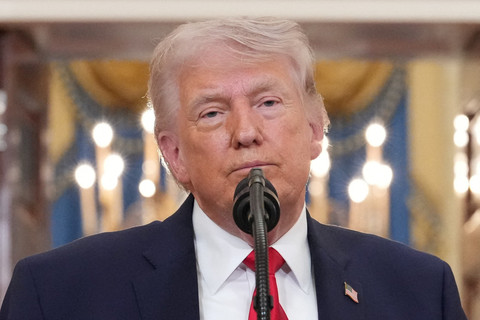
US President Donald Trump has issued a renewed warning to Iran against imposing fees on vessels navigating the vital Strait of Hormuz. This admonition comes ahead of a crucial US-Iran dialogue scheduled to take place in Islamabad, Pakistan, aimed at de-escalating tensions and potentially ending ongoing conflict.
According to a report by Bloomberg on Saturday, April 11, President Trump articulated his concern that levying such fees in the Strait of Hormuz could severely disrupt and worsen the global energy supply. The strategic waterway is a chokepoint for a significant portion of the world’s oil shipments, making any disruption a matter of international concern.
Trump’s stern message was also conveyed through a post on his Truth Social platform. “There are reports that Iran is charging tankers passing through the Strait of Hormuz,” he wrote, directly addressing the alleged practice. He followed this with an unequivocal demand: “They better not, and if they (are), they better stop now!”
The presidential warning is a direct response to earlier indications that Iran was planning to impose charges on tankers transiting the narrow strait. Tehran’s stated objective for these fees was to fund the rebuilding of its infrastructure, which has been severely damaged and dilapidated by prolonged conflict.
Crucially, the proposed payment methods for these shipping fees have garnered considerable attention. A report from the Financial Times indicated that Iran was exploring the option of accepting payments in cryptocurrency, specifically Bitcoin. Meanwhile, Bloomberg had previously reported on other payment alternatives under consideration, including the Chinese yuan and various stablecoins.
The conceptual appeal of using cryptocurrency for transactions is clear for Iran, as it offers a potential pathway to bypass the traditional US dollar-based financial system. This system has long served as the primary instrument for enforcing Western sanctions against the nation. However, market observers remain skeptical, viewing the legal implementation of such a plan as exceedingly difficult.
Reinforcing these complexities, Jake Ostrovskis of Wintermute highlighted the inherent risks and scrutiny faced by the maritime industry. “Shipping companies are already under quite a bit of scrutiny globally, given that they are in a high-risk industry,” Ostrovskis commented, suggesting that integrating novel payment methods like cryptocurrency could introduce further regulatory and compliance challenges for vessels operating in the region.
Summary
US President Donald Trump has issued a warning to Iran against imposing fees on vessels navigating the vital Strait of Hormuz, ahead of a crucial US-Iran dialogue. Trump expressed concern that such charges would severely disrupt the global energy supply, given the strait’s importance for oil shipments. Iran reportedly planned these fees to fund the rebuilding of its conflict-damaged infrastructure.
For these shipping fees, Iran explored accepting payments in cryptocurrency, specifically Bitcoin, along with other alternatives like the Chinese yuan or stablecoins. The appeal of cryptocurrency for Iran lay in potentially bypassing the US dollar-based financial system used for sanctions enforcement. However, market observers are skeptical about the legal implementation of this plan, noting that shipping companies already face high scrutiny, making novel payment methods a significant regulatory challenge.
