
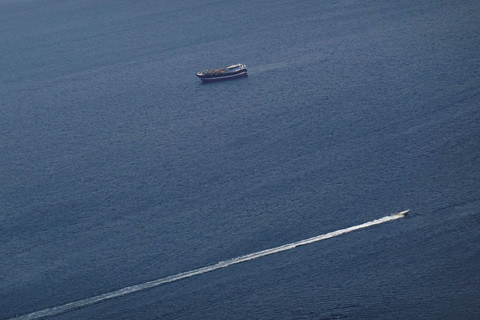

The highly anticipated ceasefire between Iran and the United States has now been in effect for two days, marking a significant step towards de-escalation in the region. A cornerstone of this agreement is Iran’s commitment to reopen the crucial Strait of Hormuz, a vital global shipping lane. Following this development, maritime traffic through the Strait is showing initial signs of gradual recovery.
Despite the reopening, activity remained cautious. As of Thursday evening, Iran time, maritime monitoring data indicates that only 10 vessels had traversed the Strait of Hormuz since the ceasefire began. AFP, citing maritime intelligence firm Kpler, reported that these initial transits included four tankers and six bulk carriers. Notably, among these, only one vessel, the ‘MSG’, was identified as non-Iranian. This Gabon-flagged ship was reportedly carrying 7,000 tons of fuel oil from the United Arab Emirates destined for India, underscoring the immediate resumption of critical energy trade.

The slow but steady resumption of shipping lanes is a crucial indicator that the Iran-US ceasefire is beginning to yield tangible results. Further bolstering this optimism, dozens more ships are reportedly en route to the Strait of Hormuz. These vessels are either bound for Iranian ports or are flagged by nations with non-hostile relations with Iran, signaling a cautious return to normalcy. Ana Subasic, an analyst from Kpler, offered a hopeful projection: “Ship traffic seems to be in the range of 10-15 ships per day if the ceasefire can be maintained,” highlighting the delicate balance required for sustained progress.
Iran Provides Alternative Routes for Ships to Navigate Around Sea Mines
To further facilitate and secure the burgeoning maritime traffic through the Strait of Hormuz, the Iranian military, specifically the Islamic Revolutionary Guard Corps (IRGC), has proactively introduced alternative shipping routes. These designated corridors are designed to help vessels safely circumvent the sea mines previously deployed by Iran. Ships are now advised to approach Larak Island, strategically located just south of the port city of Bandar Abbas, as part of this revised navigation strategy.
The IRGC has also underscored that safe passage through these sensitive waters is contingent upon direct collaboration with the Iranian Navy. This requirement emphasizes Iran’s intent to maintain oversight and ensure security within the vital Strait of Hormuz, even as it reopens to international commercial shipping.
