
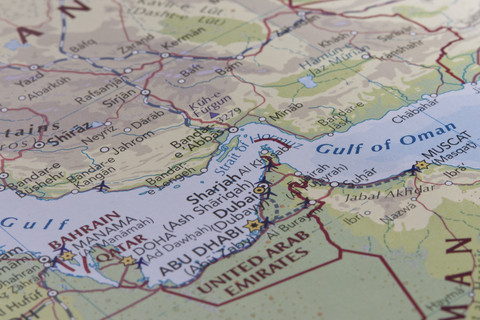

One of seven Malaysian commercial vessels that had been detained in the strategically vital Strait of Hormuz has successfully been granted safe passage and is now en route to its destination. This significant development was announced by Malaysia’s Ministry of Foreign Affairs, as reported by Bloomberg on Tuesday, April 7th.
The release of this particular vessel follows extensive high-level diplomatic efforts between Kuala Lumpur and Tehran. These included a crucial telephone conversation on March 26th between Malaysian Prime Minister Anwar Ibrahim and Iranian President Masoud Pezeshkian. Prior to this, on March 24th, Malaysian Foreign Minister Mohamad Hasan had also engaged in discussions with his Iranian counterpart, Abbas Araghchi.
Malaysia has consistently upheld friendly diplomatic relations with Iran. Prime Minister Anwar Ibrahim has publicly acknowledged Tehran’s inherent right to maintain its sovereignty, while simultaneously advocating for a swift and peaceful resolution to ongoing regional conflicts.
In total, Iran has permitted seven Malaysian tankers to navigate through the Strait of Hormuz, a waterway that has become a critical flashpoint in the broader conflict involving the US, Israel, and Iran. Among the commercial vessels previously held in this essential shipping lane were those owned by prominent Malaysian entities such as energy giant Petroliam Nasional Bhd., shipping firm MISC Bhd., and Sapura Energy Bhd.
A spokesperson for the Malaysian Foreign Ministry, however, refrained from offering specific details regarding the vessel that successfully transited the Strait of Hormuz, or the status of the remaining vessels still subject to restrictions.
“Malaysia remains steadfast in its unwavering commitment to the principles of freedom of navigation, as well as the safety and security of all maritime routes, in strict accordance with international law,” the Ministry stated emphatically in its official declaration.
The recent effective closure of the Strait of Hormuz sent significant ripples through global markets, consequently triggering a widespread energy crisis. Illustrating the immediate impact, two liquefied natural gas (LNG) carriers, which had reportedly abandoned their attempts to exit the Persian Gulf via the Strait, are now redirecting their course towards Qatar.
On the international stage, US President Donald Trump has asserted that any resolution to the ongoing conflict in the Middle East must unequivocally guarantee freedom of navigation through the Strait of Hormuz. He emphasized that the reopening of this critical maritime choke point remains an absolutely vital priority in the current negotiations with Iran.
Furthermore, President Trump issued a stark warning: should Iran fail to comply with a stringent deadline by Tuesday at 8:00 PM local time, the United States would initiate extensive, large-scale attacks targeting Iran’s vital infrastructure, specifically mentioning bridges and power plants.
Summary
One of seven Malaysian commercial vessels previously detained in the strategically vital Strait of Hormuz has successfully been granted safe passage. This significant development, announced by Malaysia’s Ministry of Foreign Affairs on April 7th, followed extensive high-level diplomatic efforts between Kuala Lumpur and Tehran, including crucial conversations between their leaders. Malaysia consistently upholds friendly diplomatic relations with Iran and is committed to the principles of freedom of navigation.
The detention of these Malaysian tankers occurred in a waterway that has become a critical flashpoint in the broader conflict involving the US, Israel, and Iran. The recent effective closure of the Strait of Hormuz had triggered a widespread global energy crisis. US President Donald Trump has asserted that guaranteeing freedom of navigation through this critical maritime choke point is a vital priority in ongoing negotiations with Iran.
