
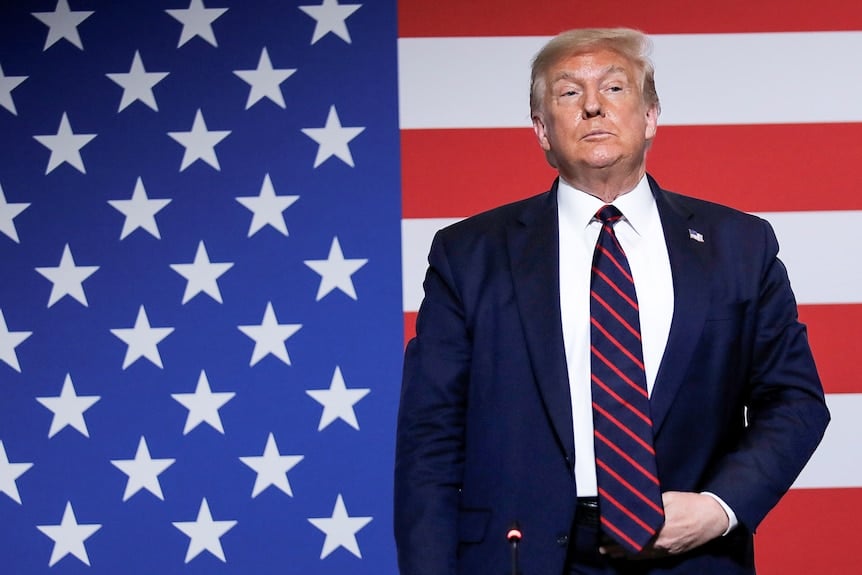
WASHINGTON – President Donald Trump has once again escalated tensions with Iran, issuing a stark warning that the US military possesses the capability to utterly devastate the nation in a single night. This ominous threat, delivered from the White House, indicated a potential strike as early as April 7, 2026.
During a press conference held at the White House on Monday, April 6, President Trump declared, “The entire country [Iran] could be destroyed in one night, and that night might be tomorrow night.” This chilling statement underscores the volatile nature of the ongoing standoff between Washington and Tehran.
These recent remarks follow a series of escalating warnings. On March 30, 2026, Trump had previously vowed that the United States would “explode and completely eliminate” key Iranian infrastructure, including all power plants, oil wells, Kharg Island, and desalination facilities, should a peace agreement fail to materialize and the vital Strait of Hormuz remain closed. Just days later, on Sunday, April 5, he reiterated his threat, asserting that operations would commence on April 7 unless Iran reopened the strategic waterway.
In response to the mounting pressure, Iran‘s Ministry of Foreign Affairs spokesperson, Esmail Baghaei, confirmed that Tehran has prepared its counter-proposals regarding mediator-led ceasefire initiatives with the United States. While Trump had earlier suggested “productive talks” were underway, the Iranian Foreign Ministry firmly refuted any direct dialogue, clarifying that messages about Washington‘s desire for discussions to de-escalate the conflict were conveyed solely through intermediaries.
The severe animosity between the two nations dates back to February 28, 2026, marking the onset of the current conflict. It was then that the United States and Israel launched coordinated attacks on Iran, resulting in significant civilian casualties and, tragically, the death of Iran‘s then-Supreme Leader, Ali Khamenei.
Iran swiftly retaliated, targeting Israeli territories and several US military installations across the Middle East. A pivotal escalation in this conflict involved Iran seizing control of the Strait of Hormuz. This maritime choke point is arguably the world’s most strategic, handling approximately 20 percent of global oil and natural gas trade, thus giving Tehran immense leverage in the escalating confrontation. The consequences of this continued tension resonate globally, highlighting the volatile geopolitical landscape of the region.
Summary
President Donald Trump issued a stark warning that the US military possesses the capability to utterly devastate Iran in a single night, indicating a potential strike as early as April 7, 2026. This threat followed earlier vows to eliminate key Iranian infrastructure, including power plants and oil wells, should a peace agreement fail and the vital Strait of Hormuz remain closed. Trump reiterated that operations would commence on April 7 unless Iran reopened the strategic waterway.
In response, Iran’s Ministry of Foreign Affairs confirmed preparing counter-proposals for mediator-led ceasefire initiatives but firmly denied any direct dialogue with Washington. The severe animosity between the two nations dates back to February 28, 2026, following coordinated US and Israeli attacks that resulted in significant casualties and the death of Iran’s then-Supreme Leader. Iran retaliated by targeting Israeli territories and US military installations, notably seizing control of the Strait of Hormuz, a pivotal global shipping route.
