
Indonesian Calls Mount for UNIFIL Withdrawal and Cancellation of Gaza Deployment After Deadly Lebanon Attack
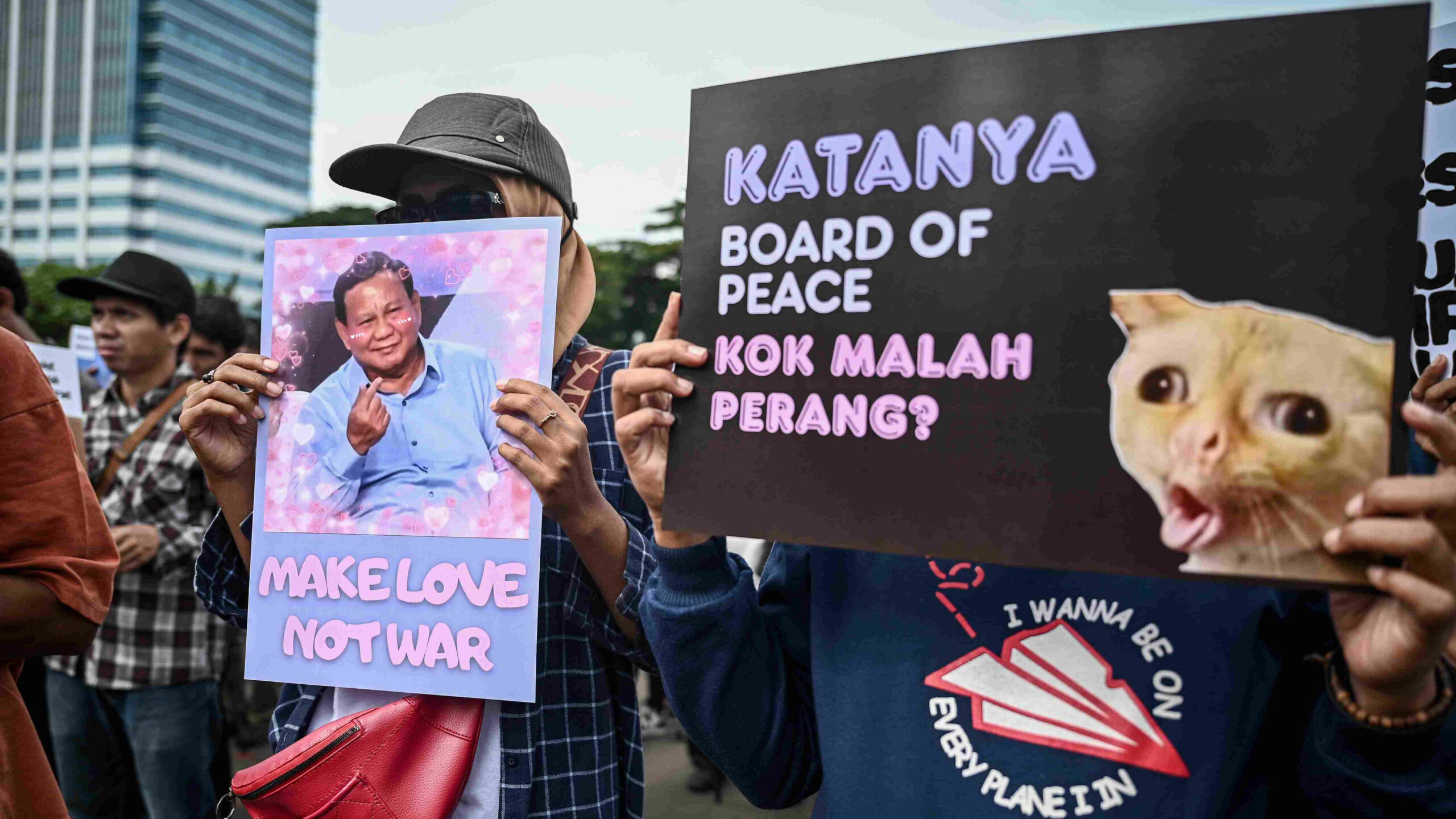
A growing chorus of voices is urging the Indonesian government to move beyond mere condemnation of the recent attack that killed three Indonesian soldiers in Lebanon. Instead, they demand Indonesia consider withdrawing its troops from the UN peacekeeping mission in the country if the security situation remains perilous for TNI (Indonesian National Armed Forces) personnel. Beyond Lebanon, there’s also a strong push for President Prabowo Subianto to take a firm stance by canceling the planned deployment of TNI personnel to the Gaza Strip as part of the “Board of Peace” project.
“The incidents in Lebanon must serve as a warning and an urgent demand for Prabowo to unequivocally cancel the deployment of Indonesian troops to the Gaza Strip,” stated Made Supriatma, a researcher at the ISEAS-Yusof Ishak Institute, in an interview with BBC News Indonesia on Tuesday (March 31).
The three fallen soldiers, who were serving with the United Nations Interim Force in Lebanon (UNIFIL), have been identified as Private First Class Farizal Rhomadhon, Captain Zulmi Aditya Iskandar, and Sergeant Muhammad Nur Ichwan. President Prabowo Subianto has extended his deepest condolences for the loss of these TNI peacekeepers. Meanwhile, the Indonesian Ministry of Foreign Affairs has demanded a thorough investigation into the series of attacks and is actively considering the withdrawal of TNI forces from UNIFIL.
‘Parents lost their child, a wife lost her husband, and I lost my brother’
In a poignant scene on Tuesday (March 31), a corrugated tin tent stood erected in front of the home of Private First Class Farizal Rhomadhon’s parents in Kulon Progo Regency, Yogyakarta. The small road leading to their house, nestled amidst teak and bamboo groves, was lined with wreaths of condolences sent by various political figures, officials, and high-ranking TNI officers, including one from Indonesia’s fifth president, Megawati Soekarnoputri.
Mourners continuously streamed in and out of the humble abode. Farizal’s 60-year-old father, Senam, appeared resilient as he received guests, while his 54-year-old mother, Supinah, visibly struggled with grief, occasionally weeping as she accepted comforting embraces. Amidst the somber atmosphere, Farizal’s 34-year-old brother-in-law, Novan Heri Prabowo, shared that Farizal had communicated with his parents almost daily via phone calls.
“The last communication was the night before the incident; he contacted my father. Then in the morning, we received news that he had fallen there,” recounted Novan, adding that Farizal leaves behind a wife and a two-year-old child. Novan explained that the tragic news was conveyed by Farizal’s wife, Fafa Nur Azila, to her in-laws over the phone. At the time of the incident, Fafa was residing in the battalion barracks of her husband’s unit in Aceh.
“Subsequently, TNI personnel from the local military command (Koramil and Dandim Kulon Progo) arrived here, but the initial news came from his wife, who was already receiving support from the Persit (Army Wives Association) mothers there,” Novan stated during an interview at Farizal’s parents’ home in Kulon Progo on Tuesday (March 31). Novan conveyed the family’s profound sorrow upon learning of Farizal’s passing, remembering him as a friendly and family-oriented individual.
“Because Mas Rizal was almost finished with his tour of duty there, and then we received this news. The family was shocked, stunned,” Novan said, adding that before his assignment in Lebanon, his brother had served in Papua. “The impact is immense loss. Parents are deeply saddened because a child is everything. Parents lost their child, a wife lost her husband, and I lost a brother,” he lamented. Novan implored the government to enhance safety and security standards for Indonesian soldiers serving abroad to prevent similar tragedies. “Perhaps it would be much better if domestic matters aren’t yet resolved, they should be prioritized. Overseas deployment is a secondary option, that’s how I see it from a general public perspective,” he added.
Farizal perished on Sunday (March 29) when a projectile of unknown origin detonated in Adchit Al Qusayr, southern Lebanon. In addition to Farizal, three other TNI soldiers were wounded in the incident. The following day, Monday (March 30), two more TNI soldiers died due to a “roadside explosion” in southern Lebanon. UNIFIL reported that the explosion “originated from an unknown source” and “destroyed” the peacekeepers’ vehicle near Bani Hayyan. The incident on Monday was “most likely” caused by an IED (improvised explosive device), according to Stéphane Dujarric, spokesman for the UN Secretary-General. Established by the UN Security Council in 1978, UNIFIL has since served as a vital buffer between Israel and Lebanon. These peacekeepers patrol the “Blue Line”—the de facto border between Lebanon and Israel—in collaboration with the Lebanese army. Approximately 339 peacekeepers have lost their lives since the mission’s inception.
Government’s Response Amidst Rising Tensions
President Prabowo Subianto, via his official Instagram account @prabowo, conveyed his deepest condolences for the martyrdom of the three TNI soldiers while on their peacekeeping mission in the Middle East. “Innalillahi waina ilaihi rajiun, my condolences for the passing of Captain Inf. Zulmi Aditya Iskandar, Sergeant Muhammad Nur Ichwan, and Private First Class Farizal Rhomadon while on a peacekeeping mission in the Middle East,” Prabowo posted on Tuesday (March 31). Prabowo emphasized that the soldiers’ dedication embodies courage in maintaining world peace and upholding Indonesia’s good name on the international stage.
Meanwhile, the Indonesian Ministry of Foreign Affairs strongly condemned both attacks. The Ministry stated that the assaults reflect the increasingly deteriorating security situation in southern Lebanon, where ongoing Israeli military operations have placed UN peacekeepers at grave risk. “Indonesia continues to strongly condemn Israeli attacks in southern Lebanon, which significantly increase the risks faced by UN peacekeepers and undermine the implementation of UNIFIL’s mandate as stipulated in Security Council Resolution 1701 (2006),” read the Ministry’s statement. Indonesia also called for an immediate, thorough, and transparent investigation to uncover the facts, including the chronology of events and the parties responsible for the incidents.
Is Withdrawing Troops from Lebanon Justified?
In response to these events, MPR RI Chairman Ahmad Muzani proposed that the government withdraw its peacekeeping troops from areas posing a threat to their safety, such as southern Lebanon. “In accordance with the constitution, which mandates protecting the entire nation and the Indonesian homeland, Indonesia should withdraw its forces from this peacekeeping mission because this is an area dangerous for TNI personnel, as seen in southern Lebanon,” stated MPR Chairman Ahmad Muzani in Jakarta on Tuesday (March 31). Furthermore, Muzani added, “The MPR RI urges the UN Security Council to immediately convene a session for investigation and impose sanctions against Israel.” Similar calls also emanated from Commission I of the DPR RI.
“If the conditions truly cannot be deemed safe, it would be advisable for the government to consider a withdrawal or an evaluation of the troops’ presence in Lebanon,” said Deputy Chairman of DPR RI Commission I, Dave Laksono, on Monday (March 30). Foreign Minister Sugiono admitted he had not yet heard the proposal for TNI troop withdrawal. “Honestly, I just heard about it; it hasn’t reached me yet, but of course, if there are steps in that direction, they will definitely be discussed further,” Sugiono said in Tokyo, Japan, on Monday (March 30). Additionally, Sugiono stated that Indonesia urges the UN to promptly hold an emergency Security Council meeting and conduct a swift, thorough, and transparent investigation.
On the other hand, the Israeli military (IDF) announced it had launched a comprehensive investigation to clarify the incidents. “It should be noted that these incidents occurred in an active combat area, where they are operating against the Iranian-backed Hezbollah group. Therefore, it should not be assumed that incidents where UNIFIL soldiers were wounded were caused by the IDF,” the Israeli military wrote on Telegram, as reported by AFP on Tuesday (March 31).
However, ISEAS-Yusof Ishak Institute researcher Made Supriatma argued that the discourse of withdrawal is unnecessary, given Indonesia’s commitment to maintaining world peace. “This is a noble task with legitimate authority, operating under the UN. And indeed, this is our sacrifice for the world, for world peace,” he asserted. Instead, according to Made, Indonesia should issue strong condemnations and even concrete sanctions against the parties suspected of carrying out the attacks.
Echoing this sentiment, Beni Sukadis, a consultant at Marapi Consulting & Advisory, noted that the presence of TNI personnel in UN forces inherently carries risks, with the worst-case scenario being a breakdown of ceasefires or attacks from either side. “One thing Indonesia needs to do is re-evaluate the rotation or reduction of TNI troop numbers in the UN, considering the highly vulnerable situation in that region,” Beni remarked. Beni pointed out that this event is not the first time UN peacekeepers have been affected by the Israeli-Hezbollah armed conflict. He highlighted one of the most severe incidents in 2006 when four UN observer forces were killed.
Beyond re-evaluating TNI personnel numbers and issuing condemnations, Beni emphasized that the government must immediately coordinate with countries participating in UNIFIL to prevent further unfortunate events. The Indonesian military boasts a long history in UN-initiated peacekeeping operations, with its first involvement dating back to a mission in Egypt in 1957. Since then, the Indonesian government has deployed soldiers to various countries impacted by or emerging from war, including Congo, Vietnam, Bosnia, Macedonia, Georgia, Iraq, Kuwait, Syria, Liberia, Sierra Leone, Sudan, and Lebanon. In 2012, the TNI established a specialized institution, the Peacekeeping Mission Center, to manage the selection and training of soldiers for operations under the UN Security Council. According to data from this institution, from 1957 to 2020, Indonesia has dispatched 45,087 soldiers to UN peacekeeping missions.
‘Cancel Troop Deployment to Gaza’
Made Supriatma, a researcher at the ISEAS-Yusof Ishak Institute, suggested a powerful and impactful step Indonesia could take: canceling the deployment of TNI troops to the Gaza Strip as part of the “Board of Peace” project. “The incidents in Lebanon must serve as a warning and an urgent demand for Prabowo to unequivocally cancel the deployment of Indonesian troops to Gaza,” Made reiterated. He added that such a firm stance would represent Indonesia’s deep disappointment over the attacks. Furthermore, Made stated that this decision would be crucial for protecting TNI forces from similar threats.
“Even without joining in Gaza, three TNI peacekeepers have already fallen and been attacked. Imagine becoming part of the International Stabilization Force (ISF) in the Gaza Strip; Indonesia would become a target and a victim because it would be perceived as taking sides.” Made questioned, “Why should we become a peace corridor for Israel and American interests in Gaza, at a time when Israel is the aggressor and source of instability in the Middle East?”
Concurring with this view, Hikmahanto Juwana, an international law expert from the University of Indonesia, also believes that Indonesia needs to evaluate its participation in the BoP, an initiative championed by former US President Donald Trump, following these attacks. In this context, he added, attacks that kill TNI soldiers would constitute a violation of international humanitarian law if carried out intentionally. Moreover, Sarifah Ainun Jariyah, a member of Commission I of the DPR from the PDI-P faction, also advocated for an evaluation of the plan to send troops to the Gaza Strip.
“Indonesia must take a stand not to send troops to Gaza given the volatile situation. There is no guarantee of security from any party because Israel itself has proven non-compliant with international rules,” Sarifah asserted. Previously, Indonesia planned to send approximately 8,000 personnel to the ISF in Gaza, even slated to hold the position of ISF deputy commander. Indonesia would be one of five countries contributing soldiers to the ISF in Gaza, alongside Kosovo, Kazakhstan, Albania, and Morocco. However, developments indicate that the Indonesian Ministry of Foreign Affairs has postponed the TNI deployment plan.
The ISF differs significantly from UN peacekeeping missions; it does not operate under the control of the UN Security Council but rather under the “Board of Peace.” In Gaza, ISF troops are assigned six main tasks, including helping to secure border areas, protecting civilians, training prospective Palestinian police, securing “humanitarian corridors” for aid delivery to civilians, and undertaking additional duties deemed necessary by the Board of Peace. Another critical task for ISF forces is involvement in the demilitarization of Gaza, which includes destroying military infrastructure and disarming Hamas.
Journalist Fajar Sodiq in Kulon Progo, Yogyakarta, contributed to this article.
Summary
Three Indonesian National Armed Forces (TNI) soldiers, serving with
