

The Indonesian government has unveiled a comprehensive eight-point energy-saving policy package, directly responding to evolving global dynamics, including the recent Iran-Israel conflict. These directives stem from President Prabowo Subianto, aiming to bolster national resilience and efficiency.
Coordinating Minister for Economic Affairs, Airlangga Hartarto, announced these pivotal policies as an integral part of a national work culture transformation. Speaking at a press conference in Seoul, South Korea, on Tuesday, March 31, Minister Hartarto clarified that these initiatives are slated to become effective on April 1, 2026. He emphasized, “In mitigating and anticipating global developments and dynamics, we are leveraging this momentum for transformation and change. This policy program is termed the 8 points of national work culture transformation, supplemented by energy policies.”
The first policy introduces a mandatory Work From Home (WFH) scheme for civil servants (ASN) across both central and regional government agencies. This measure will be implemented one day a week, specifically every Friday, to promote and accelerate the digitalization of government administration.
Secondly, the government is prioritizing mobility efficiency. This includes a stringent 50 percent restriction on the use of official vehicles, with exceptions solely for specific operational requirements and electric vehicles. Concurrently, civil servants are strongly encouraged to transition towards using public transportation.

Thirdly, significant efficiency measures are being applied to official travel, mandating a 50 percent reduction for domestic trips and an even more substantial 70 percent cut for international assignments. Furthermore, regional governments are urged to expand the implementation of car-free days, adapting these initiatives to suit the unique characteristics of their respective areas.
Fourth, the private sector is also encouraged to adopt WFH arrangements through a circular issued by the Minister of Manpower. This directive thoughtfully considers the specific characteristics and operational needs of each business sector. Minister Hartarto elaborated, “The regulation, circulated through the Minister of Manpower, also encompasses a movement for energy efficiency in workplaces,” highlighting the broad scope of these new measures.
Fifth, the education sector will largely maintain its current structure. Primary to secondary education institutions will continue with five days of in-person learning per week, ensuring continuity in student development. Higher education institutions, however, retain the flexibility to adjust their policies according to their individual institutional needs and contexts.
Sixth, the government is driving a significant refocusing and efficiency effort in the budgets of ministries and agencies. Funds will be strategically reallocated from less prioritized expenditures, such as business travel, non-operational meetings, and ceremonial activities, towards more productive investments that directly benefit the community. This strategic reprioritization is projected to unlock potential savings ranging from IDR 121.2 trillion to IDR 130.2 trillion.

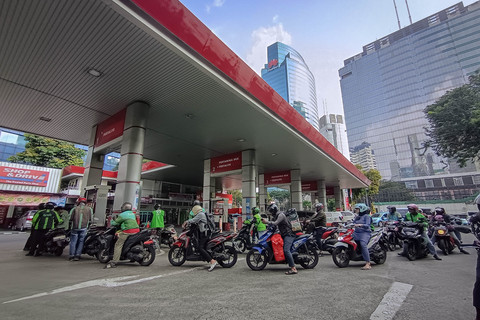
The seventh policy marks the implementation of the B50 program, set to commence on July 1, 2026. Airlangga confirmed PT Pertamina’s readiness to execute this blending initiative, which is anticipated to reduce fossil fuel consumption by an impressive 4 million kiloliters annually. This move is expected to generate an estimated IDR 48 trillion in savings from fossil fuel reduction and biodiesel subsidies. To ensure equitable distribution, the government will regulate fuel purchases using the My Pertamina barcode system, imposing a reasonable limit of 50 liters per vehicle, though this restriction will not apply to public transport.
Finally, the eighth policy directs the Free Nutritious Meals (MBG) program to provide fresh food five days a week. Crucially, specific exemptions are made for boarding schools, 3T (frontier, outermost, disadvantaged) regions, and areas grappling with high rates of stunting, ensuring support reaches those most in need. This measure alone is projected to yield budget savings of up to IDR 20 trillion.
In conclusion, these wide-ranging policies form an integral part of Indonesia’s structural transformation towards a more efficient, productive, and resilient economy. The government extends an invitation to all citizens and businesses to actively participate in and support this comprehensive work culture transformation, fostering sustainable growth and national development.
Summary
The Indonesian government, led by President Prabowo Subianto,
