

United States President Donald Trump’s assertion this week of “very good and productive conversations” between the U.S. and Iran to end the war has met with a swift and sharp rebuke from Tehran.
Iranian officials vehemently denied Trump’s claims, emphasizing that no such talks had transpired.
Adding to the pointed dismissals, an Iranian military spokesperson sarcastically mocked Trump’s statement, suggesting that the Americans have, in fact, only been “negotiating with themselves.”
The profound chasm separating the two nations is strikingly evident. Washington speaks of diplomatic breakthroughs, while Tehran outright rejects any notion of such progress. This isn’t merely a routine disagreement; it’s a stark reflection of a deep-seated crisis of trust.
This crisis of confidence has been exacerbated by a series of recent, unsettling events.
Over the past year, two separate attempts at dialogue had briefly sparked hope for de-escalating tensions, particularly concerning Iran’s nuclear program, with Oman playing a mediating role. However, both hopeful moments were swiftly undermined by subsequent military strikes launched by Israel and the U.S. into Iranian territory.

From Iran’s perspective, these past discussions were not perceived as efforts to mitigate the risk of war, but rather as unsettling precursors to impending attacks. This historical pattern is precisely why Trump’s recent claims were met with such profound suspicion.
Read also:
- What is in Trump’s 15-point peace plan, and why is Iran rejecting it?
- The US and Israel have killed many Iranian leaders, so with whom will Trump negotiate?
- Trump claims US and Iran held talks to resolve war, Iran denies
However, Iran’s current rejections do not automatically signify a complete closure to the door of dialogue. A more complex dynamic is at play, with officials who advocate for diplomatic engagement facing immense internal pressure. Attempting to renegotiate is widely perceived as a high-risk endeavor, given the lack of clear indicators that the outcome would differ from previous failed attempts.

This prevailing uncertainty elucidates why Iran’s Foreign Minister, Abbas Araghchi, and other senior officials have adopted such an unyielding tone. Even before Trump’s Truth Social post on Monday, Araghchi had publicly declared that Iran was not pursuing negotiation or a ceasefire, but was instead prepared to continue fighting.
The Head of Iran’s Government Information Council also dismissed a circulating 15-point peace plan, branding Trump’s “words as lies that need not be heeded.”
Yet, this firm rhetoric does not necessarily mean the door to future engagement is entirely shut.
On Wednesday evening, Araghchi neither directly confirmed nor rejected the alleged proposal. He informed state television that “various ideas” had been conveyed to Iran’s supreme leaders, and “if a position needs to be taken, it will certainly be determined.” He reiterated that Iran’s current policy is to continue its “endurance,” and Tehran “has no intention of negotiating now.”

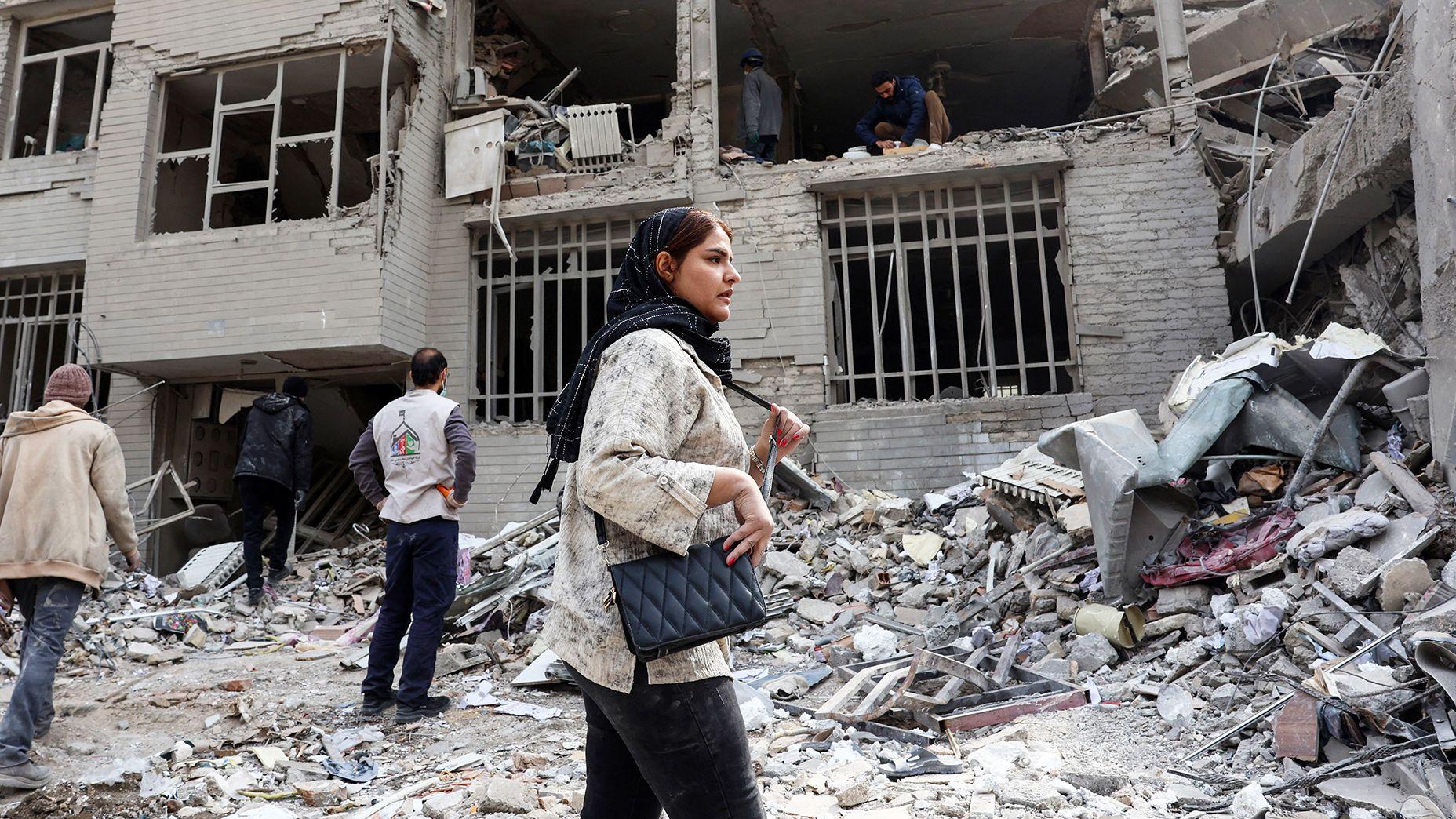
Iran’s current stance is, in reality, difficult to sustain amidst continuous attacks that are significantly damaging key infrastructure. Therefore, this harsh public language is more likely a strategic tactic aimed at dictating specific terms, rather than an outright refusal of all diplomatic avenues.
The intricate internal politics within Iran further complicate the situation. President Masoud Pezeshkian, supported by moderate factions, adopts a cautious approach, while hardline groups are far more resolute in their opposition to any talks. Concurrently, even moderate voices find it challenging to propose negotiations in the present highly charged environment.
Beyond governmental factions, pressure also emanates from external forces. Several opposition groups vehemently reject any agreement with the Islamic Republic. They actively support U.S. and Israeli strikes, harboring hopes that sustained conflict will lead to the collapse and ultimate regime change of the Islamic Republic. Meanwhile, civil society and human rights activists fear that any deal could inadvertently grant the Iranian government more latitude for domestic crackdowns, especially given the already tightening restrictions imposed during the ongoing conflict.
Iran’s position transcends mere ideology; it is deeply rooted in strategic calculations.
Since the conflict intensified, Tehran has repeatedly demonstrated its capacity to disrupt global energy arteries via the Strait of Hormuz. Any closure or significant restriction of this vital passage would not only send shockwaves through oil and gas markets but also create wider disruptions across global supply chains.
This critical leverage ensures that Iran’s position remains a formidable factor on the international stage.

Reports concerning Trump’s proposal, reportedly conveyed to Iran through Pakistani intermediaries, outline conditions that are exceptionally difficult for Iran to accept.
These terms reportedly include stringent limitations on Iran’s nuclear capabilities, missile program, and support for regional allies, in exchange for the lifting of economic sanctions and assistance for civilian nuclear energy.
However, even for those within Iran who might be amenable to peace, the paramount issue remains trust. Past experiences unequivocally demonstrate that agreements forged have a tenuous lifespan.
A poignant example is the 2015 nuclear deal, the Joint Comprehensive Plan of Action (JCPOA), between Iran and Western nations, painstakingly achieved after years of negotiations. That landmark agreement crumbled when the U.S., under the Trump administration, unilaterally withdrew from it. This historical precedent fuels deep skepticism among many in Tehran regarding whether any new agreement would genuinely be honored.
Consequently, the divergence between the two parties continues to widen.
For Washington, discussing progress in dialogue may serve its own political interests and diplomatic objectives. For Tehran, denying the existence of talks helps safeguard its position and undeniably reflects a genuine, profound skepticism.
For the foreseeable future, the significant disparity between American optimism and Iranian rejection is likely to persist. Bridging this gap will demand more than mere words; it necessitates concrete guarantees that negotiations will no longer culminate in renewed conflict.
This situation also serves as a crucial domestic test for Trump, who had previously pledged to the American people to end wars in the Middle East, not to initiate them.
- The US and Israel have killed many Iranian leaders, so with whom will Trump negotiate?
- ‘Cut off one head, a new head will grow’ – Numerous officials killed, Iran’s government has not fallen
- Iran allows Malaysian, Thai, and five other countries’ ships to cross the Strait of Hormuz, what about Indonesian ships?
- What is in Trump’s 15-point peace plan, and why is Iran rejecting it?
- Could Iranian missiles reach Europe?
- Trump claims US and Iran held talks to resolve war, Iran denies
- Iranian missiles breached Israel’s air defense, pounded two cities near nuclear facilities
- Trump ultimatum to Iran: Open the Strait of Hormuz within 48 hours or the US will destroy power plants
