
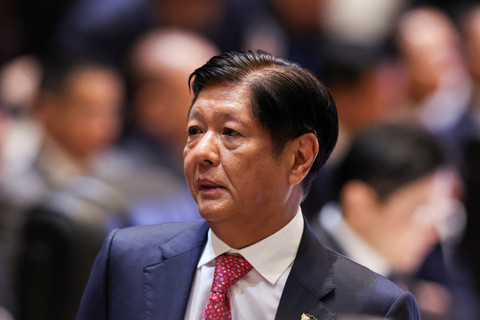

Philippine President Ferdinand Marcos declared a national energy emergency on Tuesday, March 24, amidst growing anxieties over domestic fuel supplies and energy stability. This crucial decision directly responds to the unabated conflict involving Israel, the United States, and Iran, which has significantly disrupted global energy markets.
The declaration came just hours after Philippine Energy Minister Sharon Garin announced the government’s intention to ramp up electricity production from coal-fired power plants. This strategic shift aims to mitigate surging electricity tariffs, a direct consequence of global gas supply disruptions exacerbated by the ongoing conflict. The executive order, released Tuesday evening and quoted by AFP, explicitly states: “A national energy emergency is hereby declared in light of the ongoing conflict in the Middle East and the threats it poses to the country’s energy supply availability and stability.”
Under this new policy, the Department of Energy is empowered to authorize advance payments of up to 15 percent to secure vital fuel supply contracts. Furthermore, the government can take swift action against practices such as hoarding and price speculation, safeguarding consumers from unscrupulous market behavior. The emergency status also facilitates crucial inter-agency coordination to effectively respond to global energy supply disruptions and their cascading effects on the domestic economy.

In a move to alleviate public burden, the Department of Transportation has been granted authority to regulate fuel subsidies for public transportation, and even reduce or waive toll fees and aviation charges. Expedited assistance for communities facing crisis conditions will also be a priority under this emergency declaration. The Philippines, an archipelago nation of approximately 116 million people, grapples with some of Asia’s highest energy costs and remains heavily reliant on fuel imports to power its electricity generation.
Shifting to Coal and Boosting Indonesian Imports
Currently, coal fuels approximately 60 percent of the Philippines’ electricity production. Energy Minister Sharon Garin elaborated that the sharp increase in Liquefied Natural Gas (LNG) prices has compelled the Philippines to temporarily intensify its reliance on coal, despite acknowledging its higher carbon emissions. “We have already coordinated with coal-fired power plant companies to ascertain how much they can increase production,” Garin stated.

To further bolster its energy security, the Philippines is also exploring options to increase coal imports from Indonesia, which serves as its primary supplier. Garin emphasized that this policy is temporary and could be implemented as early as April 1, 2026. She added, “If this measure is successfully implemented, we can at least curb the rise in electricity tariffs resulting from the Middle East conflict. So far, there are no restrictions on coal imports from Indonesia.”
Looking towards long-term energy solutions, President Marcos announced a significant discovery of new natural gas reserves in January, located near the rapidly depleting Malampaya gas field. This finding offers hope for extending the lifespan of the Malampaya field, which has historically supplied around 40 percent of Luzon Island’s electricity needs and was projected to be exhausted within the next few years. This dual approach—addressing immediate energy security through increased coal use while exploring domestic natural gas potential—underscores the Philippines’ urgent efforts to navigate a volatile global energy landscape.
Summary
President Ferdinand Marcos dari Filipina mengumumkan darurat energi nasional pada 24 Maret sebagai respons terhadap gangguan pasar energi global akibat konflik di Timur Tengah. Deklarasi ini memberikan wewenang kepada Departemen Energi untuk mengesahkan pembayaran di muka untuk kontrak pasokan bahan bakar dan menindak penimbunan atau spekulasi harga. Selain itu, Departemen Transportasi dapat mengatur subsidi bahan bakar angkutan umum dan membebaskan atau mengurangi biaya tol serta penerbangan.
Untuk meredam kenaikan tarif listrik, pemerintah berencana untuk sementara meningkatkan produksi listrik dari pembangkit listrik tenaga batu bara, yang saat ini menyumbang sekitar 60% pasokan, karena tingginya harga LNG. Filipina juga akan berupaya meningkatkan impor batu bara dari Indonesia, pemasok utamanya, sebuah langkah yang bisa diterapkan mulai 1 April 2026. Sebagai solusi jangka panjang, ditemukan cadangan gas alam baru yang menjanjikan untuk memperpanjang usia ladang gas Malampaya yang vital.
